Cold.
It settles into your boots first, creeping through wool socks before dawn even thinks about cracking the horizon over southern Ontario, turning your fingers stiff around a pair of binoculars you have held a thousand mornings in a row. You stand beside a frost-stiffened hawthorn hedge, breathing white clouds into air that smells of wet leaf litter and thawing mud, waiting for a sound you have not heard in more than half a decade. Most mornings, nothing happens. You log three chickadees, a downy woodpecker hammering an ash trunk, and a red-tailed hawk circling a cornfield, then you drive home with cold toes and a quiet ache in your chest that looks ridiculous on paper.
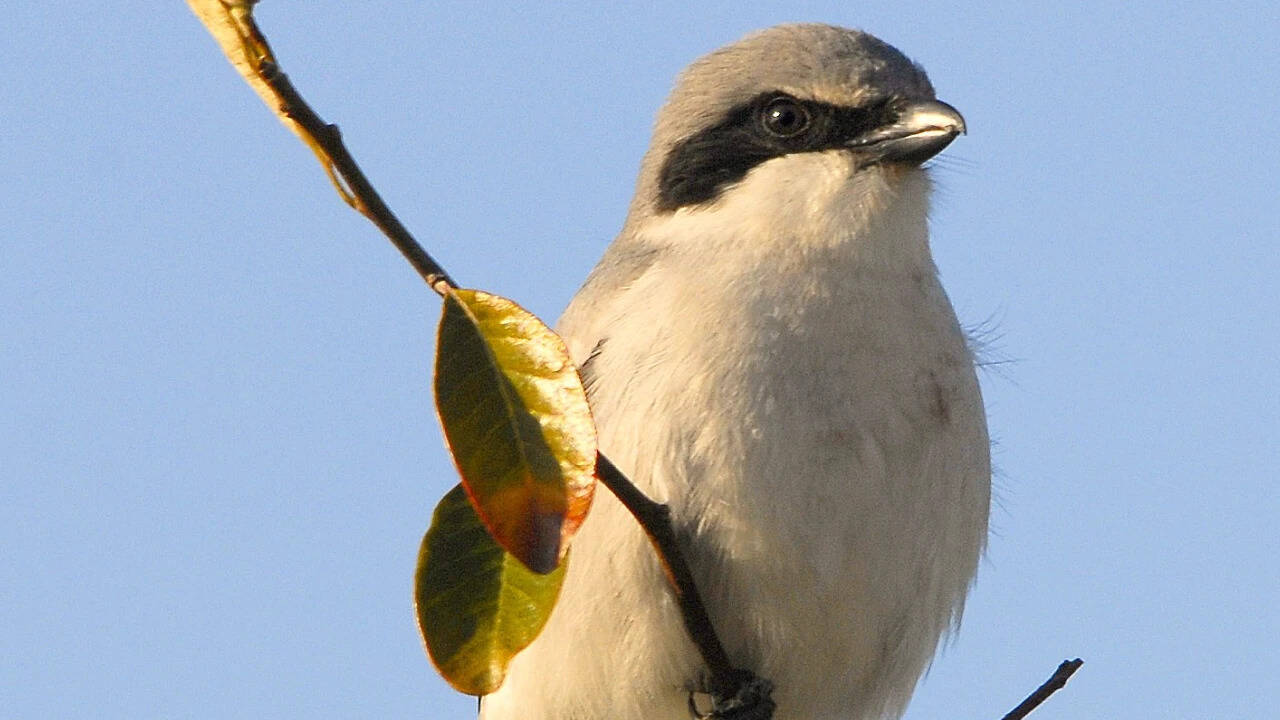
Then, on one unremarkable morning in rural Canada, a three-ounce flash of yellow and slate-gray drops onto a low willow branch, tilts its head, and sings a clear, descending trill that has been missing from the county checklist for over five years.
On the surface, this is a small local footnote. A dedicated Canadian birdwatcher steps out into his home county, spots a rare songbird absent from regional records for half a decade, snaps a verification photo, and uploads the sighting to a community database. By lunchtime, a dozen local enthusiasts have parked along the gravel shoulder with telephoto lenses, whispering like parishioners in an empty cathedral. By supper, the news cycle moves on to interest rates, traffic pileups, and whatever outrage is trending that evening.
Look closer, though, and that single sighting cracks open one of the most urgent, under-reported stories of our lifetime.
The Architecture of an Absence
To understand why one man trembling beside a hedgerow matters, you have to understand what five years of absence actually feels like when you pay attention to the land.
I learned this the hard way three springs ago, walking an old rail trail behind my own house where eastern meadowlarks used to pour liquid flute notes over the tall grass every May. For twenty years, that sound was as reliable as coffee at seven in the morning. Then one spring, the grass grew high, the dandelions turned to white puffs, and the air stayed completely flat. No whistle. No yellow breast flashing above the timothy hay. Just wind moving through weeds and the distant hum of a county highway.
Nobody notices when a song disappears all at once because species rarely vanish with a dramatic crash. Instead, they thin out the way hair greys or the way an old friend stops calling—first every other month, then once at Christmas, until you suddenly realize you have not heard their voice since before the pandemic. Ecologists have a clinical term for this slow forgetting: shifting baseline syndrome. Each new generation walks into a quieter forest and assumes that silence is normal.
Consider a composite figure I will call Arthur, modeled directly on the thousands of citizen naturalists who patrol county lines from British Columbia to Nova Scotia before work. Arthur is not a tenured ornithologist with grant funding or satellite tags. He is a retired high school shop teacher with a battered field guide, a thermos of burnt coffee, and forty years of spiral-bound notebooks stacked in his basement. When Arthur says a warbler or a vireo has been gone from his county for five years, he is not guessing. He has walked the same four-mile loop every Saturday morning through freezing rain, blackfly swarms, and July humidity, logging every single feather he sees.
His notebooks are a ledger of ghosts.
When a migratory songbird skips a county for five consecutive years, three invisible gears have usually ground out of alignment thousands of miles apart:
- The breeding bottleneck: Suburban sprawl, drained wetlands, and manicured lawns strip away the native caterpillars that nestlings must eat by the hundreds every single day.
- The transit gauntlet: Bright office towers, glass curtain walls, and fragmented stopover woodlots turn spring and autumn migration into an obstacle course where exhausted birds burn through fat reserves faster than they can refuel.
- The wintering squeeze: Shade-grown coffee farms and intact tropical dry forests in Central and South America give way to cattle pasture and monoculture crops, shrinking the winter refuge where these birds spend seven months of the year.
Think of a migratory songbird as a traveler trying to cross an ocean on a string of tiny volcanic islands. Remove two islands in the middle, or poison the freshwater springs on the third, and the traveler never reaches the far shore—even if the destination harbor looks pristine.
Why One Sighting Changes the Math
Skeptics love to ask a blunt question whenever birdwatchers celebrate a rare county record: So what? It is just one bird. Maybe a strong southerly gale blew it fifty miles off course during spring migration, the same way a stray hurricane pushes tropical seabirds onto Great Lakes beaches every autumn. Does one vagrant songbird prove anything at all?
That doubt is fair, and honestly, there are mornings when even seasoned naturalists wonder if they are chasing wind. A single bird does not equal a recovered population. A lone male singing in a thicket without a mate will spend June defending an empty territory before flying south again in September, leaving zero offspring behind.
Yet dismissing that Canadian sighting misses how biological recovery actually begins.
In 2019, a landmark study published in the journal Science revealed a staggering number that still makes my stomach drop every time I read it: North America has lost nearly three billion breeding adult birds since 1970. Not three million. Three billion—roughly one in four birds gone from our skies, backyards, and hedgerows within a single human lifespan. Warblers, sparrows, thrushes, and flycatchers took the heaviest losses.
Against a backdrop of three billion missing birds, an absence of five years in a single Canadian county looks like a closed chapter. You begin to assume the local habitat has crossed an invisible threshold—that the soil is too depleted, the insect hatch too sparse, or the surrounding farmland too sterile to ever pull that species back out of the sky.
Then a bird lands anyway.
Birds navigate using a biological toolkit that makes our best aerospace engineering look clumsy. They read the angle of polarized sunlight at dusk, sense the inclination of Earth's magnetic field through specialized proteins in their eyes, memorize star patterns around the celestial pole, and recognize topographic landmarks from thousands of feet up. When a rare songbird drops out of the high-altitude migration stream into a specific Canadian woodlot after a five-year hiatus, it is making a split-second, life-or-death calculation. From the air, that patch of scrub, wetland, or second-growth forest signaled food, cover, and water.
It means the island is still on the map.
The Human Engine Behind the Binoculars
There is a second story unfolding beside that gravel road in Canada, and it has nothing to do with feathers. It is about what happens when ordinary people refuse to stop looking.
We live in an era engineered to keep our eyes locked eighteen inches from our faces, scrolling through outrage machines designed to make us feel powerless, isolated, and furious. Modern life trains us to be passive spectators of everything, including the slow unraveling of the natural world. You read a terrifying climate headline over breakfast, feel a brief spike of dread, and click away to check your email because the problem feels too vast for two hands to hold.
Birdwatching—real, disciplined, local birdwatching—is the exact opposite of passive consumption.
When that Canadian birder raised his glass to the branches and recognized a plumage pattern he had not seen in five years, his sighting did not stay trapped in his own head. Within minutes, platforms like eBird—maintained by the Cornell Lab of Ornithology and Birds Canada—ingested that single data point, flagged it as a county rarity, verified the photographic evidence through volunteer regional reviewers, and added it to a global dataset now exceeding one billion bird observations.
Think about what that actually represents. Professional scientists could never afford to station paid researchers in every rural township across Canada every dawn of the year. The budget does not exist. Instead, millions of ordinary people—teachers, mechanics, nurses, retirees, teenagers—have formed the largest decentralized biological sensor network in human history.
- Every checklist records not just what was seen, but how long the observer walked, how far they traveled, and what was missing.
- Every rare sighting triggers targeted follow-up surveys that help conservationists identify micro-habitats worth protecting before developers pave them over.
- Every county record builds legal and scientific leverage when local land trusts apply for grants to restore wetlands or protect riparian corridors.
When a rare songbird reappears after five years, local conservation authorities suddenly have proof that restoration efforts—a planted buffer strip along a creek, a farmer leaving marginal pasture unmowed until mid-July, a municipality dimming downtown tower lights during peak May migration—are actively working. Data turns hope into funding.
What the Hedge Still Holds
By the time the morning sun climbs high enough to burn the frost off the goldenrod, the crowd along that Canadian roadside usually thins out. People have jobs to get to, groceries to buy, errands to run. The bird slips deeper into the tangle of dogwood and alder, foraging quietly for overwintering beetle larvae along the undersides of twigs, completely indifferent to the human excitement it just triggered.
If you want to understand what that bird is really asking of us, you do not need to book a flight to the Arctic tundra or donate a fortune to an international foundation. Start within fifty feet of your own front door.
Plant native oaks, willows, cherries, or goldenrod instead of sterile ornamental turfgrass that feeds nothing. Turn off unnecessary exterior floodlights between midnight and dawn during April, May, September, and October, when billions of songbirds navigate overhead by starlight. Put simple dot patterns or ceramic frit decals on large picture windows that reflect trees like open sky—a step that prevents a share of the up to one billion fatal window collisions estimated across North America every year. Keep domestic cats indoors, where they live twice as long and leave local fledglings alive to reach adulthood.
None of these actions will make the evening news. Nobody will hand you a medal for leaving a corner of your yard messy with fallen leaves so moths and beetles can pupate through the winter.
Yet somewhere out there tonight, thousands of feet above dark highways and sleeping towns, a tiny heart beating six hundred times a minute is riding a warm south wind north toward Canada, navigating by stars and magnetic pull, betting its entire life that when dawn breaks over the trees, someone left a branch worth landing on.