Five thousand dollars.
Say the number out loud over morning coffee, with a stack of utility bills sitting between your elbows and the grocery receipt still warm from the register. For a household where two adults qualify, that figure becomes ten thousand dollars. It sounds like a roof patch. It sounds like wiping out a credit card balance that has been creeping upward since the winter heating bill arrived. It sounds like breathing room, plain and simple.
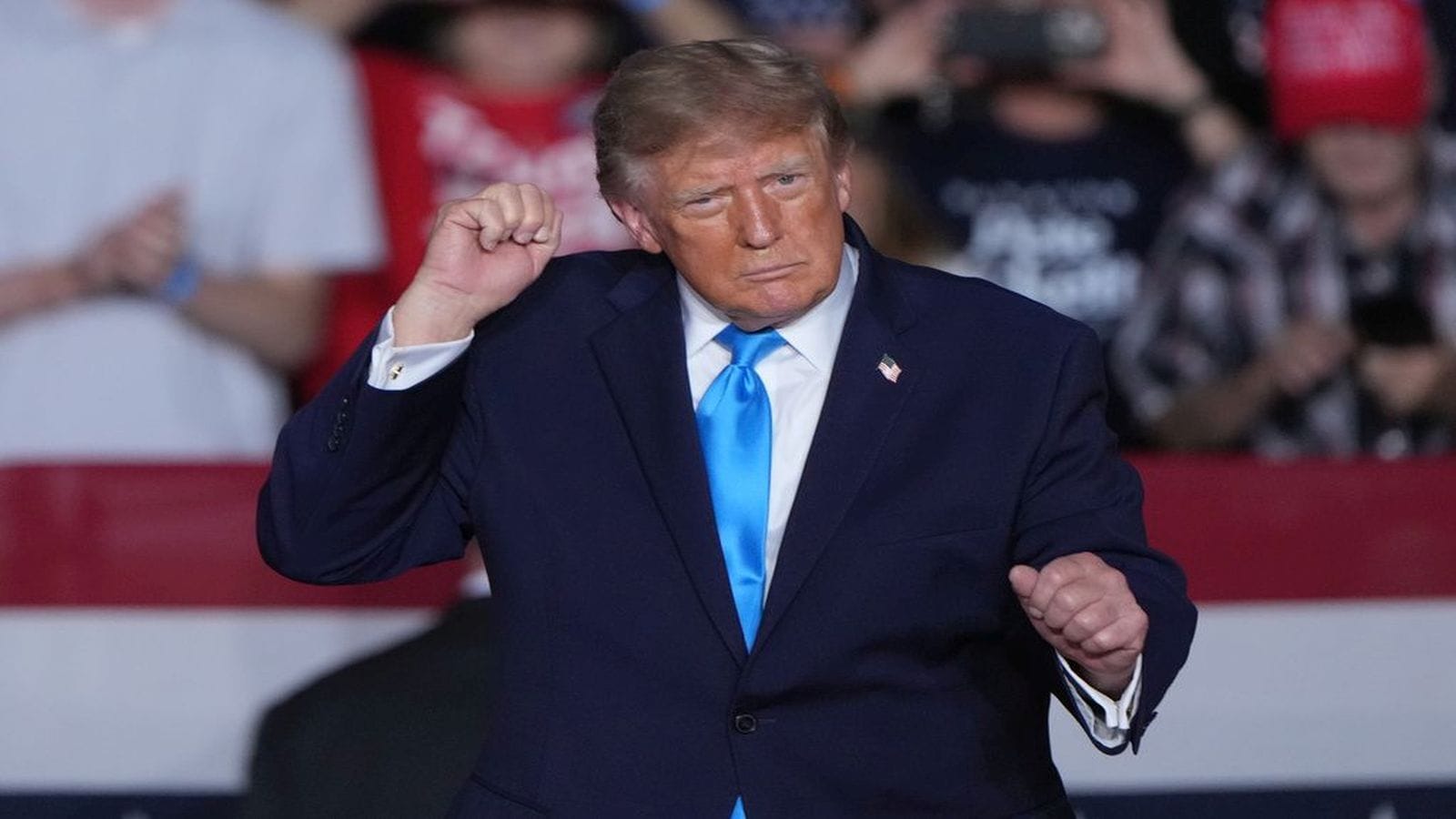
When Donald Trump floats the idea of sending five thousand dollars to every adult if Republicans win Congress—and insists that tariff revenue will pay for it—the political headline moves at lightning speed. People argue about party control, campaign promises, and who wins or loses at the ballot box. Yet the real drama does not live on a cable news panel. It lives in the quiet math between a check that might arrive once and a price tag that shows up every single week.
I have spent years sitting at kitchen tables like that one, helping families untangle numbers that looked simple on paper until real life got hold of them. When money gets tight, hopeful promises feel magnetic. You want to believe someone has found a clever shortcut where foreign exporters foot the bill and everyday Americans pocket the surplus. Still, anyone who has ever tried to stretch a paycheck knows that promises rarely pay for themselves without leaving a footprint somewhere else.
The Kitchen Table Math Behind a Big Promise
To understand what a five-thousand-dollar check actually means, picture a hypothetical couple—let’s call them David and Elena—living outside Columbus, Ohio. (Note: David and Elena are hypothetical characters created to illustrate how household budgets and import taxes interact in real life.) David works in light manufacturing and Elena picks up extra shifts as a medical receptionist. Neither of them wastes money. They buy store-brand oatmeal, keep the thermostat low at night, and still feel like every trip to the hardware store or pharmacy costs a little more than it did two years ago.
Now imagine Elena sees a headline promising five thousand dollars for every adult if Republicans take Congress, funded by tariffs. Five thousand dollars each means ten thousand dollars in their checking account. For a moment, the tension in her shoulders drops. A ten-thousand-dollar cushion would cover a sudden car transmission, stock the pantry, and still leave enough to stop flinching when the electric bill comes due.
Here is the catch that makes economists and budget hawks squint at the numbers. A one-time check is a moment; a household budget is a stream. Even if Congress passed a bill and the Treasury cut every eligible adult a check for five thousand dollars, the math at the scale of the entire United States adult population is staggering. Over two hundred and fifty million Americans are adults. Multiplying five thousand dollars by roughly two hundred and fifty-eight million adults puts the gross price tag north of a trillion dollars—more than a trillion and a quarter, depending on exact eligibility rules and income caps.
Where does that kind of money come from? In the pitch tied to Republican control of Congress, tariffs are cast as the engine that makes it happen. Tariffs are taxes levied on imported goods entering the country. In theory, foreign companies or governments ship goods across the border and pay a fee to bring them into the American market. In practice, trade economists have shown time and again that those duties are collected at the border from the U.S. importer bringing the goods in—and a substantial share of those costs gets passed along down the supply chain toward retail shelves, factory inputs, and everyday households.
That is the part that feels confusing, even slippery, when you are just trying to figure out whether your family comes out ahead. I will admit something candidly: trade math is rarely intuitive. When a politician says a foreign country or a tariff will pay for a domestic check, it sounds straightforward, almost like a toll booth where outsiders pay for our road repairs. Yet modern supply chains are tangled webs. A toaster, a pair of running shoes, a power drill, or a box of replacement filters rarely comes from just one place or passes through just one set of hands before reaching a shopper.
How a Border Tax Travels to Your Cart
Consider what a tariff actually is, stripped of campaign slogans. It is a tax on stuff coming in from abroad. When the federal government raises tariffs on imports, customs collects money at the port or border crossing. That revenue goes into the U.S. Treasury.
Think of a shipping container stacked high on a dock crane as a closed suitcase full of everyday life. Inside might be children’s coats, kitchen blenders, auto parts, or raw materials used by an American workshop. When a tariff is placed on those goods, the domestic company importing them pays the tax. Sometimes the importer eats part of the cost to keep customers from walking away. Sometimes the foreign supplier trims its price slightly to stay competitive. Often, though, businesses raise prices—either right away on finished goods or gradually on components that go into things made right here at home.
Imagine David’s small local shop buys steel brackets or electronic sensors from overseas to finish the equipment it assembles. If a tariff raises the cost of those parts by twenty percent, the shop faces a hard choice: shrink its own thin profit margin, raise the price it charges customers, or delay hiring. If every link in the chain faces higher import costs, prices across the economy tend to drift upward—or at least stay stubbornly elevated right when families are hoping for relief.
History gives us a sobering look at what happens when big tariff walls go up. In 1930, the Smoot-Hawley Tariff Act sharply raised U.S. import duties on hundreds of goods during an already fragile economic period. Trading partners retaliated with their own tariffs, global trade shrank, and the broader economic picture worsened rather than improved. Modern economies are far more interconnected than they were nearly a century ago, meaning supply chains cross borders multiple times before a finished product ever reaches a store.
So when someone says tariffs will pay for a five-thousand-dollar check to every adult, a sharp question follows: are we talking about a true windfall, or are we talking about taking money from one pocket—through higher prices on imported goods and materials—and putting some of it into another pocket via a check?
Why Congress Matters in This Equation
A political promise is not a law until it survives the legislative gauntlet. Even if voters hand Republicans control of Congress, turning a campaign pledge into an actual five-thousand-dollar payout requires real legislative mechanics.
Spending money and levying taxes are core constitutional powers of Congress. A president or candidate can propose a tariff-funded dividend, rally supporters around the idea, and push lawmakers to draft a bill. Still, lawmakers have to write the rules. Who counts as an eligible adult? Are high earners phased out, or does everyone get the same amount? Is it a one-time payment or an annual one? Most importantly, how much tariff revenue will actually be collected over a given year, and is it already spoken for by other priorities like tax cuts, border security, or deficit reduction?
Even aggressive tariff schedules typically bring in tens of billions or low hundreds of billions of dollars a year—substantial sums in government terms, yet still a fraction of what a universal five-thousand-dollar check to every American adult would cost in a single year. Bridge that gap without borrowing more money, and the numbers get tight fast. Borrow the difference, and the national debt climbs higher, bringing its own long-term interest costs that future budgets have to carry.
That tension is why the promise feels so electric to some voters and so skeptical to others. To someone feeling squeezed by rent, groceries, and insurance premiums, a five-thousand-dollar check sounds like immediate help from leaders willing to shake up the status quo. To someone watching prices climb on basics, the worry is that tariff-driven price hikes could quietly nibble away at the purchasing power of that very check—or keep biting long after the money is spent.
What Families Actually Feel When Prices Shift
Numbers on a spreadsheet rarely capture the emotional weight of a household budget. When you walk down the grocery aisle and hesitate over a jar of olive oil or a pack of diapers because the price jumped another dollar, you are not thinking about macroeconomic theory. You are thinking about whether you have enough left over before payday.
Let’s check back in on David and Elena. (Again, purely a hypothetical example to trace the human ripple effects.) Suppose their household receives ten thousand dollars total—five thousand for David and five thousand for Elena—after a Republican congressional win. For a few months, that money feels real and tangible. They pay off an old medical bill, put new tires on the sedan, and set aside a little cash for emergencies.
Now watch what happens over the next year if broad tariffs push up the cost of clothing, electronics, household appliances, and parts used in domestic manufacturing. Maybe their winter coats cost forty dollars more each. Maybe a replacement washing machine costs a hundred and fifty dollars more. Maybe groceries and everyday goods carry subtle price increases that add up to a few hundred dollars a month across a family budget.
A one-time check can vanish into higher everyday costs faster than anyone expects. That is the central tug-of-war at the heart of this debate: immediate relief versus lingering cost. A check arrives once and feels generous. Price shifts happen every week and feel relentless.
Doubt is healthy here. You do not have to be an economist to ask whether a policy that makes imports more expensive will make daily life cheaper. If tariffs are meant to protect domestic factories and punish unfair trade practices while simultaneously funding massive checks for every adult, those two goals can pull in opposite directions. Higher import prices can act like a regressive tax on lower- and middle-income families, who spend a larger share of their income on physical goods rather than saving it.
Weighing the Promise Against the Price Tag
Strip away the noise of partisan cheering and partisan jeering, and you are left with a clear set of trade-offs that every voter and household has to weigh on its own terms.
On one side sits the appeal of direct cash and a tougher stance on trade. Many Americans feel that foreign competitors have had too easy a ride in the U.S. market for too long, and many households would welcome a substantial check right now. Supporters of tariff-backed payouts argue that aggressive tariffs can generate new federal revenue while encouraging companies to build and buy closer to home.
On the other side sits the reality check of arithmetic and everyday prices. Five thousand dollars per adult is an enormous sum across the entire country. Tariffs are taxes paid at the border that frequently show up later in higher prices for consumers and businesses. If a check gives you five thousand dollars today while higher prices cost a household thousands of dollars over time, the net gain could be far smaller than the headline suggests—or even negative for families that buy a lot of goods affected by duties.
There is also the question of timing and certainty. Campaign pledges made around congressional elections depend on votes, legislative compromises, legal challenges, and shifting economic conditions. Counting on a five-thousand-dollar check before it is enacted—or assuming tariffs will effortlessly cover it without trade-offs—is a gamble.
Money in the hand feels certain. Promises on a stage do not.
Next time you hear a big number tied to a sweeping economic plan, pause for ten seconds before the applause or the outrage kicks in. Look past the check itself. Ask who writes the bill, who pays the tax at the dock, and what happens to the price tag on the shelf six months down the road.
Because in the end, no slogan buys groceries. Only the dollars left in your pocket after the bill comes due.