The clock on the wall does not care about human error. It does not pause for a frayed cable, a miscalculated voltage, or a collective intake of breath in a room built entirely for finality. It simply ticks.
Inside the maximum-security confines of Riverbend Maximum Security Institution in Nashville, Tennessee, the air always tastes of industrial floor wax and recycled iron. For decades, the rituals of state-sanctioned death have unfolded behind those heavy doors with the mechanical coldness of a factory assembly line. But machinery requires humans to tend the gears. And humans, unlike steel, eventually break under the weight of what they are asked to do.
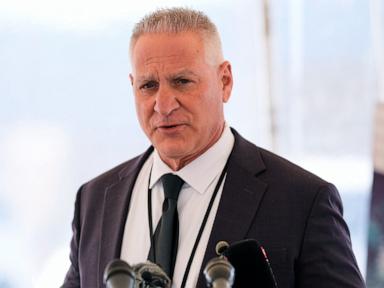
When the Tennessee Department of Correction commissioner stepped down abruptly, just days after a catastrophic machinery failure aborted the lethal injection of Christa Pike, the headlines treated it as a sudden political shockwave. Bureaucrats shuffle papers; politicians issue press releases; anchors on evening broadcasts parse the timing of a resignation like tea leaves.
They are missing the sound of the room.
To understand why a career official walks away from power in disgrace, you have to look past the bureaucratic paperwork and imagine standing twelve feet away from a medical gurney behind thick glass. You have to picture the sudden, sickening realization that the protocol has failed. Not in theory, but in practice. In front of witnesses. Under the pitiless glare of fluorescent lights.
Christa Pike was nineteen years old when she was condemned to die for a brutal murder committed in a University of Tennessee forest in 1995. She became the youngest woman on death row in modern American history, a grim historical footnote frozen in amber. For nearly thirty years, she lived in the shadow of a date that kept moving.
Then came May.
The state machinery was primed. The witnesses were seated. The legal appeals, exhausted after a grueling gauntlet through federal and state courts, had finally burned down to glowing embers. And yet, when the moment arrived to carry out the sentence, the execution was called off at the eleventh hour. Why? Because of a failure in readiness. A breakdown in the meticulous testing required before a human being is strapped to a table and administered a lethal chemical cocktail.
Governor Bill Lee intervened, ordering an independent review after realizing the state’s execution protocol had not been properly followed or tested. The sheer operational incompetence exposed a terrifying truth: the state was rushing toward a lethal outcome without even guaranteeing that its own internal rules were functioning.
When an execution protocol fails, it is rarely a cinematic Hollywood moment of sudden moral epiphany. More often, it is a mess of logistics, missed checks, and the cold sweat of realization that the state is about to commit a public botch job.
Consider what happens to the human psyche when you are the person whose signature authorizes that machinery to turn.
Bureaucracy insulates us from consequence. That is its primary design feature. Forms pass from desk to desk; stamps hit paper; digital signatures lock into databases. A person’s life is reduced to a docket number, a case file, a row in a spreadsheet. But execution day strips away every layer of abstraction. It forces the architects of the system to stand in the harsh light of physical reality.
When the execution of Christa Pike stalled, the illusion of administrative perfection shattered. The commissioner did not resign because of a sudden awakening to the moral complexities of capital punishment. Career correctional officials rarely undergo sudden ideological conversions on the way to retirement. They resign because the margin for error has evaporated, because the spotlight has exposed the frayed wiring behind the wall, and because the unbearable pressure of playing executioner on behalf of the public finally crushed the administrative armor.
We treat the death penalty as an abstract political debate. On one side, proponents argue for absolute retribution, pointing to the horrific nature of crimes and the finality of justice. On the other, opponents point to racial disparities, the risk of executing the innocent, and the fundamental cruelty of the state taking a life.
Yet both sides often ignore the mundane, greasy reality of how it is actually done.
It is executed by human beings. Flawed, tired, anxious human beings who must acquire drugs from secretive compounding pharmacies, test IV lines in sterile back rooms, and rehearse choreography that no one trains for in normal life. It is an administrative nightmare masquerading as divine justice. When the machinery jams, the illusion collapses into farce, leaving everyone involved scrambling for a door to exit through.
The resignation in Tennessee is not an isolated event. It is a symptom of a deeper rot that occurs when a society outsources its deepest moral questions to state employees working behind razor wire. We ask wardens and commissioners to shoulder the psychological burden of killing in our name, and we expect them to do it with the efficiency of a utility company repairing a downed power line.
When they fail, we act surprised. We demand accountability, investigations, and resignations, as if swapping out the man at the top will somehow fix a process that is fundamentally broken at its core.
The machinery of death demands absolute precision, yet it is operated by people incapable of perfection. That contradiction is the quiet crisis haunting every state holding a death row.
Christa Pike remains behind bars, her life suspended indefinitely in the legal and logistical purgatory created by the state's own incompetence. The commissioner is gone, replaced by another placeholder who will inherit the same broken protocols, the same secretive drug acquisition channels, and the same terrifying responsibility.
Outside the prison walls, traffic on Interstate 40 hums along, indifferent to the dramas playing out behind concrete barriers. Life moves forward with the relentless speed of the modern world. But inside, the clock keeps ticking toward a midnight that never quite arrives, managed by people who are slowly realizing that some lines were never meant for human hands to draw.


