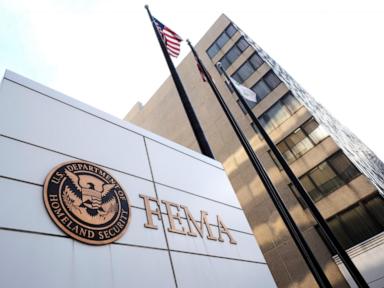
The FEMA Review Council’s latest "sweeping changes" are nothing more than a desperate attempt to rearrange deck chairs on a sinking ship. They want to streamline federal disaster support. They want to centralize data. They want to "modernize" the bureaucracy.
They are wrong.
By making federal aid more accessible and predictable, we aren't saving communities. We are subsidizing risk and lobotomizing local survival instincts. The council’s proposal assumes that the problem with disaster relief is a lack of efficiency. In reality, the problem is a surplus of dependency.
The False Mercy of Federal Paternalism
The current consensus among policy wonks is that when a hurricane hits or a wildfire spreads, the federal government should be the primary backstop. This "big brother" approach creates a moral hazard so large it can be seen from space.
When you tell a coastal developer or a municipal planner that the federal government will provide a "seamless" (to use their favorite, tired buzzword) safety net, you are effectively paying them to build in harm's way. The Review Council’s push to lower the threshold for federal intervention is a direct incentive for local governments to stop investing in their own infrastructure.
Why build a $50 million drainage system when you can wait for a flood and get the feds to buy out the properties at market value?
I have watched local officials in high-risk zones balance their budgets by cutting emergency preparedness funds, knowing full well that a Stafford Act declaration is just a paperwork exercise away. We are feeding a cycle where the "victim" status of a state is its most valuable financial asset.
The Data Delusion
A major pillar of the new proposal involves "unified data architecture." The idea is that if every agency shares a dashboard, the response will be faster.
This is a classic technocratic fallacy. Disasters are not data problems; they are physical, logistical, and social problems. No amount of real-time cloud analytics can move a pallet of water faster than a truck on a washed-out road.
By hyper-focusing on centralized data, FEMA is actually making the system more fragile. We are moving toward a single point of failure. If the federal digital infrastructure lags—or worse, gets hit by a cyberattack during a Tier 1 event—local agencies that have been trained to wait for federal "situational awareness" will be paralyzed.
True resilience is distributed, not centralized. It is messy, analog, and redundant.
Stop Fixing FEMA and Start Starving It
The most counter-intuitive truth in emergency management is that the most successful disaster outcomes happen when FEMA is nowhere to be found.
Look at the "Cajun Navy" or local mutual aid networks. They move faster, they know the terrain, and they don't require a 400-page environmental impact study to hand out a sandwich. The Review Council wants to "integrate" these groups into the federal fold. That is the quickest way to kill them with red tape.
We don't need a more efficient federal response. We need a more difficult one.
The Radical Proposal for Real Safety
- The Graduated Deductible: Every state should have a disaster deductible based on their GDP and historical risk. If Florida wants to keep building high-rises on sandbars, Florida pays the first $10 billion of every storm. No exceptions. No "emergency" waivers.
- Mandatory Privatization of Recovery: Federal funds should be capped at life-saving measures—Search and Rescue (SAR) and immediate medical. Everything else—rebuilding, debris removal, long-term housing—should be handled through private insurance markets. If the private market won't insure a house in a certain zone, that is the market telling you that the house shouldn't exist.
- Decentralized Resource Caches: Instead of massive FEMA warehouses in Maryland or Texas, we should be mandating that every county maintain its own 72-hour survival stock.
The Poverty of "Equity" in Disaster Policy
The Council spends a significant amount of time discussing "equitable distribution of aid." While the intent sounds noble, the execution is often disastrous.
When you prioritize aid based on socio-economic metrics rather than raw utility and speed, you turn a survival situation into a social engineering project. In the middle of a crisis, the only metric that should matter is: How many lives can we save with the resources currently on the ground?
By adding layers of "equity review" to the disbursement of funds, the government ensures that aid arrives weeks late for everyone, regardless of their background. Real equity is a community that is prepared enough not to need a federal check in the first place.
The Hidden Cost of "Streamlining"
The Council argues that simplifying the application process for Disaster Unemployment Assistance and Individual Assistance will help victims recover faster.
Imagine a scenario where every minor localized event—a heavy rainstorm that floods forty basements—triggers an automated federal response because the "barriers to entry" have been removed. We are talking about the total nationalization of local weather.
This kills the private insurance industry. Why would a homeowner pay for a comprehensive policy if the federal government has made it "simple and easy" to get a grant for a flooded basement? We are socializing the risk of property ownership while the profits stay private. It is a massive transfer of wealth from the inland taxpayer to the coastal elite, disguised as "compassionate reform."
The Expert Trap
Most of the people sitting on these review councils have never been waist-deep in a flooded "muck-out." They are career bureaucrats who view disasters as a series of spreadsheets. They value "process" over "outcome."
They tell you that the Stafford Act is a "foundational tool." I’m telling you it’s a crutch that has turned into a wheelchair.
We have created a generation of emergency managers who are better at filing Form 90-91 (Project Worksheet) than they are at coordinating a local volunteer fire department. They are experts in federal compliance, not survival.
The Liability of the "All-Hazards" Approach
FEMA’s "all-hazards" doctrine is a mile wide and an inch deep. They try to be the solution for everything from pandemics to cyberattacks to hurricanes. This dilution of focus is why they fail at the basics.
The Review Council wants to expand this even further, suggesting FEMA take a larger role in "climate adaptation." This is mission creep on a galactic scale. FEMA is a reactive agency. Asking it to be a proactive climate-planning agency is like asking a tow-truck driver to design a more aerodynamic car. It’s not their job, and they will be terrible at it.
We need to strip FEMA back to its core: a heavy-logistics agency of last resort. If it isn't a national-level catastrophe, the federal government should not be in the room.
Stop Asking for More Help
If you are a local leader, the best thing you can do for your citizens is to assume that the federal government is not coming.
The "sweeping changes" being proposed will only make the eventual disappointment more painful. They are building a more complex system in an era where we need simpler ones. They are encouraging people to trust a bureaucracy that has proven, time and again, that it cannot handle the scale of modern disasters.
The most resilient communities in the next decade won't be the ones that mastered the new FEMA grant portal. They will be the ones that built their own power microgrids, secured their own water sources, and stopped waiting for a permission slip from Washington to save themselves.
FEMA is not the solution. FEMA is the insurance policy that encourages you to drive the car off a cliff. Stop celebrating "better" federal support and start fearing the dependency it creates.
The more "efficient" we make federal aid, the more certain we make our eventual collapse.