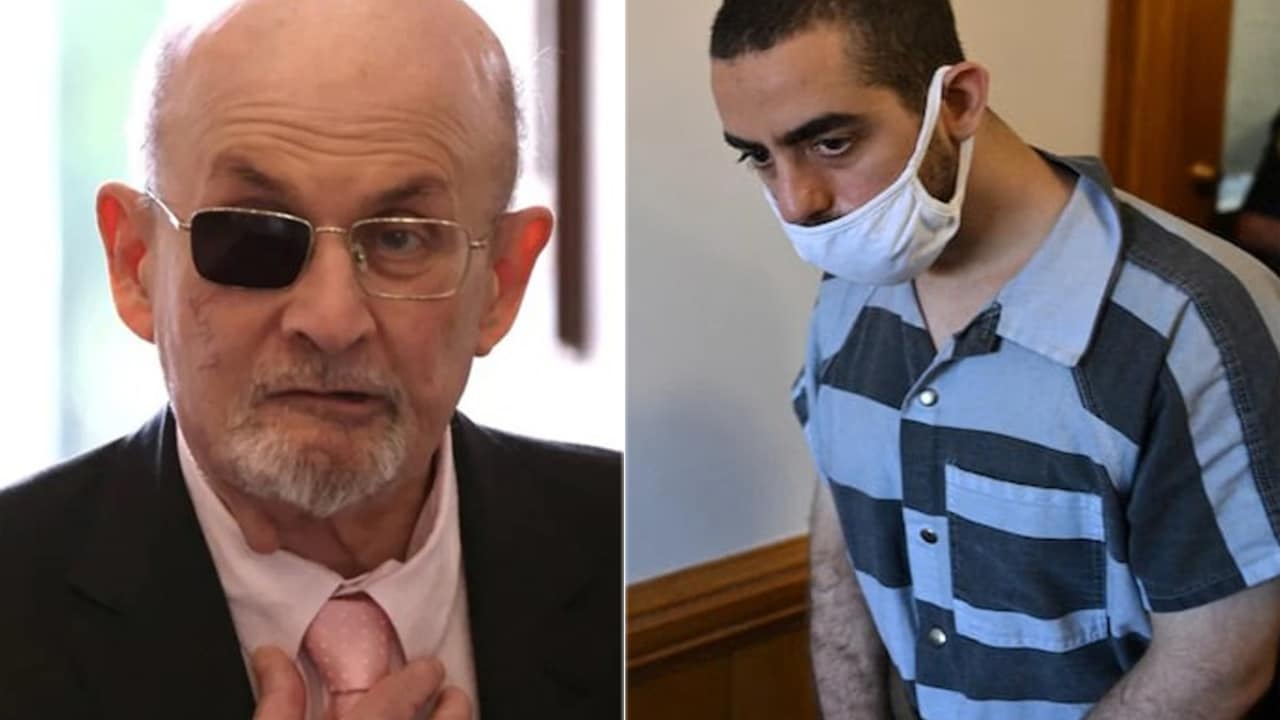
Justice moved swiftly in a Buffalo federal courtroom, but the road to accountability took years. A federal jury found 28-year-old Hadi Matar guilty on all counts of terrorism for the 2022 stabbing of author Salman Rushdie.
If you thought this case was already wrapped up because Matar was previously handed a 25-year state prison sentence for attempted murder, think again. This federal verdict changes the legal framing entirely. It moves the conversation from a violent local assault to an act of international terrorism backed by designated networks. Discover more on a connected subject: this related article.
Inside the Federal Case Against Hadi Matar
Prosecutors didn't just rely on the chaotic minutes on an amphitheater stage in Chautauqua, New York, where Rushdie was stabbed 15 times. Instead, they built a meticulous digital paper trail.
Evidence presented during the trial showed that Matar spent over a year researching the decades-old fatwa issued against Rushdie. He didn't just wake up angry one morning. He immersed himself in the violent ideology of Hezbollah, communicating with accounts in Canada, Australia, and Iran. Additional journalism by The Guardian delves into related views on the subject.
He edited videos titled "Rushdie_Fatwa 2.0" and "Rushdie_Fatwa 1.6," combining footage of the religious decree with statements from late Hezbollah leader Hassan Nasrallah. On the morning of the attack, he visited a Hezbollah-run website to look at screenshots of group members who died in August.
When Matar traveled to the Chautauqua Institution, he checked in under a fake driver's license bearing the name "Hassan Mughniyeh"—a deliberate mashup blending the first name of Nasrallah and the surname of Imad Mughniyeh, a key architect of past international terror operations.
The jury deliberated for just two hours before returning a guilty verdict on charges that include attempting to provide material support to a foreign terrorist organization and engaging in transnational terrorism. He faces a maximum sentence of life imprisonment when U.S. District Judge Richard J. Arcara hands down his sentence on November 3.
What the Defense Tried to Argue
Matar's defense attorney, Nathaniel Barone, took a straightforward approach during the trial: he argued that the government lacked concrete proof of what was actually inside his client's head. Matar himself declined to take the stand.
Yet, the digital footprint left little room for alternative interpretations. Private notes recovered by investigators showed Matar writing bluntly, "We need to kill him ASAP," as he tracked Rushdie's public speaking calendar through the spring and summer of 2022.
The Toll on Salman Rushdie
Salman Rushdie survived the brutal assault, though the physical and professional costs remain immense. The attack left the acclaimed novelist blind in his right eye, with severe nerve damage to his left hand, and internal organ injuries.
Despite the trauma, Rushdie testified during the proceedings. He recounted how the wounds were dispersed across his body while he was simply preparing to deliver a lecture on writers' safety. He has since continued writing and speaking, appearing at film festivals and literary events to discuss his harrowing memoir Knife, which details the assassination attempt and his subsequent recovery.
The federal conviction closes a major chapter in a decades-long saga born out of the 1989 fatwa over The Satanic Verses. It sends a clear message about accountability for acts fueled by international extremism, ensuring that Matar will face the maximum extent of federal law when he returns to court in November.