Silence.
That is the first thing people remember when a ballistic strike hits a camp before dawn—not the roar of the engine coming down, because a high-altitude warhead travels faster than the sound pushing ahead of it, turning an ordinary morning routine into a sudden, deafening erasure before the ear even registers danger.
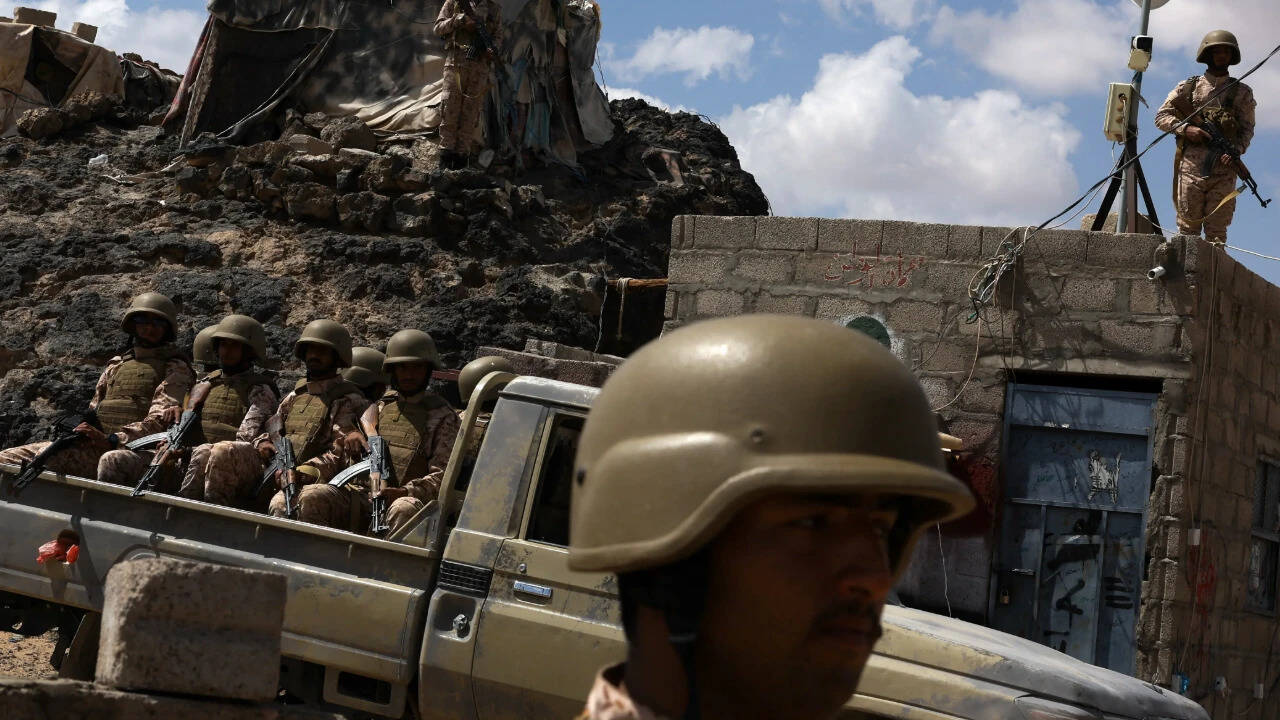
In the dry, standard wire phrasing that usually travels across screens, the event reduces to a clean, cold tally: at least twenty Yemeni fighters killed after Houthi forces targeted a military camp with ballistic weaponry. Numbers are tidy. They fit inside margins. They let a reader scroll past without getting dust on their shoes.
Yet behind every wire count sits a room where someone folded a blanket ten minutes earlier, a tin mug still warm with sweet black tea, a mother checking her phone in a village miles away where the signal drops every time the wind shifts. When a military camp in Yemen is struck by ballistic fire, the headline gives you the ledger, while the truth lives in the seconds before and after the impact—and in the broader war that has kept families suspended between fragile truces and sudden escalation for years.
The Anatomy of a Strike Without Warning
To understand why a ballistic attack on a camp feels different from ordinary frontline skirmishes, it helps to picture the geometry of modern warfare in the region. Frontline fighting is messy, close, and loud; soldiers hear rifles crack, mortars thump, and engines grind up rocky ridges. Ballistic warfare operates on a different clock. A missile climbs high into the upper atmosphere or arcs across territory under guidance, shedding altitude and picking up speed until gravity and propulsion converge on a single set of coordinates.
Let me use a metaphor here to make the mechanics plain. Think of throwing a heavy stone straight across a narrow creek versus lobbing it high into the air so it drops almost vertically onto a target far down the bank. A mortar or rocket is closer to that flat toss—visible, shorter-range, tied to local lines. A ballistic missile is the high arc: it buys reach and velocity at the cost of complexity, radar signatures, and devastating kinetic force when it comes down.
When a camp is hit, the physical shock is only half the story. Camps are places of habit. Men wake to a whistle or a call to prayer, line up for rations, check weapons, trade news from home, or sleep off a night watch in canvas tents and cinderblock barracks. A strike landing on a concentration of personnel turns routine into chaos in less than a heartbeat.
Consider a hypothetical character to ground what that morning looks like—not a real person from this specific report, since names and individual stories are not always public immediately after an attack, and I want to be transparent that this is a composite illustration built from documented patterns of conflict in Yemen.
Call him Tariq. Tariq is twenty-six, from a highland district where terraced fields cling to steep slopes and work is scarce. Like thousands of young men across Yemen's fractured map, he didn't join a unit out of love for parades; he joined because wages were irregular, prices at the market kept climbing, and a monthly stipend meant flour, cooking oil, and medicine for an aging parent. At 5:40 a.m., the air is cool and thin. Someone laughs over a joke about a broken generator. Then the ground doesn't just shake—it heaves, and the morning ceases to exist in any recognizable shape.
I have stood in places after blasts—not in that exact camp, and I won't pretend otherwise—and the smell stays with you longest. Burnt cordite, scorched metal, dry earth turned to fine powder, and a heavy metallic tang that makes your throat ache even hours later. What strikes you first isn't always grand heroism or cinematic drama. It is ordinary objects scattered out of context: a sandal sitting upright in the dirt, a cracked phone screen glowing faintly in the dust, a half-eaten piece of flatbread.
Why Camps Become Magnets in a Stalled War
Why hit a military camp when diplomacy, ceasefires, and regional negotiations have repeatedly tried to cool the conflict?
Because in a war of attrition, manpower and morale are the currency both sides try to spend down. Even when large-scale offensives stall along rugged frontlines—across desert stretches, mountain passes, or contested governorates—forces still train, rotate, stage supplies, and hold positions. A camp is a node in that chain. Striking it sends a message far beyond the perimeter fence: no assembly is safe, no rear area is entirely settled, and the threat can arrive from far above the ridgelines.
For Houthi forces, who have long relied on drones, cruise missiles, and ballistic systems as core pillars of their military doctrine, long-range precision and area strikes serve both tactical and psychological purposes. Tactically, they degrade rival formations, destroy stockpiles, and force commanders to disperse troops—which makes coordination harder and logistics slower. Psychologically, they project reach and keep pressure on opposing factions even without seizing new ground on foot.
On the other side, Yemeni government-aligned forces, local coalitions, and anti-Houthi factions face a grim dilemma. Concentrating troops makes training, command, and supply easier. Spreading them out reduces vulnerability to a single incoming warhead, yet makes cohesion harder in rough terrain. There is no cost-free choice when the sky itself can turn lethal.
And let's be honest about how confusing this conflict looks from the outside. Even people who follow world news closely sometimes lose track of who is fighting whom in Yemen. You have the Houthis—Ansar Allah—controlling much of northwestern Yemen including Sanaa and the Red Sea coast, arrayed against the internationally recognized Yemeni government, the Presidential Leadership Council, regional backing such as Saudi Arabia and the United Arab Emirates, and various local armed groups with their own shifting priorities. When a headline says "Yemeni fighters killed" and "Houthis target military camp," a reader might pause and ask: Wait—aren't they all Yemeni?
Yes, most of them are. That is part of the tragedy. A civil war layered over regional rivalries turns countrymen into targets across shifting lines of control, while ordinary citizens caught between factions pay the heaviest price in collapsed services, displacement, and grief.
The Invisible Stakes Beyond the Casualty Count
When an attack leaves at least twenty fighters dead, the immediate focus naturally falls on the dead and the wounded. Hospitals—already stretched thin across a country where years of war have battered clinics, supply chains, and electricity grids—scramble to treat burns, shrapnel wounds, and blast trauma. Field medics work with limited equipment. Ambulances race down bumpy roads under a sky that suddenly feels unsafe again.
Yet the ripples move outward in ways that rarely make the next news cycle.
First comes the shock inside families. In tight-knit communities, news travels fast and unevenly. Rumors start before official confirmations. A cousin calls a brother; a phone rings unanswered; a mother sits by the door watching the road while neighbors try to sound calm without knowing anything certain. When confirmation finally arrives, grief isn't an abstract statistic. It is an empty chair at supper, a younger brother suddenly forced to leave school or find whatever work exists, a household losing its main earner in a place where safety nets barely exist.
Second comes the fragility of any broader calm. Every major strike tests whatever restraint or backchannel talks are happening behind closed doors. Even when attacks focus on military targets rather than civilian markets or residential blocks, escalation carries momentum. Retaliation breeds counter-retaliation. Commanders harden stances. Public anger spikes on both sides, making compromise harder to sell at home.
Third is the regional shadow. Yemen does not sit in isolation. Its geography links the Arabian Peninsula to the Red Sea and Bab el-Mandeb—one of the world's vital maritime corridors. Shifts in Houthi military activity, missile capabilities, and regional tensions reverberate through shipping lanes, diplomatic capitals, and neighboring borders. A strike on a camp in Yemen can look local on the map while feeding a much wider cycle of deterrence and risk across the Middle East.
I should admit a real limitation here: in fast-moving conflict environments, early casualty figures are often minimums or estimates subject to revision as rescue and recovery continue, and full operational details around exact missile types, launch sites, or command structures are rarely verified in real time. Treating early numbers with care isn't about minimizing loss—it is about respecting accuracy when lives and political narratives are on the line.
What Cold Headlines Miss About Courage, Fear, and Survival
People who haven't lived near conflict sometimes imagine soldiers in binary terms: fearless or cowardly, ideologue or pawn. Real human beings are almost always messier—and more relatable—than that.
A fighter in a camp might believe fiercely in a cause, or might simply be trying to keep his family fed, or might carry a mix of conviction, fatigue, and quiet dread every time he looks up at a cloudless morning. Fear doesn't disqualify someone from courage; often it is the exact texture of courage. Getting up the next day after friends have died, checking a rifle with hands that still remember the vibration in the soles of your boots, keeping watch when every distant sound makes your stomach tighten—that takes a toll that doesn't show up on a tactical map.
Think, too, about the survivors who walk away physically intact. Blast waves and sudden loss leave invisible marks. Sleep turns light. Loud bangs—a backfiring truck, a slammed iron gate, thunder rolling across dry hills—can trigger a sudden jolt of adrenaline long after the danger has passed. In a country where mental health care is scarce and stoicism is often expected of men, many carry that weight in silence.
Why should someone reading this thousands of miles away care?
Because indifference is the quiet partner of prolonged wars. When a conflict drags on year after year, familiarity breeds numbness. We see another strike, another death toll, another stalled peace effort, and our attention thins out. Yet every time a ballistic missile strikes a camp and kills twenty or more people, a human world contracts. Plans vanish. Voices go quiet. Grievances deepen. And the odds of a durable, humane settlement shrink a little further.
Understanding the human cost doesn't require taking a simplistic side; it requires refusing to turn real people into mere placeholders in a geopolitical puzzle.
The Long Shadow Over an Unfinished War
Peace in Yemen has never been a single signature on a piece of paper. It has always required rebuilding trust across deep divides, addressing local grievances, creating economic alternatives to arms, and ensuring that outside powers stop treating the country as a chessboard.
Every time a military camp is targeted by ballistic fire, the reminder is stark: the machinery of war is still active, still lethal, and still capable of shattering quiet mornings in seconds. Negotiations may pause, frontlines may look static on a weekly briefing, and diplomats may trade cautious statements—but beneath the surface, the threat remains immediate for the men on the ground and the families waiting at home.
A clear sky over a military camp looks peaceful right up until the moment it isn't.
Out in the dust after the smoke clears, a single boot lies on its side beside a shattered wall, waiting for a footstep that will never come back.