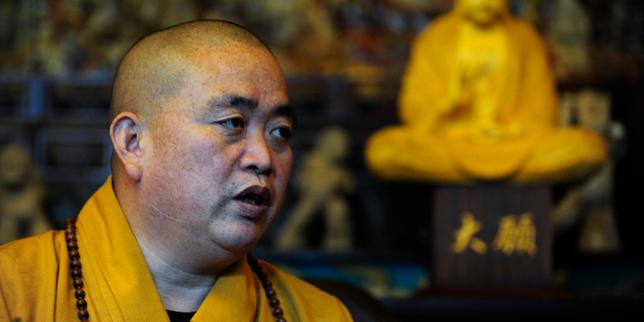
The sentencing of Shaolin's former high-ranking monk to 24 years in prison marks the definitive end of an era where spiritual authority could shield immense commercial corruption in China. A Chinese court handed down the heavy sentence following a sweeping investigation into financial fraud, bribery, and embezzlement that reached deep into the business empire surrounding the world's most famous Buddhist monastery. This is not a simple story of a rogue monk pocketing donations. It is the predictable result of state-sanctioned commercialization meeting aggressive corporate greed inside an ancient spiritual institution.
For decades, the Shaolin Temple operated less like a secluded monastery and more like a multinational conglomerate. The convicted former abbot weaponized the global brand of Kung Fu to build an empire of martial arts schools, lucrative performance tours, film production companies, and real estate holdings. While purists lamented the erosion of spiritual values, local authorities and temple executives embraced the cash flow. Now, the crackdown exposes the structural vulnerability of mixing state-backed tourism with unchecked corporate power.
The Corporate Machinery Beneath the Saffron Robes
To understand how a Buddhist leader faces two decades behind bars, one must look at the balance sheets. Shaolin became a global trademark registered in dozens of countries. The monastery did not merely accept alms; it aggressively monetized its intellectual property. The former abbot sat at the center of a web of joint-venture companies that controlled everything from souvenir sales to premium admission fees.
The financial structure resembled a modern holding company. Local municipal governments often partnered with temple entities to develop tourism infrastructure. This blurred the lines between public funds, religious donations, and private corporate profit. Investigators found that millions of dollars intended for cultural preservation were funneled into shell companies controlled by the abbot and his close associates.
This was institutional capture. The traditional hierarchy of the monastery was replaced by a corporate board structure where the abbot held absolute veto power. Without independent auditing or transparent financial reporting, the temple became a black box. Donations from wealthy patrons looking for spiritual favor were commingled with ticket sales and merchandising revenue, creating the perfect environment for large-scale embezzlement.
Beijing's Shift from Promotion to Purge
For years, the Chinese government viewed Shaolin as a prime example of soft power. The temple's monks traveled the world, performing for foreign dignitaries and showcasing Chinese heritage. This political utility granted the monastery's leadership a long period of regulatory immunity. They were too valuable to disrupt.
The political climate has fundamentally changed. The current administration in Beijing views unchecked commercial religious operations not as cultural assets, but as ideological risks and vectors for corruption. The state's tolerance for high-flying religious entrepreneurs has evaporated. By making an example of such a high-profile figure, the government is sending a clear warning to all religious and cultural institutions across the country.
The 24-year sentence is exceptionally harsh for a financial crime involving a religious figure. It signals that spiritual titles will no longer serve as a legal shield. The prosecution detailed not just bribery, but an lifestyle that directly contradicted the ascetic principles of Zen Buddhism. This public exposure serves a dual purpose: it cleanses a compromised state asset and reasserts total party control over religious organizations that grew too independent on the back of their financial success.
The Illusion of Separation Between Church and State Business
The fallout from this verdict extends far beyond the walls of the Shaolin Temple. It exposes the inherent flaw in the economic model used by many historical and cultural sites across China. When local governments rely on historical sites to drive GDP, they inevitably transform abbots into CEOs.
Consider the typical development model for these heritage sites. A local government sets up a tourism investment group. They pave roads, build hotels, and hike ticket prices. The monks become actors in a living museum, incentivized to upsell blessings, incense, and merit certificates. The pressure to generate revenue comes from the top down.
- The Ticket Trap: Tourism bureaus often keep the lion's share of entry fees, forcing monasteries to find alternative, sometimes predatory, ways to make money.
- The Trademark Wars: Entities unaffiliated with the spiritual practice register names and logos, leading to endless litigation and corporate infighting.
- The Governance Vacuum: Religious affairs bureaus lack the financial expertise to audit complex corporate structures, while market regulators hesitate to police religious personnel.
When the system breaks down, the spiritual leaders take the blame, but the systemic pressures that drove the behavior remain untouched. The former abbot was a product of a system that demanded growth and profitability above all else.
The Broken Trust of the Global Martial Arts Community
Beyond the financial metrics, the conviction deals a devastating blow to the global community of practitioners who viewed Shaolin as their spiritual home. Thousands of martial arts schools worldwide trace their lineage, legitimately or otherwise, to this single valley in Henan province. They bought into a myth of unbroken tradition and spiritual purity.
They are left to reconcile that myth with the reality of police mugshots and asset seizures. The commercialized version of Kung Fu sold to tourists and film crews had already alienated serious martial artists. This scandal permanently tarnishes the brand. It proves that the institution was vulnerable to the exact same corporate vices as any secular real estate developer or tech startup.
The recovery process will take years. The state will likely install a highly bureaucratic, compliant leadership team to run the temple's daily operations. This will stabilize the finances and satisfy the regulators, but it will do little to restore the authentic spiritual authority that was sold off piece by piece over the last three decades. The temple survives, but the illusion of its sacred independence is dead.
The conviction of the former abbot is a harsh reminder that in an economy where everything is for sale, even the most sacred symbols can be corrupted by the market forces they seek to exploit.