Every anniversary of September 11 triggers a predictable media ritual. A public figure says something about their personal experience two decades ago, journalists rush to transcripts, archive footage, and construction logs, and a fresh cycle of outrage erupts over whether a minor detail was slightly off. The lazy consensus of the political press treats these memories like forensic legal depositions, as if recalling a national trauma requires the rigid accuracy of an engineering blueprint.
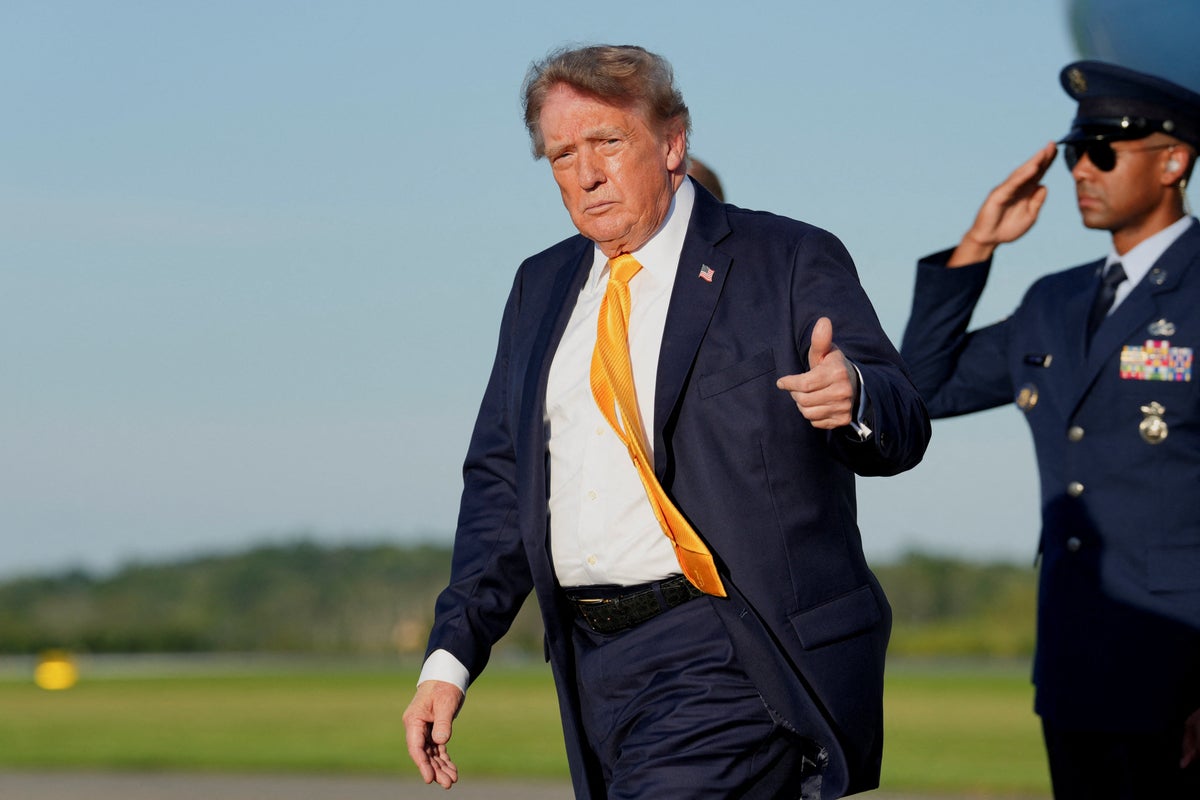
When Donald Trump told Fox News host Trey Gowdy that he went down to Ground Zero the day after the attacks with a crew of construction workers and "worked long and hard," the predictable response followed. Fact-checkers reached for old archives, pointed out that independent logs cannot verify a specific squad of builders hauling concrete under his direct supervision, and labeled the account dubious. Meanwhile, you can find other developments here: The Debt That Time Refuses to Bury.
The media focuses entirely on literal verification while ignoring how human memory functions under extreme cognitive load, and more importantly, how public figures weaponize narrative.
The Flawed Premise Of Gotcha Journalism
The core error in modern media critiques lies in treating political storytelling like a court document. When a reporter asks whether a billionaire real estate developer spent his afternoon wearing a hard hat shoveling ash, they are asking a literal question about a symbolic statement. To see the full picture, we recommend the detailed report by The Guardian.
I have watched public figures, executives, and politicians recount chaotic historical events for years. Under high-stress conditions, individual memory collapses into archetypal storytelling. People remember their proximity to disaster through the lens of their identity. If you are a developer, your brain contextualizes a national crisis through the framework of construction, blueprints, and labor.
Did Trump physically clear tons of steel alongside union ironworkers on September 12, 2001? The available contemporary records and site logs do not show a documented squad of Trump-branded laborers operating heavy machinery in the restricted disaster zone. Access to lower Manhattan was heavily restricted by the NYPD and federal authorities immediately following the collapse. Thousands of civilians wanted to help, but professional emergency responders quickly locked down the perimeter for safety reasons.
Yet, treating this discrepancy as a simple binary of "truth versus lie" misses how public communication actually moves audiences. The mainstream media fixates on whether the timeline matches an Excel spreadsheet, entirely missing the rhetorical function of the claim.
The Uncomfortable Truth About Political Mythmaking
Critics assume that catching a prominent figure in an unverified timeline damages their credibility. This is a profound misunderstanding of modern political psychology.
Imagine a scenario where a politician gives a strictly verified, emotionally flat, heavily hedged statement about a historical disaster. It generates zero engagement, zero cultural footprint, and is instantly forgotten. Now contrast that with a colorful, oversized anecdote placing the speaker right in the middle of the chaos, sleeves rolled up, embodying resilience.
The public does not evaluate these statements using a spreadsheet. They evaluate them based on resonance. When a supporter hears that story, they are not calculating the cubic yards of debris moved; they are absorbing a vibe of kinetic involvement.
The press thinks they are performing a public service by pointing out that construction executives rarely moonlight as rescue workers. But every time media outlets run a multi-day cycle dissecting a controversial memory, they reinforce the exact narrative frame they are trying to dismantle. They amplify the story to millions of people who would have otherwise missed it, trading precision for outrage metrics.
Rewriting The Question
Instead of asking whether the construction crew was clocking billable hours at Ground Zero, let us ask a better question: Why do public figures persistently anchor themselves to the physical labor of disaster zones long after the event?
The answer is tied to authenticity manufacturing. In an era where leadership is largely mediated through television screens and digital feeds, physical proximity to danger is the ultimate currency. Claiming to be "there" is a shorthand for having skin in the game.
If you want to understand why these stories persist, stop looking at police barricades from 2001 and start looking at modern media incentives. The critics are fighting a war over literal historical accuracy while the storytellers are fighting a war over emotional resonance. Accuracy lost that battle a long time ago.