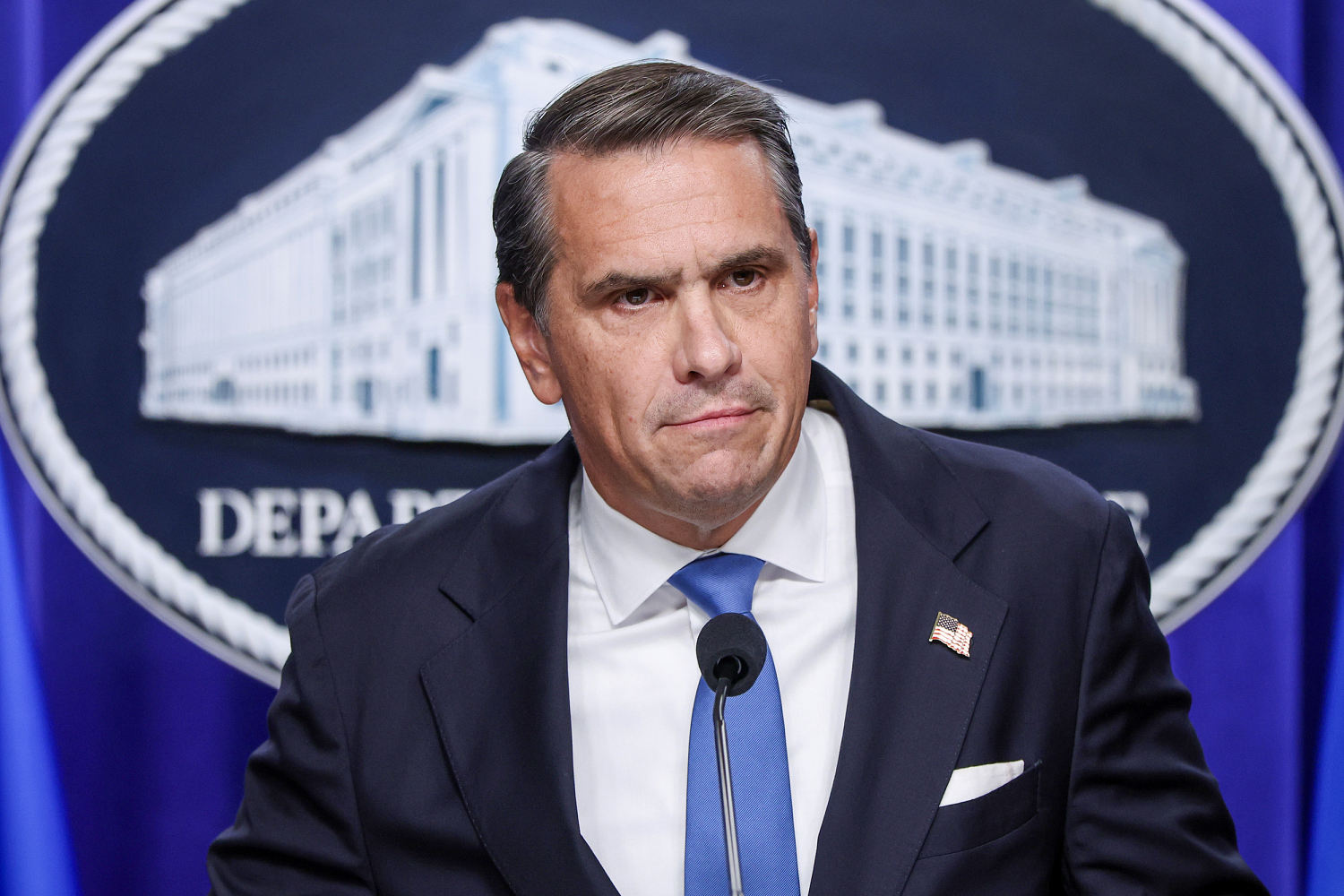
The debate surrounding executive authority over state election outcomes often hinges on dramatic rhetoric rather than structural analysis. When Attorney General Todd Blanche noted that the Department of Justice could theoretically take action to stop state election certification under an extreme "doomsday" scenario, public commentary immediately split into political talking points. Strip away the political posturing, however, and the statement reveals a critical structural friction point: the tension between constitutional state sovereignty over elections and federal executive law enforcement power.
Deconstructing this conflict requires examining the legal mechanisms, structural constraints, and systemic trade-offs that dictate how federal authority intersects with state administration during post-election certification.
The Dual Architecture of American Election Administration
Under Article I, Section 4 and Article II, Section 1 of the United States Constitution, the authority to prescribe the times, places, and manner of holding elections is primarily assigned to state legislatures. The federal government operates largely as a regulatory supervisor rather than an operational manager. Federal intervention is legally circumscribed by specific statutory thresholds.
Federal involvement in state certification functions along three primary statutory pathways:
- Voting Rights Act (VRA) Enforcement: Federal intervention to prevent discriminatory practices or civil rights violations that disenfranchise voters prior to or during tabulation.
- Civil Rights Claims (42 U.S.C. § 1983 / Criminal Conspiracy Statutes): Interventions targeting systemic corruption, widespread fraud, or state-level denial of due process under the Fourteenth Amendment.
- Electoral Count Reform Act (ECRA) of 2022 Constraints: Federal judicial review provisions designed to resolve disputes regarding executive certification of electors before Congress counts votes on January 6.
Because the executive branch lacks direct administrative authority over state canvassing boards, any action to halt or delay certification requires injunctive relief from federal courts. The Justice Department cannot unilaterally issue an administrative order to pause a state certification; it must satisfy standard civil equity requirements before an Article III judge.
The Mechanics of a Post-Election Intervention
To understand how a "doomsday" post-election intervention operates, one must map the specific prerequisites required for the Department of Justice to seek an emergency injunction against a state governor or election board.
+-------------------------------------------------------+
| Step 1: Evidentiary Threshold                         |
| Exigent discovery of systemic fraud, widespread non-  |
| qualified voting, or compromised voting machinery.    |
+-------------------------------------------------------+
                           |
                           v
+-------------------------------------------------------+
| Step 2: Emergency Litigation                          |
| DOJ files for a Temporary Restraining Order (TRO) in  |
| U.S. District Court citing Constitutional violation.  |
+-------------------------------------------------------+
                           |
                           v
+-------------------------------------------------------+
| Step 3: Judicial Balancing Test                       |
| Court weighs irreparable harm vs. statutory duty of   |
| state officials to meet federal certification dates.  |
+-------------------------------------------------------+
                           |
                           v
+-------------------------------------------------------+
| Step 4: Systemic Conflict / Escalation                |
| Immediate appeal to Circuit Courts and Supreme Court  |
| before statutory ECRA submission deadline.            |
+-------------------------------------------------------+
The Evidentiary Dilemma
The central constraint facing federal litigators is the standard of proof. Courts demand concrete, admissible evidence demonstrating that uncorrected procedural irregularities alter the outcome or violate fundamental rights. Assertions of general administrative failure do not satisfy the irreparable harm threshold needed to halt a statutory state process.
The Irreparable Harm Conflict
State certification laws mandate rigid deadlines to ensure federal statutory compliance. Halting certification risks disenfranchising an entire state's electorate by preventing their votes from reaching Congress within statutory windows. Consequently, the legal burden on the Justice Department to justify delaying a mandatory state function is extraordinarily high.
Structural Bottlenecks and Systemic Risk
Any strategy contemplating federal intervention in state certification faces three severe institutional bottlenecks:
- The Statutory Deadline Buffer: Under the Electoral Count Reform Act, state executives must issue a certificate of ascertainment by a strict deadline in December. A federal injunction delaying state certification compresses the timeline for judicial review, increasing the likelihood that the Supreme Court must intervene under expedited emergency dockets.
- Federalism and Anti-Commandeering Principles: Under the Tenth Amendment and established jurisprudence (such as Printz v. United States), the federal government cannot compel state officials to execute federal regulatory programs or alter their state statutory duties without clear federal statutory preemption.
- Institutional Legitimacy Costs: Initiating federal litigation to block state certification alters market and public expectations of stability. The economic cost function of such actions includes heightened market volatility, eroded public trust in institutional continuity, and regulatory uncertainty.
Strategic Realities of Legal Posturing
Public statements by legal executives regarding theoretical extreme contingencies serve dual operational functions. Strategically, asserting potential federal intervention acts as a deterrent against non-compliant state-level administrative actions. Operationally, however, it establishes an elevated standard of scrutiny that the Justice Department itself must meet if it chooses to act.
When analyzing executive statements on post-election enforcement, analysts must distinguish between discretionary rhetoric and executable legal pathways. Without a verified evidentiary baseline that meets the stringent requirements of federal equity jurisdiction, theoretical legal pathways remain structurally constrained by the Constitutional allocation of election authority to the states.