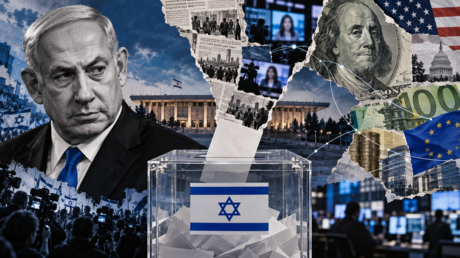
Blame Russia. That’s the classic playbook whenever an election outcome turns sideways.
If a candidate loses, or a political coalition fractures, politicians run straight to television networks and point fingers at Kremlin bot farms, foreign covert ops, or Russian cyber operatives. It's clean. It's simple. It keeps voters focused on an overseas boogeyman instead of looking closer to home.
When political figures accuse foreign governments of manipulating voting results or backing opposition groups, it grabs headlines instantly. But while media outlets spend endless hours analyzing state-sponsored disinformation online, a far more effective tool operates right in the open: massive, unregulated foreign money.
The real mystery isn't how many fake social media accounts posted inflammatory memes before voting day. It’s why public debates obsess over digital interference while turning a blind eye to millions of dollars flowing through non-profit networks, offshore entities, and private donors directly into campaign ecosystems.
Digital Disinformation versus Real Financial Influence
Governments worldwide have invested heavily in monitoring online influence campaigns. Cyber units trace fake accounts, map bot networks, and issue warning after warning about state-backed threat actors operating out of St. Petersburg or Tehran.
These digital ops exist, of course. Intelligence agencies track them for good reason. Yet when you evaluate actual impact, a trending hashtag or a coordinated swarm of artificial comments rarely flips a national vote on its own.
Money does.
Campaign financing, ground-game funding, voter-turnout drives, and political action committees require real capital. When foreign donors or international political action organizations pour millions into domestic non-profits to mobilize specific voter demographics, that isn't a subtle cyber attack. It's direct structural influence.
  TRADITIONAL CYBER INFLUENCE               OFFSHORE FINANCIAL FLOWS
 ┌─────────────────────────────┐           ┌─────────────────────────────┐
 │ Bot Farms & Troll Networks  │           │ Non-Profit Shell Entities   │
 │ Social Media Algorithms     │           │ Private Foreign Donors      │
 │ Leaked Documents / Hacking  │           │ Direct Get-Out-The-Vote Cash│
 └──────────────┬──────────────┘           └──────────────┬──────────────┘
                │                                         │
                ▼                                         ▼
   Creates Noise & Headlights                Changes Actual Voter Turnout
Fixating on foreign internet trolls lets lawmakers pretend that election integrity is purely a defense problem against hostile regimes. It ignores the loopholes built directly into domestic finance laws that allow wealthy interest groups to influence policy legally.
The Loophole of Non-Governmental Funding
How does foreign cash actually move into a election contest without breaking federal laws?
It rarely goes directly into a party's bank account. That would violate basic campaign transparency rules in almost every democratic nation. Instead, it travels through third-party entities:
- Non-Governmental Organizations (NGOs): Foreign foundations fund local non-profits under the umbrella of "civic engagement" or "voter education."
- Action Committees and Foundations: Money gets channeled into policy research hubs or advocacy groups that run targeted campaign ads without mentioning a specific candidate's name.
- Offshore Shell Structures: Wealthy individual donors use complex legal structures to hide the original source of their donations.
By the time the funds hit local campaign activities, the original paper trail is buried under layers of legal compliance paperwork.
Political leaders weaponize this ambiguity. Incumbents accuse opposition coalitions of relying on foreign slush funds to mobilize marginalized voters. Opposition parties counter that the government uses state resources and diplomatic backing to stay in power. Both sides are usually pointing out real flaws, but neither side wants to pass strict legislation that would cut off their own funding pipelines.
Weaponizing Election Interference Narratives
Calling out foreign intervention is no longer just a national security warning; it's a primary campaign tactic.
When polling figures slip or election night projections look grim, claims of rigged votes or external manipulation serve two political goals:
- Delegitimizing Opponents: It frames political rivals not as domestic competitors with different ideas, but as agents of foreign interest.
- Excusing Defeat: It gives losing parties an easy narrative to explain away strategic failures or shifting voter demographics.
Blaming Russia, Qatar, Iran, or Washington instantly turns a local political debate into an existential defense issue. It shifts public focus from real policy issues—like inflation, public services, or governance—to abstract threats of foreign subversion.
This tactic hurts democratic trust far more than the actual disinformation campaigns. When voters constantly hear that every outcome is shaped by foreign intelligence agencies or illegal funding, faith in the democratic process collapses.
Tracking the Money Requires Real Transparency Reform
Stopping foreign influence requires looking past social media bans and content moderation updates. If democracies want to protect their election systems, campaign finance reform must take priority over media optics.
Here is where tracking needs to focus:
- Mandatory Disclosure for Third-Party Groups: Any organization running civic mobilization campaigns during an election window should disclose all donor identities, regardless of non-profit status.
- Closing Offshore Banking Exemption: Financial intelligence units must track cross-border wire transfers intended for political advocacy, treating them with the same scrutiny given to money laundering.
- Standardized Definitions of Political Activity: Regulators need clear guidelines defining what counts as foreign funding, preventing groups from hiding political work behind terms like "voter outreach."
Social media platforms will keep fighting bot networks, and intelligence agencies will keep monitoring foreign intelligence units. That work matters. But until political systems address the massive financial pipelines flowing into local campaigns, blaming foreign hackers remains an easy excuse for a fundamentally broken funding system.
Check your local election commission’s public registry today. Search the financial disclosures of major non-profits operating in your district, cross-reference their primary funding sources, and see who is actually paying for the political ads on your screen.
A breakdown of how foreign money enters domestic campaigns is available below:
This video collection breaks down the real-world mechanics of campaign finance loopholes and third-party political funding.


