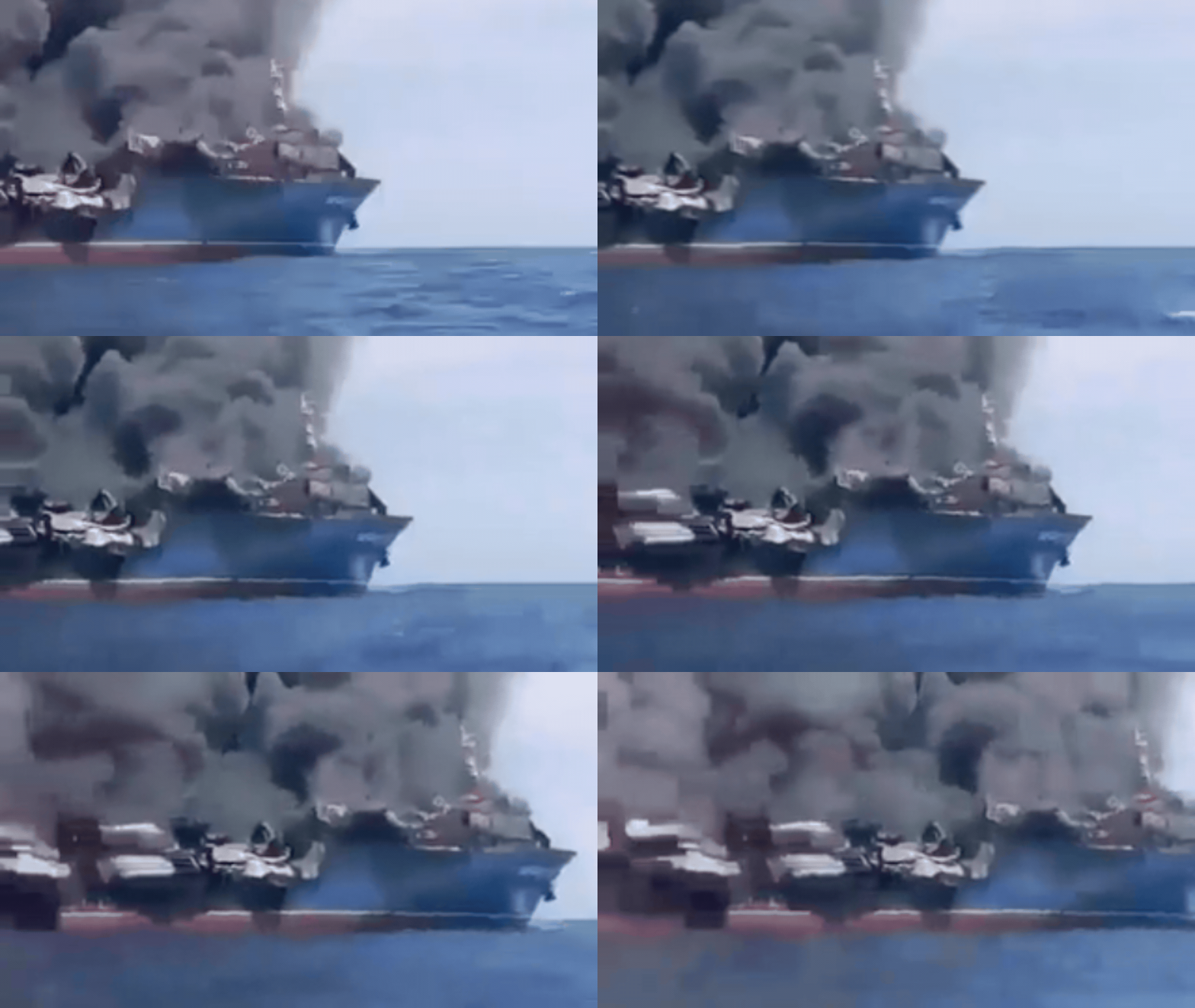
Every single headline currently screaming about an imminent kinetic explosion between Washington and Tehran is missing the point. The mainstream media feeds on the dopamine hit of impending doom, recycling tired scripts about timely and precise attacks, red lines, and diplomatic cliffs. They want you to stare at the flashing lights of naval carriers and proxy militias. They want you terrified.
And they are completely wrong.
I have spent decades watching foreign policy analysts panic over shadows while actual power brokers operate in plain sight. Real deterrence does not look like a megaphone warning or a choreographed missile strike. It looks like cold calculus, quiet supply chains, and economic bloodletting that never makes the evening news. If you are waiting for a blockbuster war, you are looking for a theatrical production that neither side can afford or actually wants.
Stop buying the script. Here is what is really happening beneath the surface noise.
The Lazy Consensus of Total Annihilation
The narrative peddled by wire services and cable news anchors relies on a lazy premise. The template goes like this: diplomacy stalls, a warning is issued, an attack follows, and the region goes up in flames. This reductionist view assumes governments operate like hormonal teenagers looking for a bar fight.
History proves otherwise. Look at the past four decades of friction in the Persian Gulf. The architecture of modern statecraft relies on controlled escalation, not accidental Armageddon.
When Tehran threatens a precise response, the financial and geopolitical markets treat it like a countdown clock to a blockbuster disaster. That is a fundamental misread of Iranian strategic culture. Tehran does not launch total wars because total wars destroy the regime. Washington does not launch direct invasions because invasions yield zero return on investment and create multi-trillion-dollar quagmires.
Both capitals are trapped in a dance of perpetual friction. Friction is cheap. War is ruinous. The lazy consensus ignores the economic reality anchoring both nations to the status quo.
The Anatomy of a Paper Tiger Narrative
Let us define terms clearly. When analysts throw around phrases like regional war, they are usually talking about asymmetric skirmishes dressed up in apocalyptic language.
A true regional war involves total mobilization, industrial capacity shifted to military production, and the wholesale destruction of state apparatuses. What we actually see in the Middle East is managed friction. Proxy networks, cyber operations, economic sanctions, and localized maritime harassment form the baseline of this dynamic.
I have watched defense contractors and think tanks inflate threats for decades simply to secure budget increases and consultancy contracts. Fear is a lucrative business model. When a report drops citing anonymous intelligence officials warning of an imminent strike, check who benefits from the panic.
Why Direct Conflation Fails
- Economic Self-Harm: A full-scale kinetic conflict spikes global oil prices to levels that wreck fragile Western economies while cutting off the very export markets Tehran relies on for survival.
- Asymmetric Preference: Both states prefer the gray zone. It allows them to posture for domestic political consumption without crossing the threshold that triggers total retaliation.
- Internal Pressures: Both governments face severe domestic scrutiny. Neither can afford the societal shock of body bags returning home en masse for a conflict with no clear strategic endgame.
Dismantling the People Also Ask Illusion
Type any variation of the current tensions into a search engine, and you will see the same repetitive queries. Let us address them with the brutal honesty the mainstream avoids.
Is a war between the United States and Iran inevitable?
No. Inevitability is a myth sold by pundits who cannot read a balance sheet. War happens when miscalculation outweighs rational self-preservation. Despite the rhetoric, military planners in both countries maintain strict guardrails to prevent accidental escalation. Hotlines exist for a reason. Backchannel communications through intermediaries like Oman or Qatar run twenty-four hours a day, seven days a week.
What happens if diplomacy completely fails?
Nothing cinematic. If diplomacy hits a brick wall, the world does not descend into a mushroom cloud. Instead, the dial simply turns on the existing proxy and economic pressure cooker. Cyber attacks ramp up. Tanker seizures happen. Sanctions tighten another notch. The failure of diplomacy does not mean the start of a hot war; it means a return to a colder, nastier version of the status quo we have lived with since 1979.
The Real Game Being Played
While the public fixates on military posturing, the actual struggle is happening in financial ledgers and technological infrastructure.
Iran is integrating deeper into alternative economic blocs like the Shanghai Cooperation Organisation and expanding bilateral trade bypasses with Asian superpowers. Washington is attempting to counter this through multilateral naval patrols and secondary sanctions enforcement. This is a war of attrition fought with SWIFT codes, drone exports, and digital espionage.
Imagine a scenario where the physical military hardware sitting in the Gulf becomes entirely irrelevant because the conflict has already shifted to digital infrastructure and currency corridors. That future is not coming; it is already here.
By focusing your attention on the threat of a kinetic flashpoint, you miss the quiet restructuring of global trade routes that will define the next century.
The Downside of the Quiet Reality
My contrarian take has its own blind spots. Accepting that a massive war is unlikely does not mean the region is safe. In fact, normalizing this perpetual low-intensity gray-zone conflict creates a permanent state of localized misery for the populations caught in the crossfire of sanctions and proxy violence.
When states avoid total war, they often outsource their hostility to proxy groups and economic strangulation. The human cost does not disappear just because television networks stop running countdown timers.
The danger is not that a sudden war will wipe us out tomorrow. The danger is that we accept a permanent state of low-grade hostility as normal, letting it quietly rot the economic and social fabric of the nations involved while we wait for a storm that never arrives.
Put down the panic button. Look past the headlines. Stop watching the carrier groups and start watching the money.