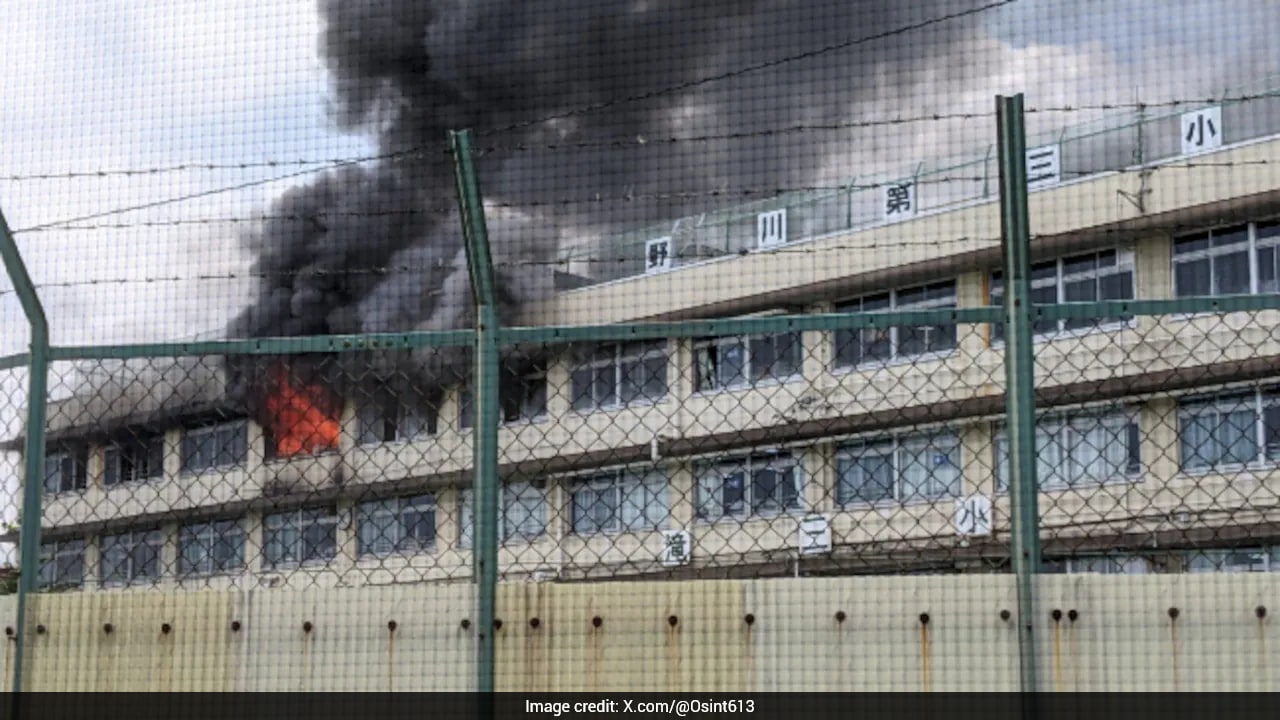
The media is currently patting a Tokyo elementary school on the back because three hundred children and staff members walked out of a burning building without a single casualty. The sirens blared. The lines formed. The protocol worked.
Except it didn't.
If your standard for operational success is "nobody died this time," you are running a ticking time bomb, whether you manage a school district in Japan or a multi-million-dollar enterprise infrastructure. Relying on blind luck disguised as "impeccable execution" is the single greatest risk management failure in modern organizational design.
We love a good survival story because it lets us ignore the structural rot underneath. The recent incident in Tokyo isn't an example of flawless emergency preparedness. It is a loud, flashing warning sign that our approach to crisis management, logistics, and human behavior is fundamentally broken.
The Flaw of the Linear Line
Standard evacuation theory assumes human beings operate like data packets in a clean network. Fire happens. Alarm sounds. People exit in an orderly, linear fashion.
This is a dangerous lie.
In a real crisis, physical choke points turn organized lines into crowds, and crowds turn into crush hazards. When three hundred people attempt to exit a structure simultaneously through designated bottlenecks, the math changes.
Logistics experts know that throughput decreases as density increases past a specific critical threshold. In fluid dynamics and crowd management, this is known as the faster-is-slower effect. When individuals hurry or panic, the physical friction at exit portals creates temporary arches or blockages, actually slowing down the total evacuation rate.
If you design your safety protocols around the assumption that people will move at a steady, uninterrupted pace, you haven't built a safety plan. You have built a math equation that only works on paper.
The Mirage of "Zero Casualties"
I have spent years auditing corporate risk strategies and structural response frameworks. The absolute worst metric you can use to evaluate a system's resilience is a binary outcome like "zero casualties."
Binary metrics hide the near-misses. They mask the close calls, the jammed doors, the communication dropouts, and the structural failures that occurred but happened not to kill anyone this time.
Imagine a scenario where a manufacturing plant suffers a massive chemical leak. The shift supervisor forgets the protocol, the secondary valves fail, but a sudden shift in wind direction blows the toxic cloud away from the local town. If management looks at that event and says, "Well, nobody got hurt, so our safety system is validated," they are functionally insane.
The Tokyo evacuation succeeded despite the system, not because of it. Relying on the compliance of eight-year-olds and the absolute perfection of a handful of teachers during a high-stress event is an incredibly fragile strategy.
Stop Fixing the Panic, Fix the Architecture
When a crisis occurs, the immediate reaction from regulators and administrative boards is always the same: we need more drills. We need better training. We need to teach people how to behave under pressure.
This is backwards. You cannot re-engineer human biology in a panic scenario. Adrenaline overrides training nearly every single time.
Instead of trying to optimize human behavior to fit a rigid, outdated architectural footprint, we need to design environments that accommodate natural human error.
- Decentralized Egress: Stop funneling entire floors down central stairwells. High-occupancy buildings require distributed, immediate external escape routes that bypass shared internal corridors entirely.
- Dynamic Signage: Static exit signs are useless when smoke fills a corridor. Systems must utilize automated, sensor-driven directional guidance that actively routes people away from heat and toxic gas build-up in real time.
- Decoupled Zones: If a fire breaks out in a western wing, the eastern wing should not rely on the same communication or physical pathways to clear out. Isolation must be physical, structural, and total.
The downside to this approach? It is wildly expensive. It requires tearing down legacy infrastructure and rewriting building codes that have been protected by powerful construction lobbies for decades. It forces organizations to spend capital on invisible resilience rather than visible, marketable upgrades. But the alternative is continuing to gamble with human lives on the roulette wheel of probability.
The Premise of Your Safety Question is Flawed
People always ask: "How can we make our staff follow evacuation protocols more effectively during a sudden emergency?"
That is the wrong question.
The real question is: "How do we build a system where the total failure of human protocol still results in a safe outcome?"
If your business continuity plan or your physical safety plan requires everyone to do exactly the right thing at exactly the right time, your plan is garbage. True resilience is not the absence of chaos. It is the ability of a system to absorb chaos, break apart predictably, and still preserve its core assets.
The Tokyo school got lucky. The wind was low, the smoke moved predictably, and the exits happened to be clear. Do not mistake their luck for your blueprint.
Stop running compliance drills that teach people how to stand in neat rows. Start breaking your systems on purpose to see where the real bottlenecks hide before the fire does it for you.


