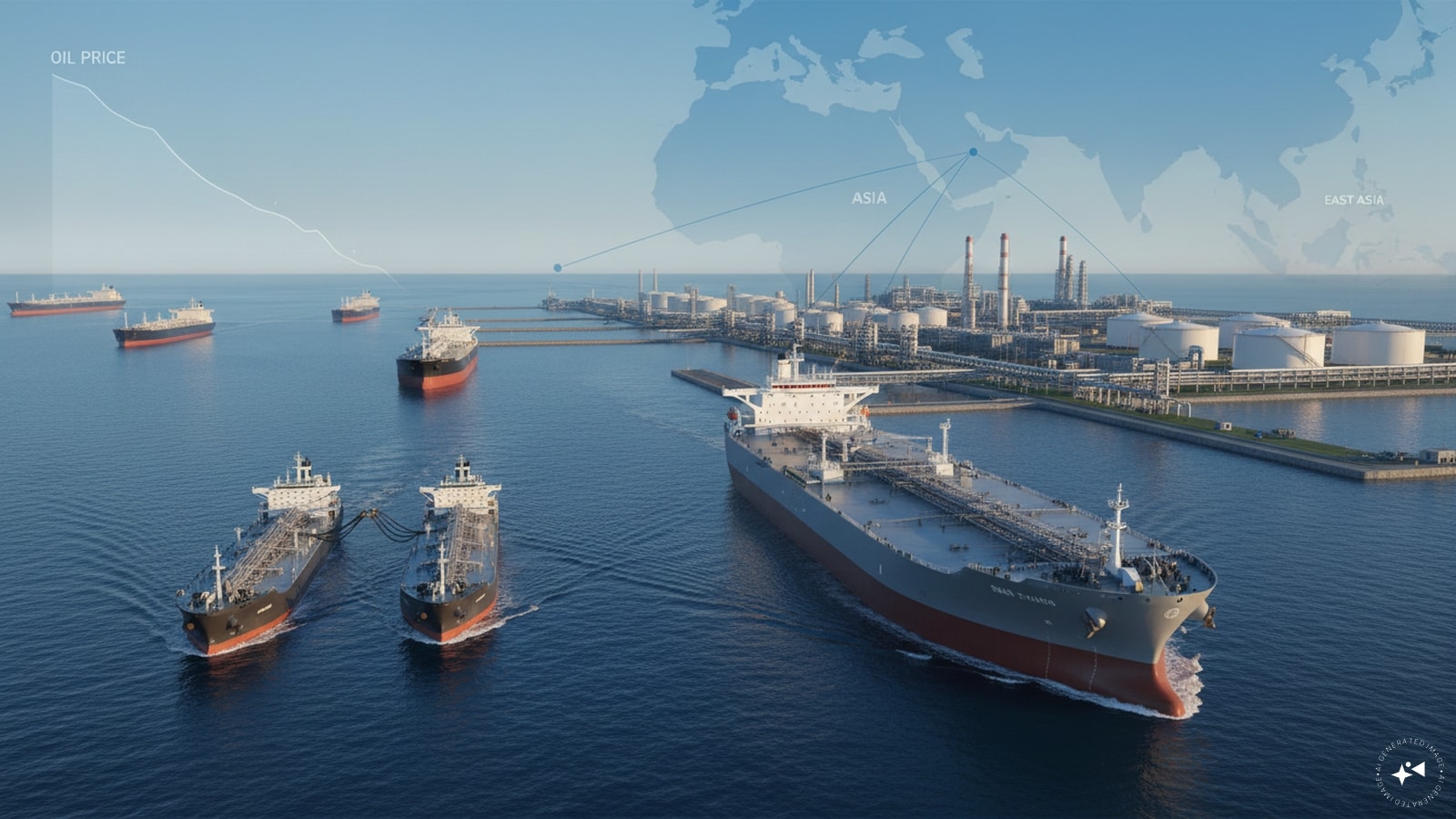
The lazy consensus of global news desks is that every missile strike, bridge hit, and intercepted vessel in the Black Sea is a tactical chess move in a territorial stalemate.
It is not.
When wire services breathlessly report that Russia has targeted a Kyiv bridge or claimed hits on maritime cargo in the Black Sea, they treat the theater like a nineteenth-century naval skirmish. They look at coordinates, tonnage, and casualty estimates. They ask whether grain corridors will close for another forty-eight hours. They miss the macro reality entirely because they are watching the splash instead of the wake.
Let us be precise. The conflict in the Black Sea basin has long ceased to be about territorial conquest or short-term logistics disruption. It is a slow-motion, high-stakes restructuring of global insurance risk, sovereign debt architecture, and maritime supply chains. Every time a missile splashes near a grain carrier or strikes a transport artery, the real economic damage is not absorbed by the steel of the bridge. It is absorbed by the London reinsurance market, the yield curves of Eastern European sovereign debt, and the cost of capital for every shipowner willing to run the blockade.
I have watched maritime insurers price risk during geopolitical flashpoints. When a headline screams about a Black Sea escalation, risk committees do not panic over the lost tonnage. They quietly recalculate the war-risk premium on every hull traversing the Bosporus. A five-basis-point bump on a grain panamax sounds invisible on a daily news ticker. Multiply it by thousands of voyages, and you have quietly drained millions of dollars out of agricultural liquidity, starving peripheral economies long before a single grain silo burns.
The Geography of Illusion
To understand why the mainstream framing is fundamentally broken, look at the geography of the targets. Bridges in Kyiv or transit nodes near the coast are treated as vital military chokepoints. Tactically, yes. Economically and structurally, they are psychological leverage points designed to manipulate sentiment far beyond the theater of operations.
When a bridge takes a hit, the immediate Western commentary focuses on supply line bottlenecks for the defenders. This assumes a static model of trade where goods must follow a single paved line. But capital and goods are fluids; they adapt, they reroute, they find rail links through Poland or alternate trucking corridors through Romania.
The real friction is not physical transport. It is trust.
War is ultimately a confidence game. The moment uncertainty spikes, the cost of transacting explodes. By keeping the Black Sea in a state of perpetual, low-grade volatility, Moscow achieves a strategic objective that conventional military analysts routinely underestimate: weaponized volatility. You do not need to sink every ship to cripple an export economy. You merely need to make insuring that ship so agonizingly expensive that the buyer looks elsewhere, shifting trade routes and drying up foreign exchange reserves.
Consider the insurance mechanics. Marine war-risk insurance operates on a strict notice-of-cancellation basis—typically seven days. Underwriters can reprice the entire basin overnight. When headlines amplify every minor strike as an existential catastrophe, underwriters respond rationally: they hike rates or pull coverage entirely. The media thinks they are reporting a tactical escalation; in reality, they are acting as the unpaid marketing department for maritime insurance cartels padding their balance sheets.
Dismantling the Grain Corridor Obsession
Every time a grain vessel is caught in the crossfire or a port facility takes shrapnel, commentators shriek about global food security and looming starvation in the Global South.
It is a lazy narrative that collapses under the weight of actual trade data.
Global grain markets are resilient, ruthless, and remarkably elastic. When traditional Black Sea ports face friction, global supply chains pivot. Brazilian soybean and corn exports surge. European rail corridors absorb what trucks cannot. The bottleneck is rarely physical scarcity; it is logistics finance and currency depreciation.
Yet, analysts continue to frame every Black Sea maritime incident through the lens of an impending global famine. Why? Because fear sells clicks, and simplistic narratives about starving populations require zero baseline understanding of futures markets or basis trading.
If you want to understand the true impact of these strikes, stop looking at the grain and start looking at the balance sheets of Black Sea littoral states. Look at how insurance costs erode the profit margins of independent traders while consolidating market share among massive, well-capitalized multinational commodities houses that can self-insure or absorb spikes in freight rates. Every missile strike acts as a silent regulatory moat, weeding out smaller players and concentrating trade in fewer, more monopolistic hands.
The Structural Blind Spot
The deeper flaw in contemporary reporting is the assumption that kinetic actions dictate economic reality. In modern industrial conflict, the economic fallout precedes and outlives the kinetic event.
Imagine a scenario where every physical bridge in a disputed corridor remains standing, but the international insurance pool permanently labels the entire maritime zone a high-risk exclusion area. The physical infrastructure is intact, but the economic utility drops to zero. Conversely, a bridge can be struck, repaired with prefabricated steel within seventy-two hours, and traffic resumes—while the psychological scar on investor confidence lingers for quarters.
Mainstream journalism consistently gets this backwards because reporters are trained to look at fire and smoke, not yield curves and credit default swaps. They cover war like a sports match: who scored, who defended, who lost territory today.
History shows that protracted conflicts are rarely decided by dramatic breakthroughs on a single bridge or the sinking of a handful of auxiliary vessels. They are decided by attrition of capital, currency stability, and the endurance of supply chains under sustained fiscal stress.
When you read that a bridge was hit or a vessel was targeted, do not ask how many tons of concrete fell into the water. Ask who is paying the insurance premium tomorrow, how many shipping lines just diverted their fleets, and which financial intermediaries are quietly pocketing the spread generated by manufactured panic.
The war in the Black Sea is not a naval battle. It is a hostile takeover of regional trade, executed with missiles as press releases. Stop reading the headlines as tactical updates and start reading them as macroeconomic weather reports.