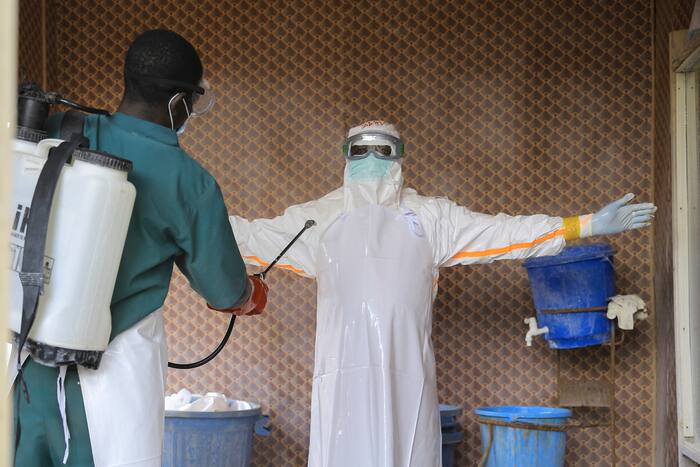
An Ebola patient gets flown out of Lagos to a high-containment hospital in Switzerland. Headlines cheer. Readers sigh in relief. Governments pat themselves on the back.
Stop cheering. That flight did not stop an outbreak. It moved a single body across a border while leaving the real battleground behind.
Conventional reporting treats medical evacuation like a clean exit door. Fly the sick person to a rich country with negative-pressure rooms, advanced dialysis, and armies of specialists. Problem solved. Except epidemiology does not care about VIP airlifts or Swiss banking precision. Outbreaks are won or lost in clinics, households, burial grounds, and supply chains—not inside a pressurized cabin crossing the Mediterranean.
I have worked alongside outbreak response teams, hospital preparedness leads, and biosecurity planners through enough panic cycles to recognize the script. Every time a high-consequence pathogen crosses an international border, coverage defaults to two extremes: apocalyptic dread or false comfort from a high-tech rescue. Both miss the mechanics that actually govern survival and containment.
The Lazy Consensus Around Medical Evacuation
Look at how standard news coverage frames an evacuation from Nigeria to Switzerland. The narrative usually runs on three lazy assumptions:
- Evacuation equals containment. Moving one confirmed patient out of West Africa supposedly reduces risk to the rest of the world.
- Wealthy hospitals equal magic cures. A Swiss biocontainment unit looks impregnable compared to an overstretched ward in a megacity of more than twenty million people.
- Originating cities are helpless. Framing Nigeria solely as a fragile export point ignores how rapid contact tracing, isolation hubs, and local clinical leadership actually stop transmission chains.
Each of those points sounds tidy on a wire report. Each falls apart under epidemiological scrutiny.
First, moving one patient does not erase transmission chains already seeded in the community. Ebola virus disease spreads through direct contact with blood, vomit, diarrhea, sweat, or other bodily fluids of an infected person—or objects contaminated with those fluids—and through remains after death. A single medevac aircraft removes one symptomatic individual. It does nothing for every unmonitored handshake, taxi ride, hospital triage line, or family caregiving shift that happened before diagnosis.
Second, high-income intensive care improves individual survival odds through aggressive supportive care—fluid resuscitation, electrolyte correction, organ support, and targeted therapeutics where available—yet even elite biocontainment wards carry razor-thin margins. In high-level isolation units, every IV line, blood draw, suctioning procedure, and waste-handling step creates exposure risk for staff wearing multi-layered personal protective equipment. Heat stress, fogged visors, and fatigue punish even veteran clinicians.
Third, dismissing the departure hub misses where real herd-level containment happens. When Nigeria faced its 2014 Ebola import crisis, containment succeeded on the ground in Lagos and Port Harcourt through aggressive case investigation, contact tracing, quarantine enforcement, and rapid isolation—not because foreign jets whisked patients away. Treating evacuation as the headline story obscures the unglamorous public health plumbing that keeps a megacity from burning.
Defining Terms Before We Wreck More Myths
Sloppy vocabulary fuels bad policy. Let us get the definitions straight before analyzing risk.
Ebola virus disease is a severe, often fatal illness in humans caused by orthoebolaviruses (historically grouped under Ebolavirus), with case fatality rates varying widely by viral species and care quality—often ranging from roughly 25% to 90% in historical outbreaks. It is not airborne like measles or influenza in ordinary community settings. Transmission requires direct contact with infectious bodily fluids or contaminated surfaces, especially during late-stage illness when viral loads climb sharply and patients experience severe gastrointestinal fluid loss.
Medical evacuation (medevac) of a suspected or confirmed high-consequence pathogen patient is not a routine charter flight. It requires specialized air transport protocols, cabin isolation or patient transport isolators, strict crew selection, route clearances, and a receiving hospital certified for high-level isolation.
Biocontainment refers to the physical engineering, operational protocols, and waste management designed to prevent pathogen escape from a laboratory or clinical unit. High-level isolation units use controlled airflow, dedicated entry and exit workflows, autoclaving or incineration of infectious waste, and strict discipline around donning and doffing personal protective equipment.
Notice what none of those terms mean: none of them mean zero risk, and none of them mean a developing health system cannot out-execute a panicked foreign response when local leadership takes charge.
What People Actually Ask—And Why the Questions Are Wrong
Search engines fill up with predictable questions whenever an evacuation story breaks. Most of them point readers toward the wrong lever.
"Is it safe to evacuate an Ebola patient to Switzerland?"
Safer than leaving them in an unequipped facility? For the patient, often yes—assuming the flight itself does not cause physiological collapse and the receiving center is genuinely staffed and drilled for filovirus care. For public health in Switzerland? Risk is low when protocols are executed without shortcuts, yet never literally zero. Every transport leg introduces movement across airports, ground ambulances, corridors, and waste streams. Risk management is about lowering probability and consequence through discipline, not pretending risk vanishes because the plane has a Swiss cross or an isolation pod.
"Why send a patient from Nigeria to Switzerland instead of treating them locally?"
Ask instead: Who benefits from that decision, and what does it cost the system left behind? Sometimes evacuation happens because of diplomatic arrangements, specialized clinical capacity, employer or insurer coverage, or bilateral agreements. Sometimes it happens because politicians and institutions want visible action. Yet pulling scarce attention, logistics, or narrative focus away from local treatment centers and contact tracers can distort priorities. A single medevac can consume logistical energy and money that would buy vast amounts of personal protective equipment, triage screening, laboratory reagents, and community outreach on the ground.
"Does evacuating a patient help stop the outbreak in Nigeria?"
No—not directly. Stopping an outbreak requires finding every exposed contact before they become infectious, isolating symptomatic cases immediately, practicing safe and dignified burials, and keeping frontline health workers protected so hospitals do not become amplification nodes. A plane taking off does not trace a single contact in Lagos, Abuja, or Kano.
The Battle Scars Behind High-Consequence Response
I have seen health systems and corporate risk teams blow millions on theater while ignoring bottlenecks that actually kill people.
I have watched organizations spend six figures on emergency extraction retainers and glossy crisis playbooks while failing to train staff on basic donning and doffing discipline—the exact moment when contaminated gloves touch bare skin or a face shield slips. I have seen facility managers obsess over exotic airborne filtration upgrades for a pathogen that spreads primarily through direct fluid contact and contaminated surfaces, while leaving biohazard waste staging disorganized and under-supervised.
I have also seen the opposite mistake: assuming low-resource settings cannot mount world-class epidemiological defense. Real-world outbreak history—including how Nigerian health authorities, international partners, and frontline responders confronted imported Ebola—proves that disciplined surveillance, rapid isolation, and relentless contact tracing beat panic every single time.
Heavy hitters in infectious disease and outbreak response—from World Health Organization emergency teams and the U.S. Centers for Disease Control and Prevention to Médecins Sans Frontières and national public health institutes—have hammered the same operational lesson for decades: speed and contact coverage beat heroic rescue missions. By the time a single patient boards a medevac plane, the clock on secondary cases in the originating community is already ticking.
Imagine a Scenario Where Every Outbreak Relies on Airlifts
Imagine a scenario where a cluster of ten cases emerges in a dense urban district, and every severe case is flown out to specialized hospitals in Europe.
What happens to the local hospital where those ten patients first showed up? If triage bottlenecks remain unfixed, if staff still lack reliable supplies of gloves, gowns, eye protection, and alcohol-based hand rub, and if community contacts are not tracked daily for twenty-one days, case numbers do not drop because ten beds emptied out. Worse, sending patients abroad can create a dangerous illusion of progress among officials while silent transmission continues in households and clinics.
Now flip the thought experiment. Imagine a scenario where zero patients leave the country, and every dollar, helicopter hour, and specialist consult goes into rapid isolation wards, real-time lab diagnostics, contact tracing teams, safe burial coordination, and clinical mentorship for local doctors and nurses. Which approach bends the epidemic curve? The one that breaks chains of transmission where they form—not the one that exports a single case.
Where My Contrarian Stance Can Backfire
A sharp contrarian take is useless if it hides its own blind spots. Pushing back against medevac hype carries real risks if taken too far.
First, denouncing evacuation can slide into cruelty toward individual patients. A sick human being is not a policy talking point. When a patient has a realistic chance of survival through advanced supportive care or specialized clinical management that is genuinely unavailable nearby, humane medical ethics weigh heavily in favor of giving them the best shot at life.
Second, skepticism toward foreign involvement can undervalue genuine international solidarity. Outbreaks strain even strong health systems. Surge epidemiologists, diagnostic labs, logistics support, and supply chains from abroad can save lives—provided they reinforce local authority rather than sideline it.
Third, dismissing border-crossing risk completely is reckless. While casual community spread of Ebola is far less explosive than respiratory viruses, imported cases still demand disciplined screening, rapid isolation, and zero complacency in receiving hospitals. A single missed symptom or sloppy waste protocol in a non-endemic country creates avoidable fear and secondary exposure.
Actionable Moves That Actually Work
If you run operations, advise executives, cover health policy, or manage travel and duty of care when a story like an evacuation from Nigeria to Switzerland hits the wire, skip the knee-jerk reaction and run this playbook instead:
- Audit transmission mechanics, not headlines. Check whether a pathogen spreads via respiratory droplets/aerosols or direct contact with bodily fluids and contaminated surfaces. Align every control measure with actual transmission biology rather than media sensationalism.
- Fund local containment before extraction. If your organization operates in an affected region, prioritize local clinic protection, supply chains, staff safety, and coordination with national health authorities over flashy evacuation promises that may fail mid-crisis due to flight bans or quarantine rules.
- Drill the unglamorous choke points. Test real-world failure modes: patient triage screening at entry points, safe isolation room turnover, donning/doffing buddies, and infectious waste containment. Glamour does not stop contamination; checklists and muscle memory do.
- Track contacts and incubation windows, not just confirmed counts. A single evacuated case tells you almost nothing about trajectory. Watch contact tracing completeness, time from symptom onset to isolation, and health-worker infection rates—those are the true vital signs of outbreak control.
- Separate individual care from population strategy. Acknowledge that saving one patient via specialized care is a clinical event, while halting an outbreak is a public health operation. Do not confuse the two.
One plane flying to Switzerland makes a dramatic photo. Stopping a virus takes grit, math, and discipline on the ground.