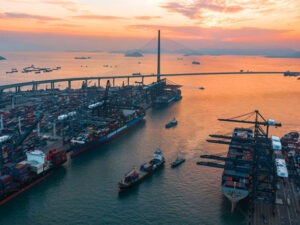
Brussels, Paris, and Berlin are panicking over a number.
The European Union’s trade deficit with China has hovered near record highs, and the political establishment has decided this is an existential crisis. Leaders are posturing, launching anti-subsidy investigations into Chinese electric vehicles, and threatening tariffs under the banner of "de-risking."
It makes for great political theater. It is also completely misguided economic policy.
The conventional narrative pushed by European officials treats trade like a scoreboard from a high school football game: exports are points scored, imports are points conceded, and a trade deficit means you are losing. This logic is as outdated as it is dangerous. By treating China's manufacturing dominance as a theft of European prosperity rather than a structural consequence of Western policy and consumer choices, Europe is setting itself up for a self-inflicted recession.
Here is the uncomfortable truth: Europe doesn't have a China problem. Europe has a competitiveness problem, and tariffs won't fix it.
The Flawed Scoreboard of the Bilateral Deficit
To understand why the current panic is misplaced, you have to dismantle the primary metric politician love to cite: the bilateral trade deficit.
When a German consumer buys a €35,000 Chinese-built electric vehicle, or a French company imports solar panels manufactured in Jiangsu, European trade stats record a net negative. What those stats fail to capture is the reality of global value chains.
Consider how modern manufacturing actually works:
- Upstream Design and Value: European firms design the high-value components, write the software, and control the brand IP.
- Intermediate Goods: A massive portion of Chinese exports to the EU consists of intermediate components—batteries, processing units, raw refined materials—that European manufacturers rely on to produce their own finished goods cheaply.
- Consumer Surplus: Lower prices on clean tech and consumer goods act as an implicit subsidy to European households, keeping inflation lower than it would otherwise be during a volatile economic period.
Measuring trade balance purely by gross financial flows across a single border ignores where value is created and captured. If Europe slaps a 25% tariff on Chinese green technology to "fix" the balance sheet, it doesn't miraculously create a thriving domestic supply chain overnight. It simply drives up costs for European citizens and slows down energy transitions.
I have sat in boardrooms where executives spent millions trying to map out supply chain "de-shoring" strategies to appease political rhetoric. The result? They realize that replacing Chinese manufacturing infrastructure requires trillions in capital expenditure, decade-long permitting cycles in Western markets, and higher energy prices that destroy any hope of margin. The math simply does not work.
You Cannot Blame Subsidies for European Inertia
The standard defense from Paris and Berlin is that China "cheats" by heavily subsidizing its industrial base—specifically in green tech, batteries, and EVs.
Is Beijing subsidizing its critical industries? Absolutely. China’s state-capitalist model relies heavily on targeted state capital, cheap land grants, and subsidized energy for strategic sectors.
But calling this "unfair" misses the broader point: China picked a strategy fifteen years ago and executed it with relentless discipline while Europe rested on its industrial laurels.
While European regulators spent the last decade building burdensome compliance frameworks, bureaucratic red tape, and over-regulating their own tech sector, China built supply chain dominance in lithium refining, battery chemistry, and solar manufacturing.
+-------------------------------------------------------------------+
|               THE REAL DIFFERENCE IN STRATEGY                     |
+-------------------------------------------------------------------+
| CHINA                                | EUROPE                     |
| • Long-term industrial strategy      | • Reactive regulatory regimes  |
| • Heavily scaled supply chains       | • High energy and labor costs |
| • Focus on hardware & scale          | • Bureaucratic friction        |
+-------------------------------------------------------------------+
Attempting to punish Chinese firms for being cheaper and faster is not a strategy; it is a temper tantrum. If Beijing wants to use Chinese taxpayer money to subsidize cheap solar panels and EVs for European consumers, Europe should be thanking them for funding its green transition on the cheap, not building economic walls to keep low prices out.
"De-Risking" Is Just Protectionism in a Designer Suit
Policy circles love the term "de-risking." It sounds sophisticated, measured, and strategic—a clever middle ground between full decoupling and naive free trade.
In reality, "de-risking" is merely classic protectionism rebranded for a modern audience.
When politicians force companies to source higher-cost inputs from domestic or "friendly" third-party nations, they are adding structural friction to the economy. This friction translates directly into higher production costs, lower profitability for European exporters, and reduced purchasing power for consumers.
The Hidden Tax of Supply Chain Re-Engineering
Let's run a simple thought experiment.
Imagine a European automaker forced by regulatory pressure to source 100% of its lithium-ion battery cells domestically within the EU.
- Energy Costs: Industrial electricity rates in Germany or France are significantly higher than in major manufacturing hubs in Asia.
- Capital Expenditure: Building a Giga-factory in Europe requires navigating years of environmental impact assessments, local pushback, and labor union negotiations.
- Unit Cost: The cost per kilowatt-hour ($/kWh) of the European battery ends up 30% higher than its Chinese counterpart.
The result? The European automaker must either absorb the loss—destroying shareholder value and R&D capital—or pass the cost onto consumers, making European cars non-competitive in the global market.
By trying to protect domestic manufacturing from Chinese competition at home, Europe makes its own industries uncompetitive abroad.
The Real Scars: Why European Companies Are Moving to China Anyway
Here is the irony that politicians in Berlin and Paris refuse to mention: while politicians talk about shrinking the trade deficit, Europe's own industrial champions are doubling down on China.
Major chemical giants, automotive groups, and industrial engineering firms are actively expanding their Chinese footprints. Why? Because China is no longer just a cheap assembly line; it is a massive market and an R&D ecosystem that moves faster than anything in Western Europe.
If you operate a high-volume manufacturing firm today, you don't stay in Europe because the regulatory environment is supportive. You stay out of legacy obligations. When executives look at where to put their next billion dollars of growth capital, Europe's high energy costs, aging demographics, and sclerotic bureaucracy make it an increasingly tough sell.
Punishing Chinese trade doesn't solve any of those underlying structural issues. It conceals them.
What Europe Should Do Instead (If It Actually Wanted to Win)
If the EU wants to reduce its economic vulnerability, it needs to stop playing defense with tariffs and start addressing its own competitiveness crisis.
- Deregulate Industrial Innovation: Slash the bureaucratic timeline required to build industrial facilities, mine local critical minerals, and deploy capital within the bloc.
- Lower Energy Costs: Prioritize reliable, low-cost base-load energy for manufacturing instead of taxing heavy industry out of existence.
- Stop Fearing Foreign Capital: Instead of blocking Chinese investment, encourage Chinese EV and battery companies to build factories inside Europe using local labor, just as the US did with Japanese automakers in the 1980s.
- Focus on Value Capture, Not Volume: Accept that low-margin hardware manufacturing has moved east. Double down on deep-tech, software, bio-tech, and advanced precision engineering where Europe still holds a structural edge.
Trade deficits are not an inherent sign of economic weakness, just as trade surpluses are not proof of prosperity. Deficits simply reflect deep macroeconomic balances, investment flows, and consumer preferences.
If Europe continues down the path of defensive tariffs and nationalistic trade policy, it won't fix the deficit. It will simply create a poorer, slower, less competitive continent hidden behind a wall of expensive, state-protected industries.
Stop blaming Beijing for playing the game better. Start fixing the domestic policy failures that made Europe easy to beat.