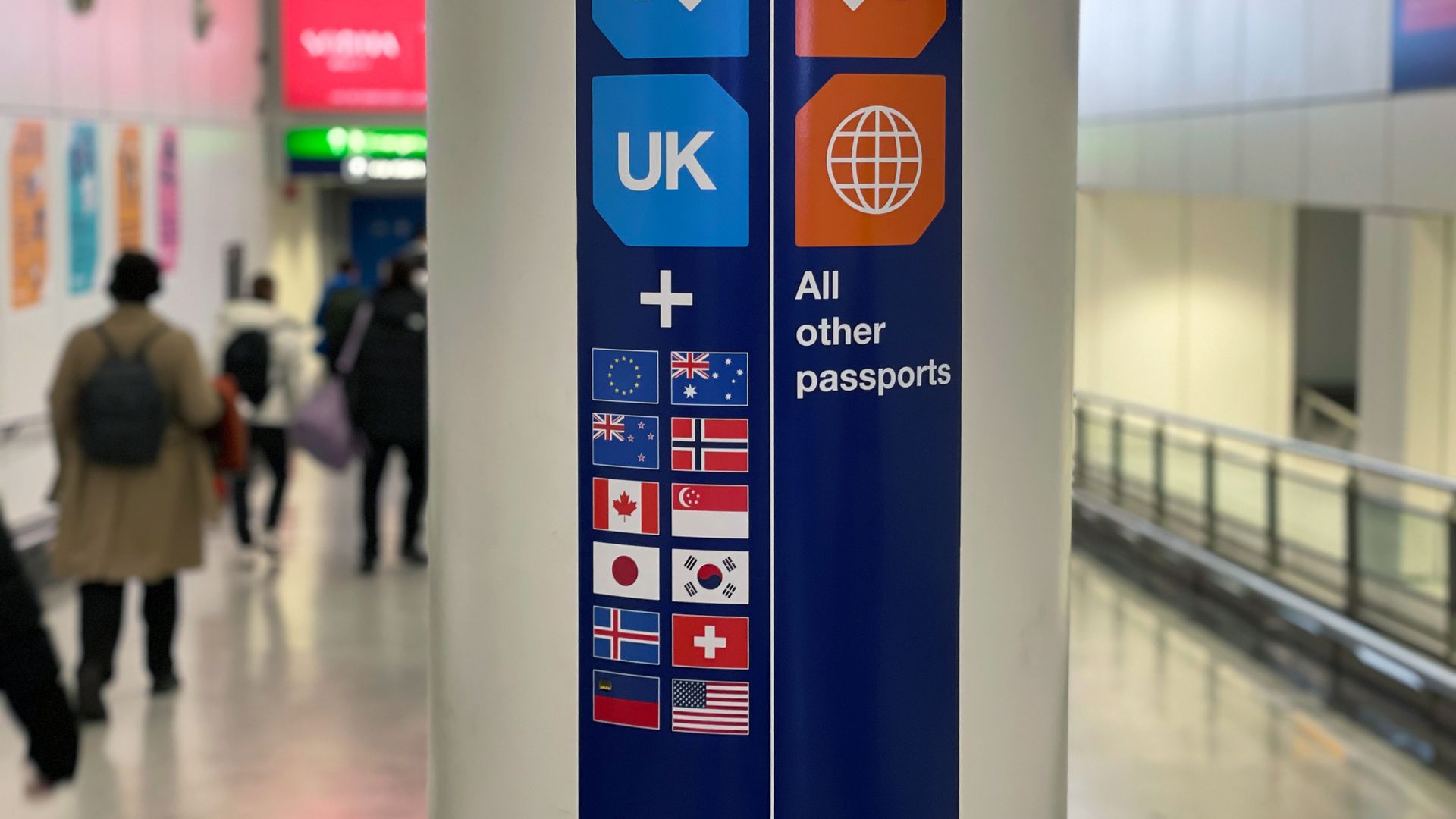
British media is currently obsessed with a ghost story. The narrative is predictably tired: the EU’s upcoming Entry/Exit System (EES) is a "technical disaster" waiting to happen, "glitches" are the new national security threat, and British holidaymakers are doomed to spend their summers in Dover-sized purgatory.
It is a comfortable, lazy consensus. It frames the UK as the victim of European bureaucracy or failing code. But this obsession with "technical difficulties" is a massive distraction from the cold reality of modern sovereignty. The delays aren't a bug. They are the feature. For a closer look into this area, we suggest: this related article.
Stop looking for a software patch. Start looking at the hardware of geopolitics.
The Myth of the Technical Glitch
Let’s dismantle the biggest lie first. Every report cites "IT issues" or "unprepared databases" as the primary reason for EES delays. This is a fundamental misunderstanding of how high-stakes biometric infrastructure is deployed. For additional information on this topic, comprehensive analysis can be read on Travel + Leisure.
In twenty years of tracking border tech, I’ve seen systems fail, but they rarely fail because the "code is hard." They fail because of a lack of political will to fund the physical footprint required to support that code. The EES requires every non-EU traveler to provide fingerprints and a facial scan. The "glitch" isn't in the software; it’s in the physical reality that a 19th-century port like Dover or a cramped terminal at St Pancras cannot physically fit the kiosks needed to process thousands of people at once.
We are blaming the digital layer for a structural failure. The media calls it a "technical difficulty" because that sounds temporary. It sounds like something a developer in Brussels can fix with a Friday night push to production. They can't. This is a spatial crisis, not a digital one.
Biometrics Are Not Faster
The travel industry has sold a dream: biometrics will make travel "seamless." They lied.
When you used to show a paper passport, a trained border agent took roughly 45 seconds to glance at your face, scan the machine-readable zone, and stamp the book. The EES process, in its current iteration, is projected to take up to three minutes per person for the initial registration.
- Standard check: 45 seconds.
- EES registration: 180 seconds.
In a queue of 500 passengers—the size of one Eurostar train—that is the difference between a 6-hour wait and a 25-hour wait. These aren't "extra checks." This is a total recalibration of how time works at a border. If you think a software update is going to shave two minutes off the time it takes to physically capture ten high-quality fingerprints from a toddler or an elderly traveler with worn ridges, you are living in a fantasy.
The ETIAS Illusion
Then there is the ETIAS—the European Travel Information and Authorisation System. The "competitor" articles treat this like a visa. It isn't. It’s a data-harvesting operation.
The lazy take is that ETIAS is a "Brexit tax." While the €7 fee is annoying, the real cost is the data profile you are handing over before you even pack a bag. The EU is building a massive, interconnected neural network of traveler data. This isn't about security in the way we usually think—catching the "bad guys." It’s about algorithmic management of "low-risk" populations.
By the time you reach the border, the system has already decided your risk profile based on your digital footprint, travel history, and socio-economic indicators. The "checks" at the border are merely the physical confirmation of a digital sentence already passed.
The Sovereignty Tax Nobody Admits
We need to be brutally honest about the "Why."
British travelers are experiencing the friction of being a "third-country national." For decades, the UK enjoyed the benefits of being an insider while complaining about the rules. Now, the rules are being applied with mechanical indifference.
The EU has no incentive to make this fast for you.
When a system is "hampered by technical difficulties," it provides the perfect diplomatic cover for slow-walking a process that emphasizes a hard border. If the French or the Belgians wanted to solve the Dover queues, they would simply waive the biometric requirement during peak times. They won't. Because the moment you waive the requirement, the border loses its power.
Friction is the point. Friction reminds you exactly where one jurisdiction ends and another begins. The "technical difficulties" are a convenient scapegoat for a very deliberate political hardening.
The Passport is a Liability
If you are still carrying a physical passport and relying on "human" border lanes, you are holding a legacy asset in a digital-first world.
The future belongs to the "Known Traveler." The only way to bypass the EES chaos isn't through better government IT; it’s through total surrender of privacy. Programs like Global Entry in the US or the various Registered Traveller schemes are the only way out.
But here is the catch: to save ten minutes at the border, you must give the state a 24/7 window into your life. You aren't buying convenience; you are trading your anonymity for a faster lane. Most people will make that trade without thinking. They shouldn't.
How to Actually Navigate the New Border
If you want to avoid the "glitches" and the 14-hour queues, stop following the advice in the Sunday supplements.
- Stop traveling on peak "Switcher" days. The EES databases will crash on Friday evenings and Monday mornings. Not because the code is bad, but because the server load from simultaneous biometric uploads at every EU entry point will create a bottleneck that no load-balancer can handle.
- Avoid the "Choke Points." Dover, Folkestone, and St Pancras are physical bottlenecks. If you are a British traveler, fly into smaller regional airports in the EU where the volume of third-country nationals is lower. The "technical difficulty" is magnified by the crowd.
- Assume the first year is a write-off. No complex biometric system has ever launched without a 40% failure rate in the first six months. This isn't pessimism; it's engineering reality.
The Data Trap
What the media calls "border checks," I call the "Great Enrollment."
The EU is enrolling 1.4 billion people into a centralized biometric database. This is the largest peacetime surveillance project in history. Every time a "glitch" is reported, it’s usually the system failing to verify a face or a fingerprint against a central server in Strasbourg.
Why does this matter to you? Because once you are in the system, you never leave. Your "technical difficulty" today is a permanent digital record tomorrow. If the system misidentifies you once, you are flagged for "secondary inspection" for the rest of your life.
The British public is being told to worry about "wait times." They should be worrying about "false positives."
The End of Casual Travel
The era of the "casual" weekend trip to Paris or Amsterdam is dying. Not because of a lack of flights or trains, but because the administrative overhead of leaving the UK has become too high.
When you add ETIAS pre-clearance, EES biometric enrollment, and the inevitable physical queues, a 2-hour trip becomes an 8-hour ordeal. This isn't a "glitch." It is the intentional de-globalization of the individual.
Governments realize that they cannot stop the flow of people, so they are making the flow as painful as possible to manage the numbers. They are using "technology" as a gatekeeper. If the system is "down," the border is effectively closed. It’s the perfect "force majeure" for the 21st century.
You are being told that the system is broken. It isn't. It is working exactly as intended. It is filtering you, timing you, and recording you.
The next time you see a headline about "technical difficulties" at the EU border, don't roll your eyes at the IT department. Recognize it for what it is: the new iron curtain, and this time, it’s made of code.