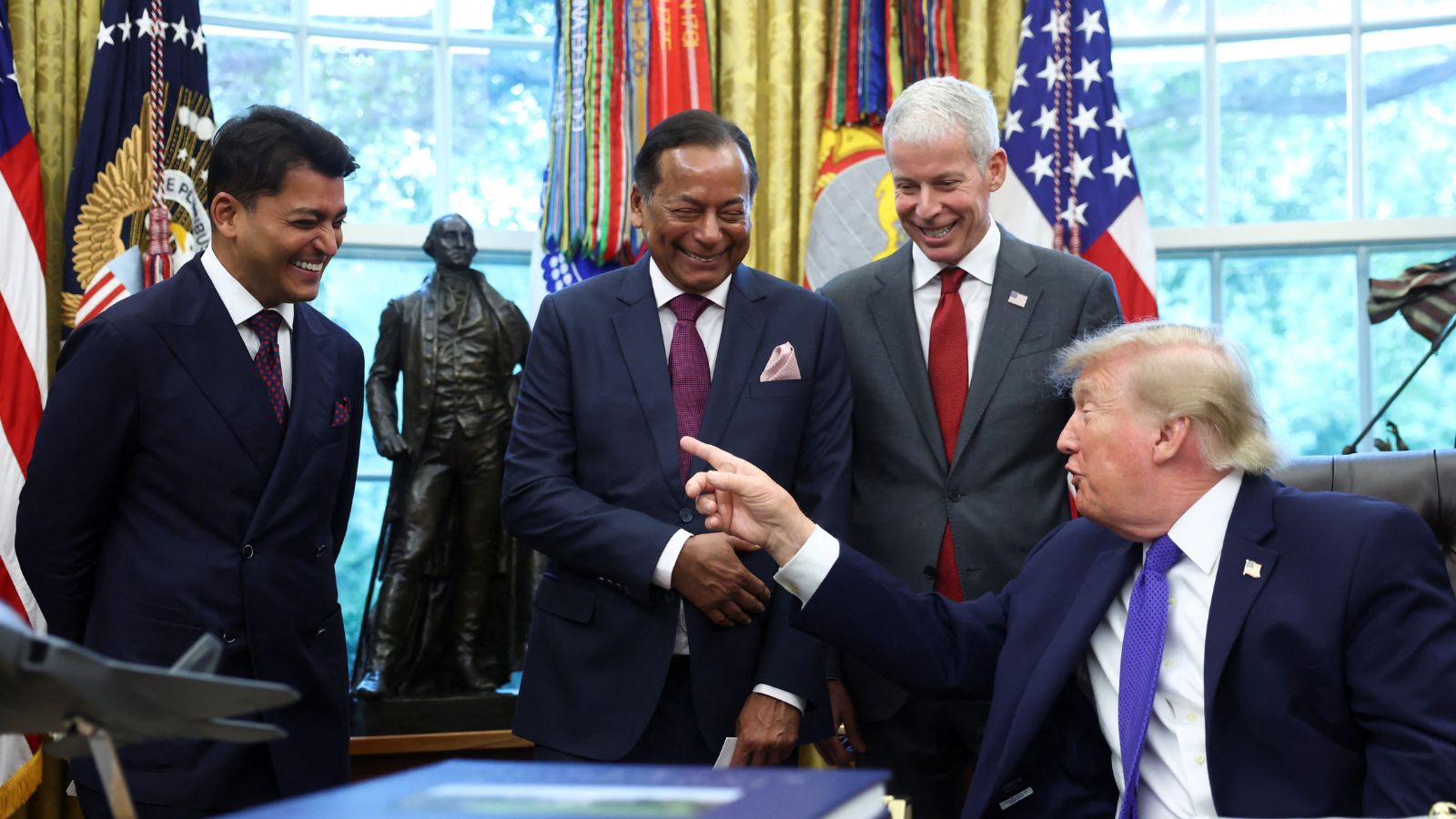
The headlines rolled in like a coordinated ticker tape. Donald Trump grabbed a microphone, flashed that familiar grin, and announced that India’s Essar Group was dropping eighteen billion dollars to construct the largest steel plant in the United States right in the middle of Iowa. The mainstream press did what it always does. They swallowed the press release whole, regurgitated the staggering figure, and framed it as a miraculous renaissance for American manufacturing.
It is a fairy tale. You might also find this related coverage interesting: What Most People Miss About the Massive Essar Steel Deal in Iowa.
I have watched conglomerates announce capital expenditure mega-projects for two decades. I have sat in boardrooms where executives float nine-figure numbers simply to juice market sentiment or extract regulatory concessions from local governments desperate for a ribbon-cutting ceremony. When you unpack the physical, logistical, and economic realities of dropping a massive steelworks into the American heartland, the eighteen-billion-dollar figure stops looking like an industrial triumph and starts looking like an expensive ghost ship.
Stop asking when construction starts. Ask why anyone thinks virgin primary steel production makes economic sense in the middle of an agricultural state with zero iron ore mines, exorbitant scrap transit costs, and an energy grid that will buckle under the sheer amperage required. As reported in latest coverage by Harvard Business Review, the implications are significant.
The Geographic Illusion Of The Heartland
The lazy consensus is that Iowa offers cheap land, friendly taxes, and a central location. Proponents point to the map and say you can ship steel anywhere from the Midwest.
Geography disagrees.
Steelmaking requires raw inputs on a scale that defies casual imagination. You need millions of tons of iron ore or high-grade scrap, millions of tons of metallurgical coal or natural gas, and immense volumes of cooling water. Iowa does not mine iron ore. Essar will have to haul raw inputs hundreds of miles by rail or barge, paying top dollar for freight logistics before a single furnace is ever lit.
Compare this to traditional domestic production hubs in Northwest Indiana or the Ohio River Valley. Those regions grew organically because they sat directly on top of or adjacent to the logistics arteries of the Great Lakes and the Mississippi river system, tied directly to integrated supply chains that have spent a century optimizing transport costs. Dropping a Greenfield mega-plant in Iowa is like building a massive shipyard in the middle of the Sahara because the sand is free. You save on real estate and bleed out on freight.
The Scrap Metal Paradox And The Electric Arc Lie
Most modern American steel expansion relies on Electric Arc Furnaces. EAFs melt down scrap metal rather than reducing raw iron ore with coal in a blast furnace. It is cleaner, faster, and cheaper.
Except there is a catastrophic flaw in trying to build the largest plant in the country on an EAF model in a low-density agricultural state: scrap availability.
Scrap steel is a localized commodity. It comes from urban demolition, automotive shredders, and heavy industrial manufacturing waste. Where do you find heavy industrial waste? In the Rust Belt, major metropolitan manufacturing centers, and coastal shipping hubs. Iowa is a powerhouse in agriculture and wind turbines, but it is not a heavy industrial scrapyard. To feed a plant of this magnitude, Essar will have to bid aggressively against existing domestic mills for scrap shipped in from Chicago, Detroit, and Minneapolis.
Driving up feedstock acquisition costs to feed a monster facility hundreds of miles inland is a fantastic way to burn capital. If they intend to use direct reduction iron powered by natural gas, the energy input equation changes entirely, exposing them to the wild volatility of domestic natural gas prices and pipeline capacity constraints.
The Power Grid Wall
Let us talk about electricity. A steel mill of this scale does not just plug into a standard wall outlet. It demands a dedicated baseload power supply equivalent to a mid-sized city.
Energy grids across the Midwest are already strained to their absolute limits. Data centers have gobbled up available capacity, and transmission line buildouts move at a glacial pace due to regulatory gridlock and local pushback. When a heavy industrial operator asks a regional transmission organization for hundreds of megawatts of continuous, uninterruptible power, the utility response is usually a polite panic attack.
If Essar expects to run an efficient operation, they will have to build their own dedicated power generation infrastructure or subsidize massive grid upgrades. Either way, the eighteen billion dollar price tag is about to balloon. Capital expenditures never shrink once the ground is broken. They compound.
The Regulatory Squeeze And The Subsidy Trap
Foreign conglomerates love announcing massive American investments during election cycles because it buys political immunity and triggers a bidding war for tax credits, property abatements, and infrastructure subsidies. State and local officials line up to hand out the store, terrified of being the ones who let a headline-grabbing project slip to a neighboring state.
This creates a dangerous moral hazard. Projects born from political theater rather than cold, hard unit economics often prioritize optics over operational efficiency. When the construction delays hit—and with supply chain bottlenecks, labor shortages, and environmental permitting battles, they always hit—the financial hemorrhaging begins.
Look at past foreign mega-investments in American manufacturing. Foxconn in Wisconsin is the masterclass example of politicians promising economic miracles, waving massive tax subsidies, and delivering an empty parking lot and a fraction of the promised jobs. While steel is a harder asset than LCD screens, the underlying syndrome remains identical: grandiose capital announcements driven by political incentives often collapse under the weight of basic supply and demand.
What Real Industrial Strategy Looks Like
If you want to understand where American steel is actually winning, look at brownfield optimization, localized micro-mills, and specialized alloy production situated right next to end-user automotive and heavy equipment clusters. Efficiency comes from proximity to suppliers and customers, not from planting a flag in a cornfield because the governor rolled out the red carpet.
Essar may pour concrete. They may erect steel skeletons that look impressive from a helicopter view. But capital markets do not care about ribbon-cutting photos. When the operating margins get squeezed by high freight costs, constrained scrap supply, and punishing energy bills, the math will catch up.
The eighteen-billion-dollar Iowa steel plant is a monument to political posturing, not industrial sense.
Don't look at the press release. Look at the balance sheet three years from now.