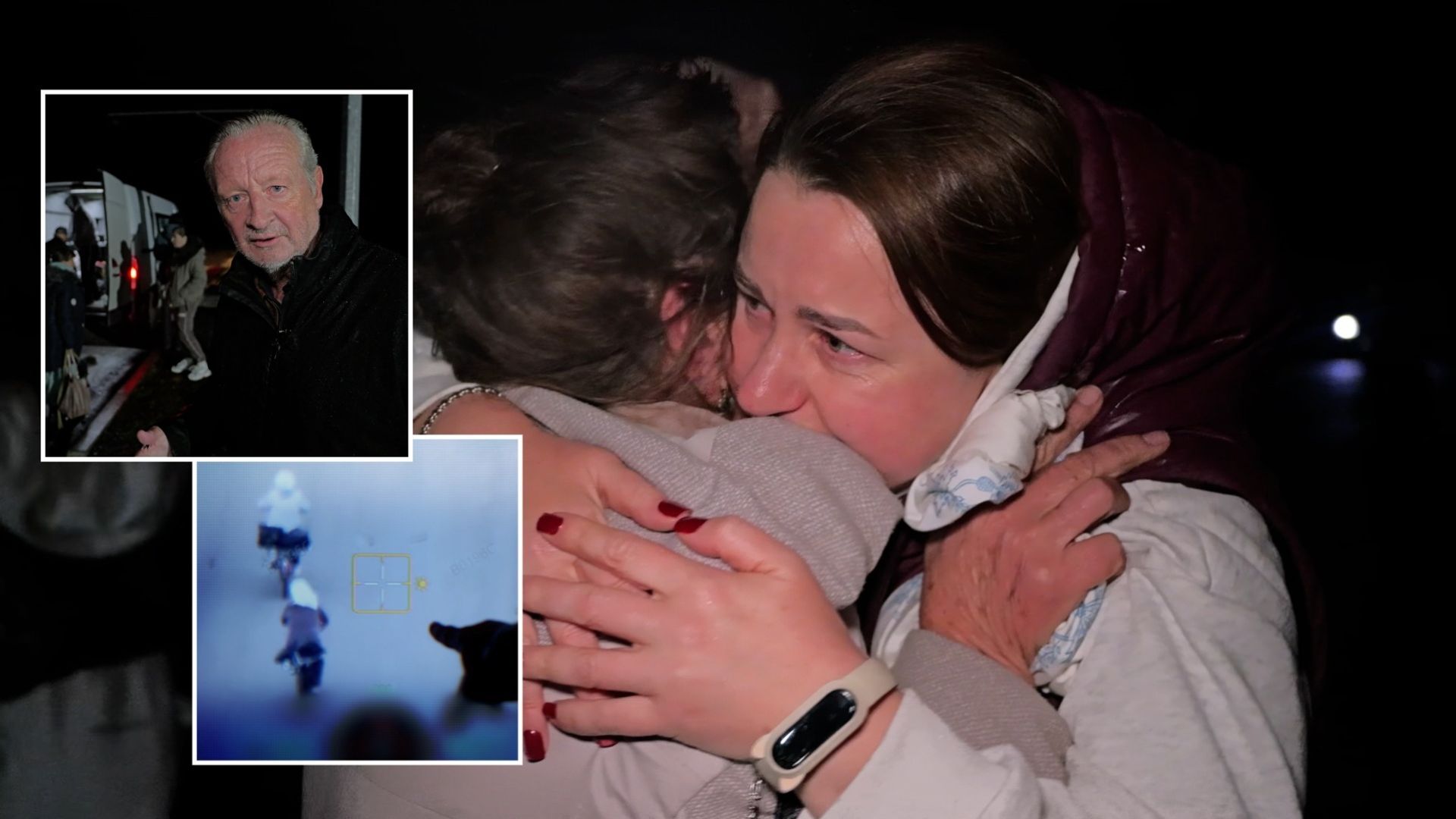
Conventional war coverage loves a neat emotional arc. Two civilians get on bicycles. They thread past mines, checkpoints, and overhead drones. They make it out alive. Cue the triumphant music and the tidy "what happened next" wrap-up.
That framing is lazy. Worse, it is misleading.
When mainstream outlets turn an escape from an occupied city into a human-interest cliffhanger, they treat survival like a plot twist instead of a complex tactical and human reality. Escaping active frontlines on two wheels is not a movie montage. It is a high-stakes movement decision shaped by terrain, acoustic and visual signatures, checkpoint friction, weather, exhaustion, and what happens the moment you cross out of the danger zone into a completely different set of problems.
The Lazy Consensus Around "What Happened Next"
Turn on almost any major broadcast segment or read the standard video summary of a dramatic civilian escape, and you will see the same two shortcuts.
First, there is heroic compression. Complex survival choices get flattened into pure grit and luck. Grit matters. Luck matters even more in a zone where a single tripwire, a shifting wind, or a battery-powered quadcopter changes the math in seconds. Compressing hours or days of agonizing route calculation into a brief video package makes the escape look almost linear, as if leaving a city is simply a matter of pedaling fast enough until the scenery changes.
Second, there is arrival amnesia. Traditional reporting treats crossing the line out of occupied territory as the finish line. "What happened next?" usually gets answered with relief, reunion, or a brief update on resettlement. In reality, crossing out of an occupied zone does not end the ordeal. It changes its shape. Medical stress, hypervigilance, lost documents, housing instability, and the sudden shock of trying to explain lived reality to people who have only seen it on a screen often hit hardest after the adrenaline drops.
I have watched plenty of media teams and crisis analysts get burned by that exact blind spot. Early in conflict cycles, observers routinely assume that once people clear the immediate threat zone, the hardest operational problem is solved. Time after time, field assessments show that exit is a phase transition, not a resolution. Treating arrival as the end of the story misses half the truth.
Why People Are Asking the Wrong Question
"Two women fled an occupied city by bicycle. What happened next?" invites curiosity, which is fine for a headline, yet it points readers at a narrower question than the situation actually demands.
The real question is not merely what happened after they reached safety. The real question is why a bicycle ever becomes a rational choice in modern conflict, and what that choice reveals about how civilian mobility breaks down under occupation.
Consider the mechanics on the ground:
- Fuel and vehicle scarcity: Civilian cars either run out of fuel, are confiscated, sit behind damaged bridges, or draw immediate attention at checkpoints and along main roads.
- Acoustic and thermal profile: A bicycle makes almost no engine noise and throws off a fraction of the heat signature of a motorized vehicle. Quiet movement matters when listening for motors or avoiding observation posts.
- Path flexibility: Paved highways are predictable chokepoints. Secondary tracks, tree lines, and broken pavement are often impassable to sedans, yet passable—slowly and painfully—on two wheels when carrying minimal weight.
- Speed versus control: Cars are faster on clear asphalt, but slower when stopped, turned around, or stuck in traffic. A bicycle is slower over long distances and brutally demanding on the body, yet offers quick dismounts and narrow passage where roads are cratered or blocked.
None of that makes a bicycle safe. A bike offers zero armor, zero protection from shrapnel or blast overpressure, and zero shelter from weather or observation. Choosing a bicycle in an active war zone is rarely a romantic burst of freedom. Usually, it is a calculated trade-off made when every other option looks worse.
Dismantling the Usual "People Also Ask" Assumptions
When dramatic escape stories circulate, people tend to ask the same predictable follow-up questions. Most of those questions rest on flawed assumptions.
"How do civilians outrun or evade drones on a bike?"
You do not "outrun" a modern reconnaissance or strike drone on a bicycle. Anyone framing escape as a speed contest between a pedal stroke and a rotor blade is misunderstanding the physics and doctrine involved.
In modern warfare, drones operate across distinct roles—short-range observation quadcopters, loitering munitions, and longer-range systems—and their effectiveness depends heavily on line of sight, electronic conditions, weather, and operator workload. Survival around drones has far less to do with sprinting on gravel and far more to do with timing, concealment, avoiding open sky corridors, staying off predictable routes, and reading local cues before moving. Even then, there is no guaranteed formula. Anyone who claims a simple trick beats modern surveillance is selling false certainty.
"Why would anyone leave by bike instead of waiting for an evacuation corridor?"
Because official evacuation corridors do not exist everywhere, all the time, or on terms civilians can trust.
Corridors depend on political negotiation, ceasefires that may fail locally, safe transport capacity, and information reaching residents before routes close or shift. In occupied areas, communications can be cut or jammed, rumors spread fast, and waiting for an organized exit can mean staying put while conditions deteriorate. Independent movement is dangerous—often desperately so—but waiting can carry its own severe risks.
"Once someone escapes an occupied city, isn't the danger over?"
Physically escaping an active combat or occupation zone removes immediate exposure to that specific front, which is a massive shift. Calling the danger over, though, ignores how trauma and displacement work.
People leaving occupied territory frequently carry acute physical exhaustion, untreated health issues, severe stress from constant threat monitoring, and grief over family members left behind or homes lost. Adjusting to safety can feel disorienting rather than peaceful. Relief and distress often arrive in the exact same breath.
What Serious Analysts and Practitioners Look At Instead
Serious conflict researchers, humanitarian logistics specialists, and military analysts who study civilian displacement—including work documented by organizations such as the International Committee of the Red Cross, the UN refugee agency UNHCR, and independent conflict monitors—do not measure an escape by how dramatic the footage looks.
They look at decision architecture under constraint. What information did the person actually have? How many checkpoints or hazard zones sat between origin and destination? How much water, food, medical supply, and battery power could be carried? What happens if a tire blows out, a road is mined, or weather turns bad?
Imagine a scenario where two people plan a short daytime ride out of a contested edge of town using a secondary path they think is clear. A single fallen tree, a fresh mine or unexploded ordnance hazard, or an unexpected patrol forces a detour into unfamiliar terrain. Suddenly a two-hour plan becomes an eight-hour ordeal with dwindling water and rising panic. In real life, small frictions compound fast when there is no margin for error.
That is the nuance mainstream storytelling routinely skips. Courage and resourcefulness are real, yet reducing the whole event to inspiration erases the harsh logistics and sheer uncertainty that define civilian survival.
The Honest Downside of Taking This Contrarian Stance
Pushing back against feel-good escape coverage carries its own risk if you go too far in the other direction.
If you strip away all human emotion and treat civilian survival purely as a cold tactical diagram, you miss what makes these stories matter in the first place. Real people—with fear, love for family, stubbornness, and hope—are making impossible choices under conditions no civilian should ever face. Clinical detachment can easily slide into cynicism if you forget whose lives are on the line.
The right balance is not coldness. It is honesty. Honor the human resilience without turning war into entertainment.
A Sharper Way to Read Escape Stories
If you want to understand what is actually happening when civilians flee occupied territory—by bicycle, on foot, or in any other makeshift way—stop watching for a neat Hollywood ending and start reading for friction.
- Look for the bottlenecks, not just the departure. Ask where movement narrows: bridges, intersections, treeline gaps, checkpoints, and shifting front lines.
- Check what is missing from the frame. Notice who stayed behind, what supplies could not be carried, and how reliable the information was at the moment they left.
- Track the second act. Pay attention to medical recovery, legal status, shelter, and psychological strain after arrival, because survival does not end at the edge of the map.
- Refuse tidy morals. A survival story does not need to prove a grand thesis about human nature to be worth hearing. Sometimes it simply shows how narrow a person's options became—and how much it cost to take one.
Stop treating wartime escapes like suspense thrillers with a happy bow tied on the end. Look at the terrain, the trade-offs, and the aftermath that actually lasts.