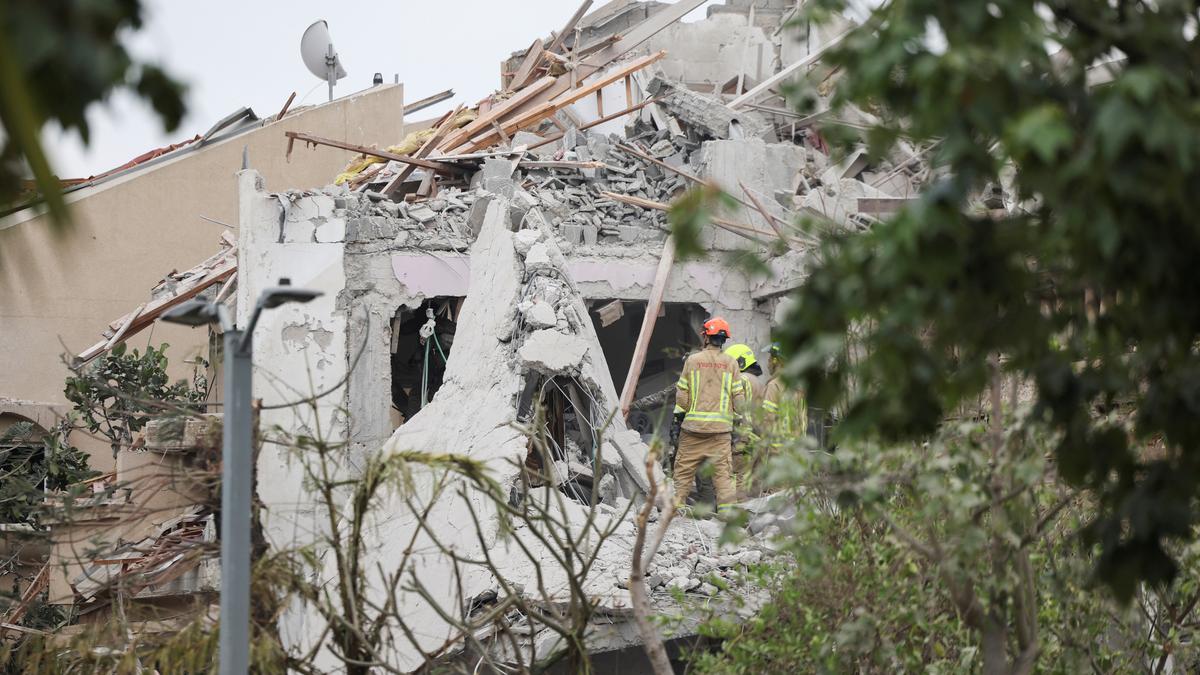
The threshold has been crossed. When Israeli ordnance struck deep inside Iranian infrastructure housing nuclear enrichment apparatuses, the calculation that had held back direct conventional war for decades dissolved in an instant. Three dead, several wounded, and a geopolitical architecture built on shadow wars and calculated ambiguity reduced to rubble.
For years, observers debated the tipping point. Intelligence analysts spoke of redlines written in diplomatic ink, easily smudged by cyberattacks and proxy skirmishes. That academic debate ended the moment precision munitions impacted facilities long shielded by mountains and international treaties. The strike was not merely a tactical blow against a contested nuclear program. It was a strategic rupture, forcing an immediate kinetic response from Tehran and leaving global markets and intelligence desks scrambling to price in a new reality.
The Anatomy of a Calculated Escalation
Military operations of this magnitude require months of synchronization, satellite surveillance, and diplomatic signaling. Yet the execution caught regional capitals flat-footed. By targeting sites linked directly to the nuclear enrichment cycle, planners calculated that Tehran's response would remain bounded by its traditional reliance on regional proxies like Hezbollah and the Houthis.
That calculation misread the domestic pressures facing Iranian leadership. A direct strike on national nuclear assets inside sovereign borders cannot be absorbed with proxy retaliation alone. To maintain domestic credibility and deter future strikes, Tehran had to punch back directly, utilizing ballistic missile inventories designed for precisely this contingency.
The resulting barrage answered the question of whether the shadow war could remain in the shadows. It cannot. The theater has shifted from cyber corridors and proxy battlegrounds in Lebanon and Yemen to direct, state-on-state missile exchanges. Every capital from Washington to Riyadh is now recalculating exposure in a conflict zone that no longer has a safety valve.
The Nuclear Paradox
The irony of the strike lies in its strategic objective. Proponents of preemptive military action argue that delaying an adversary's nuclear threshold buys vital time for diplomacy and internal regime strain. Yet history suggests a darker trajectory. When enrichment facilities are bombed, programs rarely die; they scatter, burrow deeper underground, and harden their resolve.
Iran's response signals an acceleration of defensive posturing rather than capitulation. Hardliners inside the clerical establishment have found vindication for their long-standing argument that international diplomacy was merely a stalling tactic for Western aggression. International Atomic Energy Agency inspectors now face an opaque wall of hostility, with access restricted and political oversight fractured.
The technical hurdles of weaponization remain complex, but the political will to bypass them has never been higher in Tehran. By forcing the issue militarily, the intervening power may have inadvertently catalyzed the very outcome it sought to prevent, trading a protracted clandestine delay for an accelerated, defiant sprint toward breakout capacity.
The Economic and Diplomatic Fallout
Energy markets felt the tremor within hours. Crude prices surged as traders priced in the perpetual risk of Strait of Hormuz disruptions, a chokepoint through which a fifth of the world's petroleum passes. Insurance premiums for maritime shipping in the Persian Gulf spiked, translating regional violence into immediate inflationary pressure at petrol stations from Tokyo to Toronto.
Diplomatic channels, meanwhile, have curdled into mutual accusations. Emergency sessions at the United Nations Security Council degenerated into procedural gridlock, with vetoes deployed like shields against accountability. Western allies find themselves caught between the imperative of supporting regional defense postures and the terrifying prospect of a wider conflagration that draws in global superpowers.
The diplomatic class continues to call for restraint, using phrases that ring hollow against the backdrop of burning infrastructure and retaliatory missile arcs. Restraint is a luxury of peacetime, and peace is currently in short supply.
Beyond the Horizon
The casualties reported in the initial exchanges—three dead and several wounded in the primary Iranian facilities—will likely register as footnote numbers in a conflict measured by escalation ladders rather than human tolls. But the institutional damage is permanent. The unwritten rules of engagement that governed the Middle East since the signing of the Non-Proliferation Treaty are gone.
As intelligence agencies model the next phase, the focus shifts to air defense resilience, cyber retaliation against critical civilian infrastructure, and the posture of regional militias waiting for the master signal. The illusion of containment has evaporated, leaving behind a stark landscape where deterrence is measured entirely in destructive capability and the willingness to use it first.