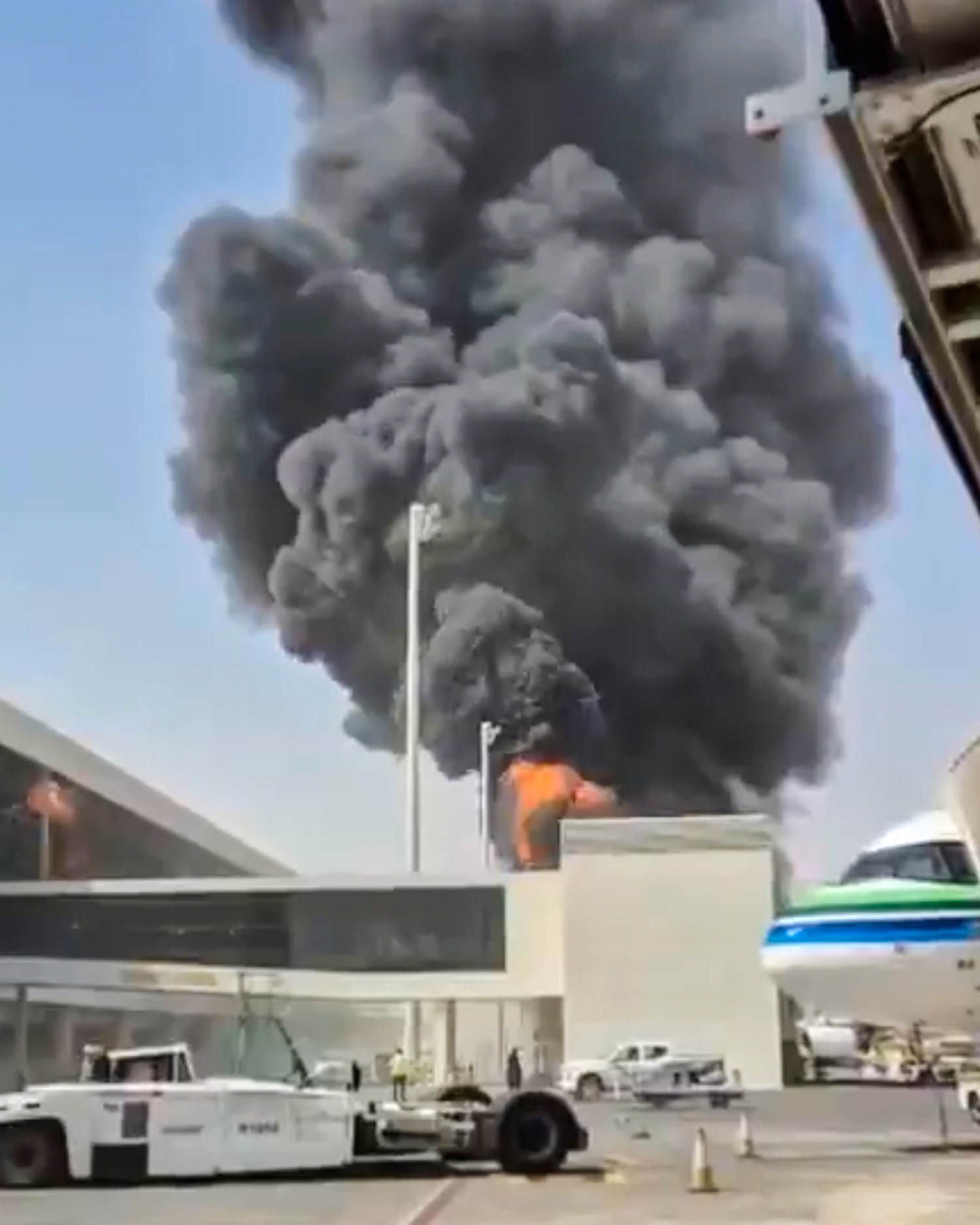
Geopolitical crises rarely begin with the explosions that flash across cable news screens. They begin in quiet planning rooms, in procurement documents signed months prior, and in the gradual erosion of regional deterrence architectures. When a ballistic projectile or laden drone slams into a critical aviation hub on the Arabian Peninsula, the resulting fire is only the visible symptom of a much deeper, systemic rot in regional security frameworks.
The strike that left a devastating toll at a major Saudi Arabian airport, killing 12 individuals and injuring dozens more, was never an isolated act of asymmetric violence. It represented a calculated pressure test against air defense networks, regional coalition cohesion, and the limits of Western security commitments in the Gulf. For years, analysts tracking the proliferation of loitering munitions and short-range ballistic systems warned that the technological democratization of precision strike capabilities would eventually overwhelm traditional Patriot and THAAD interceptor economics.
Firing a multi-million-dollar interceptor missile at a low-cost, domestically assembled drone creates an unsustainable fiscal asymmetry. This economic attrition weaponizes the supply chain itself, forcing defense planners into an impossible arithmetic where the defender goes bankrupt before the attacker runs out of ordnance.
The Economics of Asymmetric Air Defense
Military analysts often focus on radar cross-sections, apogee calculations, and terminal guidance systems. They frequently ignore the balance sheet. When militant networks utilizing smuggled subcomponents launch coordinated salvos against civilian-military dual-use infrastructure, they trigger a cascade of secondary economic consequences. Airspace closures disrupt multi-billion-dollar logistics chains, insurance premiums for Gulf shipping and aviation spike overnight, and foreign direct investment recalibrates its risk exposure.
The 12 lives lost at the terminal were a human tragedy, but within the cold calculus of asymmetric warfare, they also served a psychological and systemic function. They demonstrated that even heavily fortified airspace remains permeable when confronted with saturated, multi-axis attack vectors.
Saudi security forces have spent tens of billions of dollars upgrading their national infrastructure protection. Yet, interceptor exhaustion remains a persistent vulnerability. The industrial base supplying interceptor motors, guidance chips, and fuel cannot easily scale to match the velocity of drone assembly lines operating out of decentralized workshops.
The Washington Dilemma and Alliance Entanglement
Following the attack, political pressure mounted inside the Beltway regarding a deeper American military posture shift. The specter of Washington being dragged directly into active combat operations along the southern flank of the Arabian Peninsula highlights a recurring structural dilemma in modern foreign policy. Alliance commitments forged during the Cold War era of state-on-state deterrence translate poorly to an era of non-state actors, proxy networks, and grey-zone friction.
For an American administration weighing its options, the choice is rarely a simple binary between abandonment and direct intervention. Committing combat assets means inheriting responsibility for target selection, collateral damage assessments, and the indefinite underwriting of a regional stalemate.
The defense industrial complex thrives on perpetual threat inflation, but strategic planners know that throwing tactical hardware at a political problem only delays an inevitable reckoning. If Washington underwrites the defense without demanding a fundamental diplomatic reset, it acts as a moral hazard, insulating regional actors from the domestic political costs of a prolonged military campaign.
The Intelligence Blind Spots
Behind every successful penetration of an advanced air defense grid lies a failure of intelligence preparation of the battlefield or operational security lapses. Drones do not materialize out of thin air. They require launch ramps, pre-programmed GPS coordinates, communications relay nodes, and logistical tail support involving trucks, fuel caches, and specialized technicians.
The fact that these launch operations continue with relative impunity underscores the difficulty of counter-force targeting in complex terrain. Urban sprawl, mountainous regions, and porous borders provide ideal cover for decentralized cells. Electronic warfare and cyber operations offer alternative levers of disruption, but these capabilities carry their own risks of escalation and operational disclosure.
Intelligence sharing between coalition partners has historically been plagued by caveats, stovepiping, and competing national interests. Riyadh wants actionable targeting data to strike launch sites proactively, while Washington worries about mission creep and human rights accountability for the resulting kinetic strikes. This friction creates operational delays measured in hours—an eternity when tracking mobile, rapid-setup launch platforms.
Beyond the Tactical Response
Treating these attacks as mere law enforcement anomalies or temporary security lapses ensures repetition. A sustainable posture requires shifting the paradigm away from purely kinetic defense toward economic interdiction, supply chain visibility, and political settlement frameworks that address the underlying grievances fueling the conflict.
As long as regional actors calculate that the benefits of low-cost sabotage outweigh the diplomatic costs of peace, the hangars will burn, the commercial flights will ground, and the grim casualty counts will mount. The true crisis is not the vulnerability of an airport terminal wall, but the bankrupt imagination of a security architecture that knows only how to build higher walls while ignoring the artillery being manufactured outside the gate.



