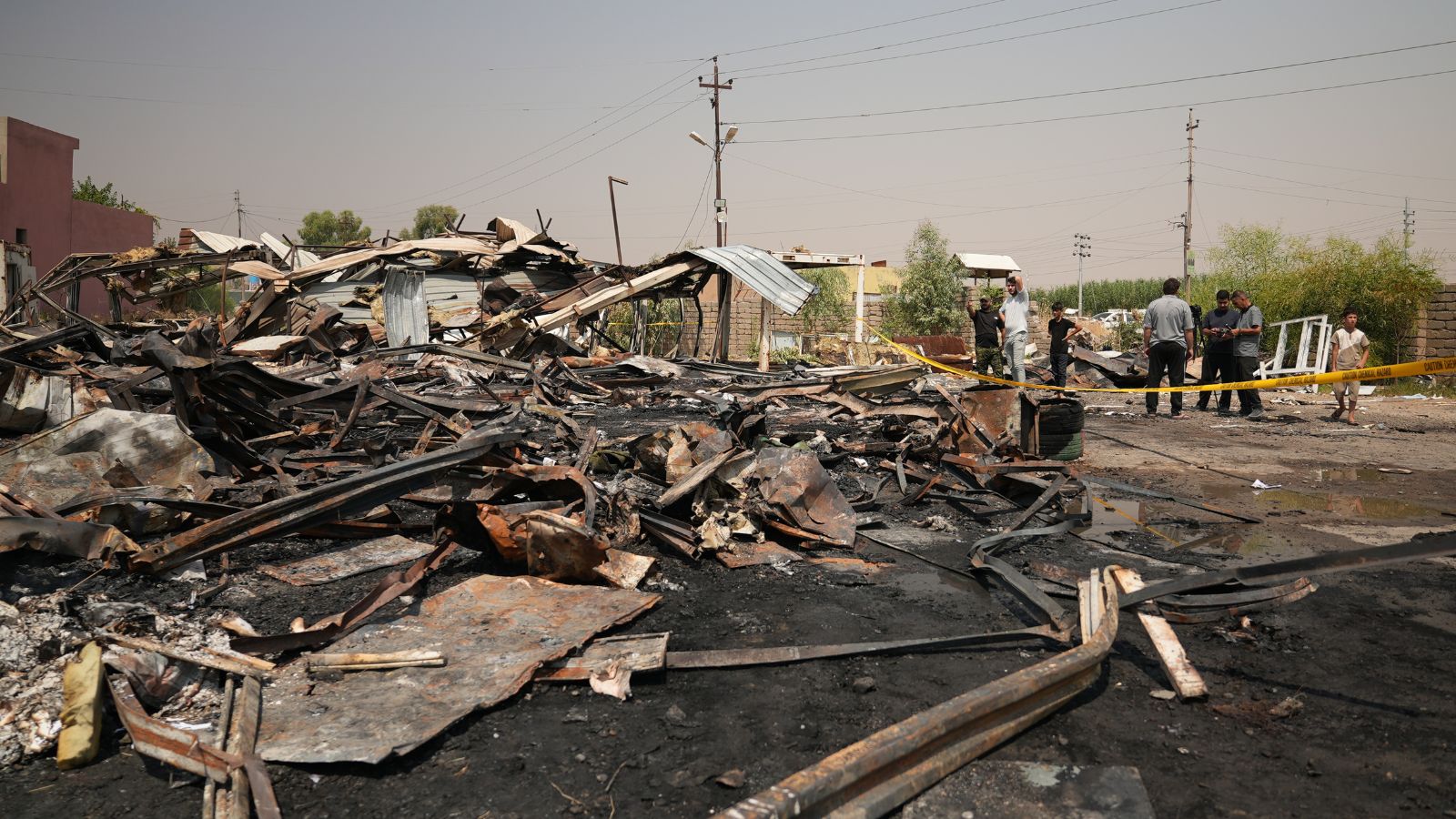
Military retaliation operates under strict economic and structural constraints where every kinetic action alters the regional balance of power. The United States military strikes against Qeshm and Bandar Abbas in Iran, executed in direct response to the fatal drone attack on Tower 22 in Jordan, represent a critical pivot from deterrence via proxy management to direct deterrence enforcement. Analyzing this military sequence requires stripping away narrative friction to examine the core variables driving escalation control, logistical costs, and strategic signaling between sovereign actors and non-state networks.
The Tripartite Framework of Retaliatory Calculus
When a regional hegemon absorbs a kinetic blow resulting in casualties, the strategic response is governed by three distinct variables: proportionality, signaling clarity, and escalation containment.
The first variable, proportionality, is rarely about matching exact tonnage or casualty counts. Instead, it measures operational disruption. Striking infrastructure nodes on Qeshm Island and near Bandar Abbas targets maritime chokepoints and logistical hubs that sustain regional maritime interdiction and drone transit. By selecting targets within Iranian sovereign territory that directly support the Islamic Revolutionary Guard Corps naval assets, Washington communicates that host-state deniability has expired.
The second variable centers on signaling clarity. Ambiguous strikes invite miscalculation. When defense planners select fixed military installations associated with asymmetric warfare capabilities rather than civilian infrastructure, the objective is to impose high replacement costs on specific hardware without forcing an existential panic in Tehran that would necessitate a maximalist counter-response.
The third variable is the containment threshold. Every military action carries a secondary cost function. If the response is too weak, deterrence erodes further, inviting aggressive posturing. If the response is too broad, it triggers a region-wide conflagration involving oil transit choke points like the Strait of Hormuz. The geometry of the Qeshm and Bandar Abbas operations demonstrates an operational threading of this needle.
Operational Geography and Logistical Bottlenecks
Geography dictates military exposure. Qeshm Island sits directly at the mouth of the Persian Gulf, commanding the maritime approaches to the Strait of Hormuz. Bandar Abbas functions as the primary mainland command and logistical nexus for Iranian naval operations in the southern sector.
Targeting these locations disrupts the operational feedback loop between regional proxy networks and their state sponsors. In asymmetric conflicts, command-and-control infrastructure is decentralized, but physical resupply corridors remain concentrated. When supply lines face kinetic pressure, the velocity of drone and missile transfers to proxies operating in Iraq, Syria, and Jordan drops significantly.
The operational mechanics involve several structural constraints:
- Radar and air defense saturation points dictate the flight profiles of strike aircraft and cruise missiles.
- Proximity to commercial shipping lanes limits the window of engagement to prevent collateral economic disruption.
- Intelligence fusion cycles determine the half-life of targeted assets, as mobile missile batteries and fast-attack craft can relocate rapidly once hostilities commence.
By focusing on these nodes, military strategists shift the burden of logistics back onto the adversary, forcing them to expend resources on site repair and communications hardening rather than forward deployment.
The Economic Cost Function of Deterrence
Deterrence is an economic transaction paid in ordnance, fuel, and systemic risk. The cost function for the initiating strike package involves high-value precision-guided munitions deployed against fixed military footprints. Conversely, the cost function for the defender involves the degradation of irreplaceable radar arrays, command nodes, and specialized watercraft.
When analyzing the return on investment for retaliatory strikes, analysts must evaluate the duration of the deterrence effect. Historical precedent in West Asia indicates that single-strike deterrence degrades rapidly unless backed by continuous economic sanctions, covert disruption, and sustained naval presence. The Tower 22 attack exposed vulnerabilities in air defense integration at remote outposts, meaning kinetic retaliation alone cannot resolve the strategic deficit. It must be paired with active air defense upgrades and proactive counter-drone deployment.
Furthermore, market sentiment reacts immediately to kinetic exchanges near the Strait of Hormuz. Even when petroleum infrastructure is untouched, insurance premiums for commercial shipping spike, pricing risk into global energy markets. This financial friction acts as an indirect economic lever, imposing subtle pressure on economies dependent on regional transit routes.
Strategic Trajectories and Force Posture Adjustments
Managing a protracted crisis requires moving beyond reactive cycles of attack and counter-attack. The structural reality of the current security architecture in West Asia is defined by distributed networks operating beneath a nuclear threshold. Traditional containment models designed for state-on-state conventional warfare fail to account for the speed and autonomy of modern proxy forces.
Future operational success depends on integrated multi-domain architecture combining real-time overhead intelligence with automated counter-UAS systems at every forward operating base. Command structures must shorten the sensor-to-shooter loop to neutralize threats before launch rather than absorbing impacts and managing the political fallout afterward.
Execute a comprehensive audit of forward-base air defense radar integration and establish automated kinetic interception protocols for low-altitude drone signatures before initiating any further regional force redistribution.