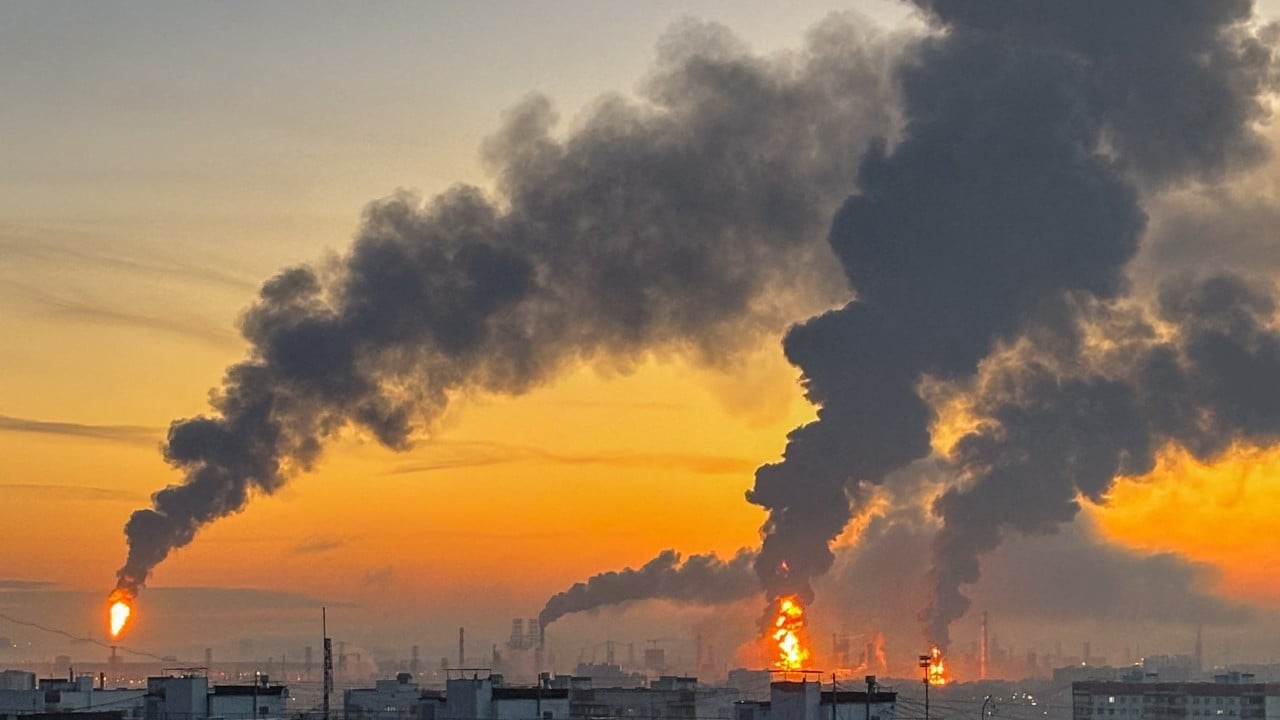
Air travel into the Saudi capital used to feel insulated from the immediate cross-border turbulence of the region. That sense of security is gone. Recent ballistic missile and drone strikes targeting King Khalid International Airport in Riyadh have shattered standard assumptions about civilian infrastructure protection, leaving multiple people injured, forcing emergency operational halts, and driving an urgent reassessment of air defense capabilities across the Gulf.
If you've been trying to make sense of why these escalations matter beyond local headlines, you have to look at how civilian hubs are increasingly being dragged into the front lines of asymmetric warfare.
The Reality on the Ground in Riyadh
When incoming projectiles breached airspace protections near a major international transit hub, the immediate response involved emergency medical call-ups and flight suspensions. Witnesses reported chaotic scenes near departure terminals as debris fell and air traffic control scrambled to ground departures.
These aren't abstract skirmishes happening in remote borderlands. They are direct vectors hitting deep into urban centers. Analysts tracking the conflict point out that targeting civilian airports and financial districts marks a sharp escalation. It shifts the strategic calculus from military containment to total defense of domestic infrastructure.
Why Traditional Air Defenses Face New Pressures
Intercepting fast-moving ballistic missiles and low-flying explosive drones over a sprawling metropolitan area is an engineering nightmare. Even when Saudi air defense systems successfully intercept incoming threats, falling debris creates secondary hazard zones on the ground.
Critics and defense experts note that the frequency of these multi-pronged assaults strains interceptor stockpiles and forces a constant evolution of counter-UAS (Unmanned Aerial Systems) tactics. You're dealing with an adversary utilizing cheaper, highly adaptable launch platforms against multi-million-dollar defense batteries. That asymmetry favors the attacker over time unless interception costs drop or electronic warfare suppression improves drastically.
Economic and Diplomatic Fallout
Riyadh positions itself as a premier global hub for business, tourism, and massive infrastructure projects. When international flights face sudden suspensions and travel advisories update in real time, investor confidence takes an immediate hit.
Diplomatic channels have swung into overdrive. Condemnations from the United Nations and international bodies emphasize that hitting civilian aviation violates fundamental international norms. Yet, verbal condemnations do little to stop the launch rails in Yemen. Riyadh has responded by shifting military commands and tightening security postures, signaling that a passive defensive posture is no longer on the table.
Expect security checks at Gulf airports to tighten even further, causing longer queues and stricter luggage screenings for travelers heading into the region. The playbook for protecting major Middle Eastern transport hubs is being rewritten in real time, and the margin for error is shrinking fast.
Houthis Strike 2 Saudi Airports: 3 Killed, 36 Injured Across Saudi Airports
This video provides on-the-ground news coverage and footage regarding the security escalation and impacts across Saudi airports following the Houthi attacks.