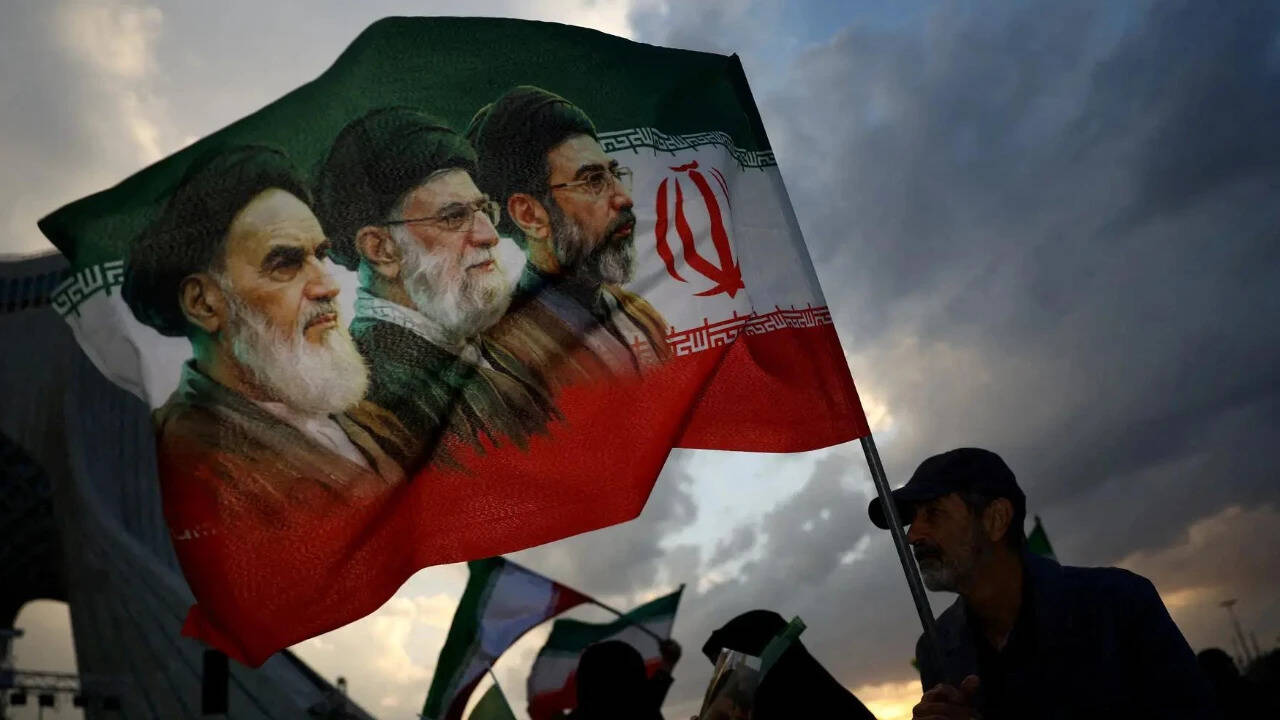
Ink is heavy. But silence is heavier.
Consider the weight of a single telephone ring in an empty apartment in Tehran, the screen glowing with an international country code that could mean a prison sentence. For decades, the invisible bridge between citizens inside the Islamic Republic and journalists peering in from Washington or Jerusalem has been built on fragile threads of encrypted messaging apps, whispered phone calls, and clandestine interviews. People risked their livelihoods to tell the world what the morning papers refused to print. They spoke of inflation that turned a month's salary into pocket change, of morality patrols that cast long shadows over brick sidewalks, of daughters and sons who vanished into the machinery of the state. Meanwhile, you can find related events here: Stop Blaming Nature When We Built Cities in Bathtubs.
Now, that bridge is being dynamited.
Recent legislative shifts in Iran have moved to criminalize interviews with hostile foreign media—specifically targeting outlets based in the United States and Israel. The penalties being discussed and enacted are staggering, featuring prison terms stretching up to thirty years. Thirty years. A human life, neatly folded in half and locked away behind steel bars, simply for answering a question from a foreign microphone. To explore the full picture, check out the detailed article by USA Today.
To understand why a government chooses to criminalize conversation, you have to look at what fear actually looks like in practice. Fear is not merely a police officer with a truncheon. Fear is bureaucratic. Fear is the systematic silencing of the narrative until the only voice left in the room is the one echoing from state television speakers.
Imagine a journalist sitting in a cramped office in West Tehran. Let us call him Arash—a hypothetical composite based on dozens of real reporters who have navigated these perilous waters over the last decade. Arash has a laptop with three different privacy shields installed. His phone battery is removed when he walks certain streets. He knows the cadence of state surveillance the way a sailor knows the roll of a tide. When a foreign news agency reaches out via a burner Telegram account to ask about fuel protests or university crackdowns, Arash faces a terrible arithmetic. If he speaks, he tells the truth of the streets. If he speaks, his children may grow up visiting their father behind plexiglass.
The new legislation takes that arithmetic and removes any margin for error. It turns ordinary curiosity into high treason. By classifying communication with specific international press corps as collaboration with foreign adversaries, the state achieves something remarkable: it preemptively rewrites reality. If no one inside can talk to the outside, then the outside is just guessing. And a guess can always be dismissed as propaganda.
History shows us this playbook with unsettling clarity. Totalitarian systems throughout the twentieth century understood that before you can control the physical bodies of a population, you must first monopolize their vocabulary. George Orwell captured this mechanism with terrifying precision, but living through it requires a different kind of endurance. It is the slow, grinding realization that your lived experience—the empty shelves at the bazaar, the sirens echoing down Vali-Asr Street at midnight—is officially classified as a lie.
The mechanics of this law are designed to induce a chilling effect so absolute that reporters abroad won't even need to be blocked. The sources will simply dry up. Who will pick up the phone when the ring could mean the end of everything they have ever built? Who will risk thirty years in Evin Prison just to confirm a casualty statistic or describe the mood of a crowd gathered around a central square?
The answer, inevitably, is fewer and fewer people.
And that is precisely the point.
When information becomes contraband, the black market for truth thrives, but it becomes infinitely more dangerous. We see the emergence of hyper-encrypted digital whispers, of citizen journalists uploading blurry, three-second video clips to decentralized servers, knowing that a single metadata slip could expose them. The state builds higher walls, and the desperate find narrower cracks through which to squeeze the truth.
Consider what happens when a society is forced into complete informational autarky. The local economy of truth collapses. Rumors take the place of facts. Conspiracy fills the vacuum left by verified reporting. Without the ability to cross-examine events through independent channels, ordinary citizens inside Iran and observers outside are left staring at a distorted mirror, unsure if what they are looking at is reflection or illusion.
Yet, human beings have a stubborn habit of refusing to remain unexpressed.
During the dark hours of past crackdowns, poets scrawled verses on the inside of matchboxes. During internet blackouts, people shouted grievances from rooftops under the cover of darkness, turning the night sky into a communal newspaper. The threat of a thirty-year sentence is terrifyingly real, backed by the full weight of a security apparatus that knows how to enforce its laws with chilling efficiency. But the impulses that drive people to speak—dignity, grief, anger, and the desperate need to be witnessed—cannot be legislated out of existence.
The criminalization of the interview is not a sign of strength. It is an admission of vulnerability. A government that is entirely confident in its legitimacy does not tremble at the sound of a foreign broadcast or a phone call routed through an encrypted server. It does not threaten its own citizens with decades behind bars for the crime of describing what they see out their windows.
The battle lines of the modern world are increasingly drawn not across physical borders, but across the bandwidth of human attention. In this new arena, a microphone is treated with the same tactical suspicion as artillery.
As these draconian measures take root, the cost of bearing witness climbs higher than ever before. The silence that the authorities seek to impose is deafening, heavy with the weight of untold stories and unrecorded grief. But beneath that surface silence, the pressure continues to build, waiting for the moment when a single voice finds a way through the static, reminding the world that no prison sentence is long enough to permanently lock away the truth.


