He woke up a citizen. By sunset, he was a ghost.
Jassim (a composite name for the many individuals now facing this reality) didn’t feel the shift in the atmosphere immediately. The morning started with the familiar scent of cardamom coffee and the humid air of the Gulf pressing against the windows. But by noon, the digital infrastructure of his life began to dissolve. His bank card was rejected at a grocery store. His login for a government portal—the gateway to his healthcare, his children’s schooling, and his right to exist on this soil—returned a cold, clinical error message.
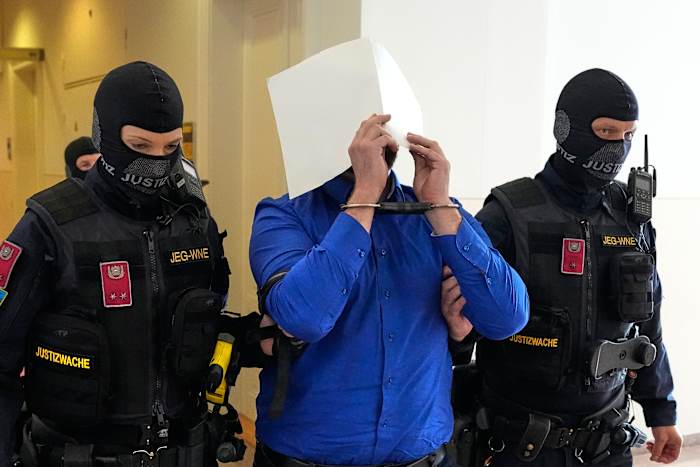
The notification arrived not with a knock on the door, but through a televised decree. The monarchy had moved. With the stroke of a pen, dozens of men and women were stripped of their nationality. The official reason cited "sympathy" for a foreign power, specifically Iran.
Betrayal is a heavy word. It implies a conscious turning away from one’s home. But for those caught in the dragnet of these shifting political tides, the "betrayal" often looks less like espionage and more like a prayer, a family tie, or a dissenting opinion shared in a private chat.
The Weight of a Passport
A passport is more than a travel document. It is a social contract printed on high-security paper. It guarantees that if the world turns its back on you, one specific piece of land is obligated to take you in. When a state revokes that status, they aren't just taking away a booklet; they are deleting a person's legal identity.
In the Gulf, where the lines between loyalty to the state and loyalty to the ruling family are intentionally blurred, citizenship is often treated as a revocable privilege rather than an inalienable right. The recent wave of revocations targets a specific demographic: those accused of being an "internal front" for Tehran.
The geopolitics of the region are a tinderbox. On one side, you have the Sunni-led monarchies, wary of any influence that might destabilize their absolute grip on power. On the other, you have the shadow of Iran, a regional rival whose religious and political reach across the water is viewed as an existential threat. Those living in the middle—the Shia minorities within these monarchies—find themselves walking a tightrope that has suddenly been cut.
The Architecture of Statelessness
What happens to a man who no longer belongs to the only country he has ever known?
Consider the immediate logistics. Without a nationality, you cannot work legally. You cannot renew a driver's license. If your child is born the day after your citizenship is revoked, that child enters the world as a "Bidoon"—a person without. They are born into a vacuum.
This isn't just about security; it's about the weaponization of identity. By labeling dissent as "sympathy for the enemy," the state bypasses the messy, public requirements of a criminal trial. There is no evidence to cross-examine. There is no jury of peers. There is only the decree. The accused is transformed from a citizen with rights into a security threat with none.
The psychological toll is a slow, grinding erosion. Imagine looking at your neighbor and wondering if they saw you at the wrong mosque. Imagine deleting your social media history because a "like" from three years ago could be interpreted as a signal of allegiance to a foreign cleric. This is the "invisible stake." It isn't just the dozens who lost their papers; it is the hundreds of thousands who now live in a state of performative loyalty, terrified that their heritage might one day be used as evidence of their treachery.
The Ghost in the Machine
The state argues that these measures are necessary for "national stability." They point to the very real threats of regional interference and the need to protect the sovereignty of the kingdom. It is a persuasive argument when framed through the lens of national survival.
But stability built on the foundation of fear is a brittle thing.
When a government uses citizenship as a tool of punishment, it changes the nature of the relationship between the ruler and the ruled. It is no longer a community of shared values; it is a landlord-tenant agreement where the landlord can evict you for the crime of thinking differently.
Jassim’s grandfather helped build the docks that brought the first oil wealth to these shores. His father served in the local police force. Jassim himself was a mid-level bureaucrat. Their history is woven into the sand and the concrete of the city. Yet, in the eyes of the law, that history was erased in a single afternoon.
The logic of the state is binary. You are with us, or you are with the "other." In this worldview, there is no room for the complexity of human identity. A person can be a loyal resident, a hardworking professional, and a devout practitioner of a minority faith all at once. But when the state feels threatened, it stops seeing people and starts seeing variables in a security equation.
The Silent Exit
There is a specific kind of silence that falls over a community when the purges begin. People stop talking about the news. They stop gathering in public squares. They retreat into the safety of their homes, hoping that by becoming small and quiet, they can remain invisible to the eyes of the state.
But invisibility is its own kind of prison.
The international community often watches these developments with a detached, clinical interest. Human rights organizations issue reports. Foreign ministries release carefully worded statements about "due process." But for the person sitting in a living room in a Gulf suburb, watching their life's work vanish from a computer screen, these statements are whispers in a hurricane.
The "Iran sympathy" label is a convenient catch-all. It serves as a political shorthand that justifies the most extreme measures. By linking domestic dissent to a foreign bogeyman, the monarchy ensures that the rest of the world stays out of what they deem an "internal security matter." It is a masterclass in narrative control.
The Ledger of Belonging
If we strip away the titles and the geopolitical jargon, we are left with a fundamental question: Who gets to decide where you belong?
Is it the earth beneath your feet? Is it the language you speak? Or is it a bureaucrat in a distant office who decides that your existence is no longer politically convenient?
The dozens who were recently stripped of their status are now living in a legal limbo. They are physically present but legally absent. They cannot leave because they have no travel documents. They cannot stay because they have no right to remain. They are the human cost of a regional cold war that shows no sign of thawing.
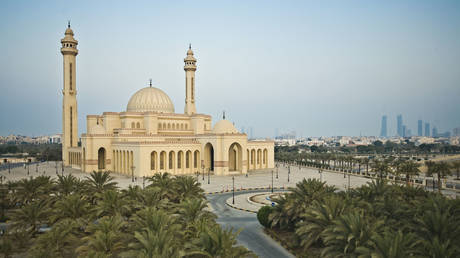
The sun sets over the Gulf, casting long shadows across the glittering skylines of the modern world. Below those lights, in the quiet neighborhoods away from the tourist tracks, families sit in the dark, checking their phones, waiting for the next decree, wondering if their names are still written in the ledger of the living.
They are waiting to see if they will still exist tomorrow.