The ink on the official refusal was dry before the news even reached the courtyard.
In Moscow, political death rarely arrives with a dramatic knock at midnight. More often, it comes in the quiet geometry of bureaucratic rejection. A stamp on a piece of paper. A minor signature from a minor official. A closed door that was already locked. Meanwhile, you can read similar events here: The Ghost in the Machinery of Justice.
For the members of Yabloko, Russia’s oldest remaining liberal democratic party, that door slammed shut once again. The electoral commission did not raise its voice. It did not need to. It simply reiterated what has become the unyielding baseline of modern Russian political reality: dissent is permitted to exist only so long as it remains entirely powerless, and occasionally, not even then.
To understand what happened, you have to look past the cold statutory language of election bans and look at the faces of people who spent decades trying to build a house in a hurricane. To understand the complete picture, check out the excellent analysis by Al Jazeera.
Imagine walking into a drafty regional office in the dead of winter. The walls are painted that specific, institutional shade of pale green that seems designed to drain the color from your skin. On the desk sits a ledger containing thousands of signatures. Real signatures. Real citizens who took a quiet, calculated risk to write their names down on a piece of paper supporting a candidate who believes in the rule of law, the release of political prisoners, and an end to foreign wars.
To the bureaucrats reviewing those papers, those names are not people. They are errors waiting to be found. A misplaced comma. A mismatched passport digit. A slight smudge on a handwritten date. The state does not need to ban a party outright when it can simply drown it in administrative quicksand, declaring thousands of signatures invalid with the stroke of a pen.
That is how Yabloko was kept off the ballot. Not with a dramatic theatrical trial, but with the quiet hum of a photocopier and the cold click of a binder closing.
Yet, the elimination of a ballot line was only the administrative half of the equation. The human toll struck closer to home, sharp and immediate.
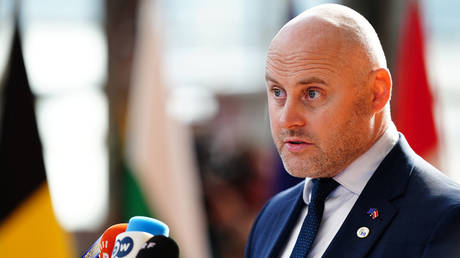
While the party was being neatly excised from the upcoming electoral registers, Maksim Kruglov, a prominent deputy head within the organization, found himself facing a very different kind of state attention. Political exclusion is one thing; physical extraction is another. The enforcement machinery does not wait for campaigns to officially begin or end. It moves on its own relentless schedule.
Kruglov’s detention—and the steady drumbeat of similar actions against opposition figures, municipal deputies, and independent voices—serves a precise psychological function. It is meant to send a message across the kitchen tables of every apartment block from St. Petersburg to Vladivostok. The message is simple. If you step forward, your name is noted. If you organize, your office is searched. If you speak too clearly, your freedom becomes temporary.
We talk about authoritarianism as if it were a massive, abstract machine, grinding relentlessly forward with sparks flying and gears clashing. But having watched political spaces shrink firsthand across various transitional societies, I can tell you it feels much quieter than that. It feels like air slowly leaving a room.
At first, you don't notice the pressure change. You keep talking. You keep holding meetings in cramped kitchens over weak tea. You keep printing flyers on cheap desktop printers, hoping against hope that this time, people will look up from their grocery bags long enough to care.
Then the air gets a little thinner. A colleague stops returning your calls. Not because they betrayed you, but because their employer received an anonymous phone call about their tax status. A venue cancels your booking for a book launch because the plumbing suddenly requires urgent, indefinite repairs. A prominent leader is detained under an administrative charge that keeps them in a holding cell for fifteen days—just long enough to miss the filing deadline.
Death by a thousand papercuts.
The Yabloko party occupies a tragic, paradoxical space in Russian political history. Founded in the optimistic twilight of the Soviet Union, it was built by economists and intellectuals who genuinely believed that the transition to a market democracy could be managed with numbers, logic, and parliamentary debate. They were the eternal optimists of the opposition, often criticized by more radical voices for participating in a rigged system at all. They believed that playing by the rules, even when the house was clearly cheating, would eventually force the house to honor the game.
History proved them heartbreakingly wrong.
When you play chess with someone who owns the board, the pieces, and the prison beneath the floorboards, winning is mathematically impossible. Yet, Yabloko kept playing. They kept putting forward candidates. They kept filing paperwork. They kept reminding the Russian public that an alternative vocabulary still existed—words like accountability, human rights, peace, and constitutional limits.
And that is precisely why the state could not tolerate them this season.
In a time of profound national crisis, even the whisper of a moderate alternative is viewed by the Kremlin as an intolerable fracture in the facade of total unity. Totalitarian stability requires total silence. A single dissenting voice on a ballot, even one strictly hemmed in by legal restrictions, acts as a mirror reflecting the emperor's new clothes. It reminds voters that things could be different. It proves that compliance is a choice, not a law of physics.
Consider the ordinary citizen sitting in front of the evening television news. They are tired. Prices at the local market are creeping upward. Their cousin is somewhere near the front lines, and the letters have stopped coming. They know things are broken. But when they look at the political landscape, they see a wasteland. They see opposition figures jailed, disqualified, or driven into exile. They see a system so heavily armored against change that even whispering about it feels dangerous.
So they turn off the television. They pull their coats a little tighter against the wind. They focus on surviving until tomorrow.
This is the true victory of the exclusion ban. It isn't just about stopping Maksim Kruglov or keeping Yabloko off a piece of paper on election day. It is about convincing the exhausted observer that resistance is not just futile, but fundamentally imaginary. It is about making people forget what freedom actually looks like, until the absence of choice feels like the natural order of the world.
History teaches us that political systems built entirely on enforced silence are remarkably durable right up until the moment they aren't. They look like monolithic granite blocks from the outside. But inside, beneath the surface, the stone is full of hairline fractures, stress-tested by every closed door, every rejected signature, and every empty chair where a deputy used to sit.
For now, the offices on Pyatnitskaya Street are quiet. The computers hum softly in empty rooms. The stacks of electoral forms sit in storage, gathering dust, waiting for a future that feels further away today than it did yesterday.
Outside, the snow falls over Moscow, covering the footprints on the pavement, smoothing over the rough edges of the city, and burying everything beneath a heavy, uniform white.