The containment of invasive meningococcal disease demands an understanding of population density, transmission physics, and the specific limitations of vaccine-induced immunity. The emergency deployment of GlaxoSmithKline’s Bexsero vaccine to roughly one million young adults in the United Kingdom highlights a critical shift in public health strategy. This intervention is driven by highly unusual epidemiological patterns: the March 2026 outbreak in Kent was the fastest-growing and largest cluster ever recorded in the UK, alongside subsequent unseasonal clusters in Dorset and Berkshire. By evaluating this targeted vaccination campaign, we can clarify the mechanics of disease transmission within closed networks and the socioeconomic calculations governing emergency health interventions.
The Transmission Function of Closed Student Networks
The primary driver of the current intervention is the stark difference in infection risk between specific demographics. While infants have historically faced the highest risk of MenB infection, the current epidemiological anomaly targets school- leavers and incoming university undergraduates. According to data from the UK Health Security Agency (UKHSA), first-year university students face a risk of invasive MenB disease that is approximately seven times higher than non-university peers of an identical age.
This heightened vulnerability can be modeled through a network transmission function dependent on three specific environmental variables:
- Communal Cohort Density: The introduction of thousands of susceptible hosts into high-density, shared residential spaces, such as university halls of residence, decreases the physical distance between individuals.
- Prolonged Direct Interpersonal Contact: Activities unique to the late-summer and autumn academic transition—specifically high-frequency social events, nightclub attendance, and the sharing of drinks or vaping devices—provide the direct respiratory droplet or salivary transfer required by Neisseria meningitidis.
- Immunological Discontinuity: While the eligible population received the MenACWY vaccine during secondary school (typically Year 9 or 10), that formulation provides zero cross-protection against Serogroup B. Consequently, a stark immunity gap exists within this cohort.
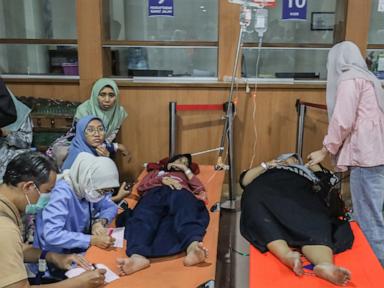
The Kent outbreak demonstrated how these variables interact to create a super-spreading event. Propagated initially within a nightclub network, the bacteria bypassed localized containment, resulting in two fatalities and demonstrating a high transmission velocity. The infection profile changed from scattered, sporadic cases into localized, dense clusters, necessitating an immediate adjustment to the standard national immunization schedule.
Immunological Mechanics and the Two-Dose Delivery Bottleneck
The biological profile of Neisseria meningitidis Serogroup B makes rapid containment difficult. The pathogen causes rapid-onset meningitis and septicaemia, which can progress to full-scale sepsis within hours. The disease carries a mortality rate of approximately 10%, and 20% of survivors suffer long-term structural morbidity, including digital or limb amputations, sensorineural hearing loss, and permanent neurological deficits.
The emergency vaccination framework utilizes Bexsero, a multi-component vaccine targeting four distinct surface antigens on the MenB bacterium. The logistical execution of this campaign faces a strict chronological constraint determined by human immunology:
$$t_{\text{total}} = t_{\text{interval}} + t_{\text{response}}$$
Where the minimum required interval between the first and second dose ($t_{\text{interval}}$) is 28 days, and the period required for the adaptive immune system to generate protective bactericidal antibody titers ($t_{\text{response}}$) is 14 days.
This reality creates a strict six-week bottleneck. For an individual to possess maximum protective immunity before entering the high-risk university environment in mid-September, the first dose must be administered no later than late July.
The state infrastructure must therefore manage a highly compressed timeline:
[Late July: Dose 1 administered]
               │
               ▼ (28-day mandatory metabolic interval)
[Late August: Dose 2 administered]
               │
               ▼ (14-day antibody synthesis period)
[Mid-September: Maximum Protective Immunity Achieved]
Any disruption to this schedule—such as missed appointments due to summer travel or delayed procurement—leaves individuals entering peak transmission environments with only partial, sub-optimal protection.
The Cost-Effectiveness Frontier and Routine Vaccination Policy
The implementation of a time-limited, emergency campaign rather than a permanent expansion of the routine immunization schedule reveals the economic trade-offs within public health policy. Since 2015, the UK has provided routine MenB vaccination exclusively to infants, a strategy justified by traditional health economics.
Expanding routine coverage to teenagers has historically failed to clear the strict cost-effectiveness thresholds enforced by the Joint Committee on Vaccination and Immunisation (JCVI). This friction is caused by a fundamental characteristic of the Bexsero vaccine: while it is highly effective at preventing severe invasive disease in the vaccinated individual, it does not reliably eliminate nasopharyngeal carriage of the bacteria.
Because the vaccine fails to interrupt colonization, it cannot generate robust herd immunity. The economic return on investment is therefore strictly limited to the individual recipient. In a standard epidemiological environment, the high cost of procuring and distributing two doses of the vaccine to millions of teenagers outweighs the statistical probability of preventing a rare, sporadic infection.
The 2026 outbreaks changed this cost-benefit equation. When the baseline mutation rate or environmental conditions alter pathogen behavior—as indicated by Health Secretary James Murray's observation of a potential change in how MenB affects young people—the statistical probability of localized epidemics increases. The emergency campaign functions as a form of macroeconomic risk mitigation. By vaccinating the highest-risk segment of the population (all Year 13 leavers and under-25 university freshers), the state pays a short-term premium to avoid the far higher economic and healthcare costs of an uncontrolled regional epidemic.
Operational Execution Risk and Logistics
The deployment of one million vaccine regimens across England, Wales, Scotland, and Northern Ireland presents significant operational challenges. The strategy splits its distribution channels based on current educational status to optimize reach.
Year 13 school leavers will be targeted directly through automated state records via the NHS App, SMS text notifications, and physical mailers, directing them to standardized vaccination hubs. Conversely, individuals under the age of 25 entering university from non-traditional paths or different employment sectors cannot be tracked as easily via secondary school registries. This group must self-identify and book their appointments directly through community pharmacies.
This dual-channel distribution introduces three distinct operational vulnerabilities:
- Asymmetric Pharmacy Coverage: The reliance on community pharmacists creates supply chain risks. Urban centers and university towns possess a higher density of pharmacy infrastructure, whereas rural areas may experience longer lead times for vaccine delivery and fewer available appointment slots.
- The International Student Gap: Under-25 international arrivals are eligible for the program but present a major logistical challenge. Because they arrive immediately prior to or during the autumn term, they cannot complete the six-week, two-dose regimen before entering high-density student housing. While public health directives state these students should ideally receive their first dose in their home country, varying international health portfolios and vaccine access make uniform compliance highly unlikely.
- Adherence Erosion: Given that the target demographic is highly mobile during July and August, tracking individuals across regions for their second dose presents a high risk of patient dropout. A single-dose recipient remains immunologically vulnerable to breakthrough infections.
Strategic Forecast for Public Health Intervention
The current time-limited deployment serves as an interim defensive measure while the JCVI conducts a comprehensive review of clinical evidence. The long-term policy response will be dictated by the data gathered during this emergency deployment.
If the UKHSA data from this winter cohort demonstrates a measurable drop in clusters among the vaccinated population without shifting the infection vector to older or younger unvaccinated demographics, pressure will increase to make this adolescent cohort a permanent part of the national immunization schedule. However, if genome sequencing of the Kent, Dorset, and Berkshire strains reveals a permanent shift toward increased virulence or higher transmissibility, the current targeted strategy will prove insufficient. In that scenario, public health infrastructure must prepare for an expanded, non-targeted rollout to all young adults aged 15 to 25 to prevent the pathogen from establishing new reservoirs in non-academic work environments.