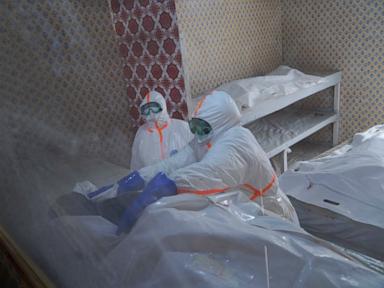
Pathogen containment architecture relies on the strict separation of high-consequence biological agents from human populations through multi-layered physical barriers and administrative controls. When a containment breach results in mortality within a specialized research facility, public health assessment requires separating institutional communications from empirical epidemiological mechanics. The incident involving a researcher at the Irkutsk Anti-Plague Research Institute in Siberia highlights the structural friction between state-managed information control and international transparency protocols.
Evaluating the contagion potential of Yersinia pestis following a potential laboratory exposure involves examining the transmission vectors and clinical presentation associated with specific strains. The bacterium manifests in three primary clinical forms: bubonic, septicemic, and pneumonic. Bubonic plague is transmitted primarily via vector flea bites from infected sylvatic rodent reservoirs. Septicemic plague involves systemic vascular dissemination. Pneumonic plague represents the most lethal and operationally significant variant due to its capacity for direct human-to-human airborne droplet transmission.
The fundamental metric governing epidemic risk in pneumonic plague is the basic reproduction number, denoted as $R_0$. Historical data and epidemiological modeling indicate that unmitigated pneumonic plague exhibits an $R_0$ typically ranging between 1.3 and 2.0 under baseline social conditions. However, this parameter is highly sensitive to early isolation protocols and rapid prophylactic administration. Because Yersinia pestis remains susceptible to standard broad-spectrum and targeted antibiotic regimens—including streptomycin, tetracyclines, and fluoroquinolones—the window for therapeutic intervention is mathematically predictable. When administered within the first twenty-four hours of symptom onset, mortality rates drop precipitously, transforming an otherwise 100% fatal presentation into a manageable clinical event.
The systemic hazard in institutional settings does not stem solely from the intrinsic biology of the pathogen, but from operational transparency failures. Effective epidemiological surveillance depends on three variables:
- Granular genomic sequencing of the clinical isolate to identify potential genetic modifications or antibiotic resistance markers.
- Complete epidemiological tracing of secondary and tertiary contacts within the immediate occupational and municipal zones.
- Unhindered access for independent verification bodies, such as the World Health Organization, to evaluate containment integrity.
When governing authorities restrict information flow or issue contradictory classifications regarding the causative agent—such as attributing mortality to generalized "pneumonia of unknown origin" while implementing localized anti-epidemic measures—the verification mechanism breaks down. This information asymmetry prevents accurate risk quantification by external health agencies, fostering public uncertainty and eroding trust in institutional biosafety frameworks.
Mitigating biological risks in high-containment laboratories requires continuous auditing of administrative controls, rigorous personnel vaccination tracking, and adherence to standardized international health regulations that mandate immediate, verifiable data sharing during suspected exposure events.
[Fubu Toy review](https://www.youtube.com/watch?v=SjKSQKN_cGc)
This video provides an overview of the local response and the official containment measures implemented following the reported laboratory incident in the Irkutsk region.