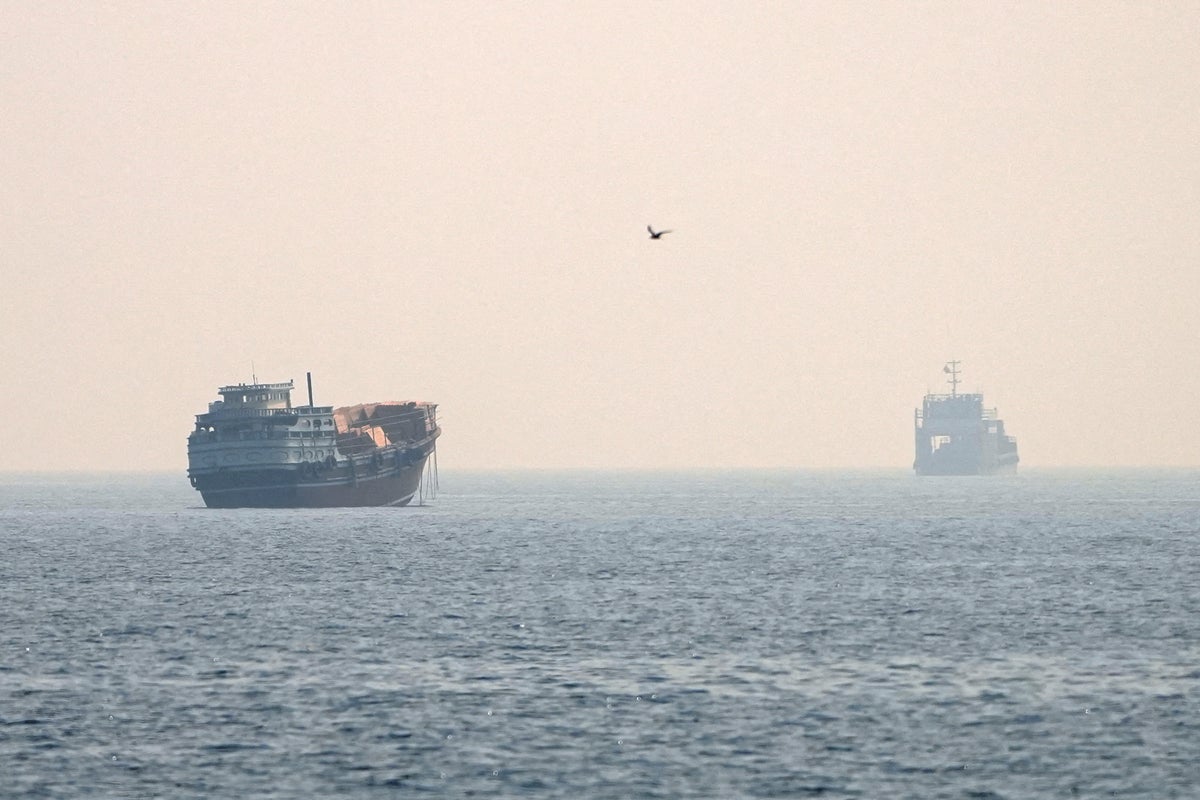
Paper peace deals don't secure shipping lanes. If the wild volatility in crude oil markets has proven anything this week, it's that traders are completely done betting on diplomatic handshakes.
Just when the global economy thought a fragile interim agreement between the US and Iran would finally unlock the Strait of Hormuz, the entire arrangement blew up. A fresh wave of military strikes, damaged commercial tankers, and U-turning cargo vessels sent Brent crude swinging violently, surging past $76 a barrel before wobbling as Wall Street tried to digest the chaos. For another perspective, read: this related article.
The real issue isn't just a temporary bump in oil prices. It's the fact that the world’s most critical maritime chokepoint has turned into a tactical no-go zone, and the shipping industry is refusing to play Russian roulette with multi-million-dollar vessels.
The Illusion of a Reopened Strait
For a brief moment, shipowners were optimistic. Traffic through the Strait of Hormuz—the narrow artery responsible for a fifth of global oil and gas consumption—had actually ticked upward. Maritime data platforms like Windward logged dozens of successful transits, and energy giants like QatarEnergy were starting to guide their massive liquefied natural gas (LNG) carriers back into the Gulf. Similar coverage on this matter has been shared by Financial Times.
Then reality hit.
The collapse of the latest US-Iran framework happened fast. Following an attack on a Qatari LNG vessel leaving the waterway near Oman, the US military launched targeted strikes against Iranian military positions. President Donald Trump quickly declared the previous memorandum of understanding effectively dead.
What followed was immediate panic on the water.
- A Saudi-flagged crude oil tanker and a Qatari vessel suffered direct damage.
- Maritime authorities spiked the regional threat level to "severe."
- Three massive LNG tankers controlled by QatarEnergy abruptly aborted their routes and turned away.
- An Indian-flagged Very Large Crude Carrier (VLCC) packed with two million barrels of Kuwaiti crude made a literal U-turn off the coast of Oman.
Ship-tracking data painted a stark picture: traffic through the strait ground to a near-total standstill.
International Maritime Organization Secretary-General Arsenio Dominguez didn't mince words, warning ship operators to stop exposing seafarers to severe danger. The IMO even suspended its emergency evacuation framework because they could no longer guarantee the basic safety of crews against sea mines and missile strikes. Around 6,000 seafarers remain essentially trapped in the Persian Gulf.
Why Oil Prices Are Wobbling Instead of Skyrocketing
You might expect a total gridlock in the Persian Gulf to instantly push oil prices into triple digits. Instead, we're seeing a weird, erratic wobble. Brent and West Texas Intermediate (WTI) initially spiked by more than 6% mid-week, but they haven't completely boiled over.
Why the hesitation?
First, the physical flow of oil hasn't completely vanished from the global ecosystem; it’s just getting aggressively bottlenecked. According to trade data from Kpler, Middle East crude exports dropped from a pre-war baseline of 15 million barrels per day down to roughly seven million. That's a massive hit, but the market is surviving on global inventories and domestic refinery run cuts, particularly in China, where inbound shipments hit an eight-year low.
Second, traders are realizing that the current US strategy targets military assets rather than drilling infrastructure. Financial institutions like ANZ Bank noted that as long as actual oil fields and production facilities aren't being blown up, the market keeps a lid on absolute panic.
But hiding behind this temporary stability is a massive financial hangover for global supply chains. Insurance premiums for transiting the region have turned astronomical. Even if a permanent peace deal is signed tomorrow, shipping companies face a logistical nightmare.
The Long Road to Real Supply Recovery
Most people think a political resolution acts like a light switch—flip it and the oil flows. It doesn't work that way.
Even if diplomatic talks resume, clearing the physical risks will take months. The Strait of Hormuz is currently cluttered with underwater hazards, meaning extensive mine-sweeping operations must happen before commercial fleets feel safe. Furthermore, restarting shut-in oil fields and repairing port infrastructure damaged by months of erratic drone and missile strikes takes serious time.
The pain is already trickling down past crude oil. Look at global freight rates. The Drewry Composite World Container Index shows that the cost of moving a standard 40-foot container has more than doubled since late February, climbing past $3,900.
Because natural gas is a primary feedstock for industrial agricultural supplies, fertilizer shortages are already driving up food production costs across Asia. We aren't just looking at expensive fuel at the pump; we're looking at structurally higher costs for retail goods, food, and manufacturing heading into the winter months.
If you’re managing supply chains or trading energy commodities, relying on headlines about political ceasefires is a losing strategy. The smart money is watching actual vessel transits and maritime insurance spikes, not the political statements coming out of Washington or Tehran. True stability won't return until the physical risk to seafarers hits zero, and right now, we are nowhere near that point.