The foreign policy establishment is currently clutching its pearls over the idea of a self-sufficient America. You’ve seen the headlines. They suggest that if the United States no longer needs Middle Eastern oil or foreign energy inputs, it will suddenly transform into a reckless, global bully. They argue that "interdependence" is the glue holding the world together.
They are dead wrong.
The "interdependence" they worship is actually a hostage situation. When a nation relies on its enemies to keep the lights on, it doesn't become more peaceful; it becomes more desperate, more prone to "preemptive" meddling, and more likely to fund the very regimes that hate it. True energy independence isn't a license for aggression. It is the only credible path to a non-interventionist foreign policy.
The Myth of the Restrained Superpower
The prevailing theory among "experts" is that dependency creates a stabilizing feedback loop. They claim that because the U.S. needs the global energy market to remain stable, it acts as a "responsible stakeholder."
Look at the last forty years of history. Has dependency led to restraint? Hardly. The U.S. has spent trillions of dollars and countless lives patrolling the Persian Gulf, propping up autocratic petrostates, and engaging in "regime change" specifically because the flow of oil was a matter of national survival.
When you must have a resource that sits under someone else’s soil, you are forced to care about their internal politics. You are forced to take sides in their civil wars. You are forced to station carrier strike groups in their backyard.
Independence flips this script. If the U.S. can power its own grid and fuel its own transport via domestic fracking, nuclear expansion, and localized renewables, the strategic "necessity" of policing the Middle East evaporates. For the first time since the 1940s, the U.S. would have the luxury of minding its own business.
Why Interdependence is Actually a Trigger for War
Let’s dismantle the logic of the "peace through trade" crowd. They argue that global supply chains prevent conflict because war would be too expensive. This ignores the basic psychology of survival.
In a state of energy scarcity or dependency, every fluctuation in a foreign capital becomes an existential threat. If a minor coup in a distant nation can cause $10 gas at home and trigger a domestic recession, the superpower has every incentive to strike first to ensure "stability."
Energy independence removes the hair-trigger.
Imagine a scenario where a regional conflict breaks out in the Strait of Hormuz. In the old world of dependency, the U.S. is forced to intervene immediately to prevent a global economic collapse. In a self-sufficient world, the U.S. can watch from the sidelines. It can choose to mediate rather than being a combatant by proxy. Independence provides the greatest gift a nation can have: optionality.
The Hidden Cost of the Petrodollar
We need to talk about the brutal reality of the global energy market that the polite articles ignore. For decades, the global economy has been anchored by the petrodollar. This system requires the U.S. to ensure that oil is traded in dollars, which in turn requires a massive, aggressive military presence to "underwrite" that security.
The contrarian truth? The petrodollar is a shackle.
It forces the U.S. to export its inflation and maintain an artificially high currency value, which has gutted the American manufacturing base. By moving toward energy independence—and specifically energy abundance—the U.S. can decouple its economic health from the whims of OPEC+.
Critics say this will lead to "isolationism." If isolationism means not spending $8 trillion on "forever wars" to protect oil pipelines, then isolationism is exactly what the taxpayer deserves.
Precision Energy: The Nuclear Factor
The "aggressive America" narrative also fails to account for the type of energy we are talking about. When we discuss independence, we aren't just talking about more oil rigs in Texas. We are talking about the massive deployment of Small Modular Reactors (SMRs) and next-generation nuclear power.
$$E = mc^2$$
The physics of energy density tells us everything we need to know. A nation that masters high-density energy production doesn't need to conquer territory. It doesn't need to control shipping lanes. It doesn't need to fight over "rare earth" minerals if it has the power to process and recycle what it already has.
The establishment fears this because energy abundance destroys their leverage. They want a world of managed scarcity because scarcity requires managers. Abundance requires only innovators.
The Arrogance of the Dependency Class
I have sat in rooms with "energy consultants" who believe that American self-sufficiency is a threat to the "liberal international order." What they really mean is that it’s a threat to their relevance.
If the U.S. doesn't need to manage the world's energy flows, the entire class of diplomats, lobbyists, and defense contractors who thrive on "global stability operations" loses their job. They aren't worried about American aggression; they are worried about American indifference.
Indifference is the most peaceful stance a superpower can take. A self-sufficient nation is a nation that doesn't have to care what a dictator in the desert thinks about the price of a barrel.
The Downsides of the Independence Path
To be clear, the road to independence isn't free. It requires a brutal overhaul of domestic regulations. It means telling NIMBY activists that yes, we are building a nuclear plant in your county. It means ignoring the screams of those who want us to stay "connected" to a broken global system.
There is also the risk of domestic complacency. A nation that has everything it needs might stop looking outward entirely, leading to a decay in global intelligence and cultural exchange. But compared to the risk of a nuclear-armed world fighting over the last drops of easy-to-reach crude? I will take complacency every single time.
People Also Ask: The Wrong Questions
The public usually asks: "Will energy independence lower my gas prices?"
Wrong question. The real question is: "Will energy independence stop my children from being sent to die for a pipeline?" The answer is yes.
Another common query: "Can we be energy independent without fossil fuels?"
Wrong question. The answer is that we need an "all of the above" strategy that prioritizes energy density. Whether it's gas, wind, or uranium, the goal is the same: the total elimination of foreign leverage over the American economy.
The Strategy of Abundance
We need to stop viewing energy as a commodity to be traded and start viewing it as a shield to be built. Every kilowatt-hour generated at home is a bullet that doesn't have to be fired abroad.
The establishment thinks independence makes us a "rogue state." They think that without the "tether" of dependency, we will go wild.
The reality is the opposite. Dependency is the drug that makes nations do crazy things. Independence is the sobriety that allows us to finally go home.
The next time some think-tank "fellow" tells you that energy independence is a danger to global peace, ask them who pays for their flights to Davos. Then, ask them why they are so afraid of an America that doesn't have to fight.
The era of peace-through-dependency is dead. Long live the era of peace-through-power.
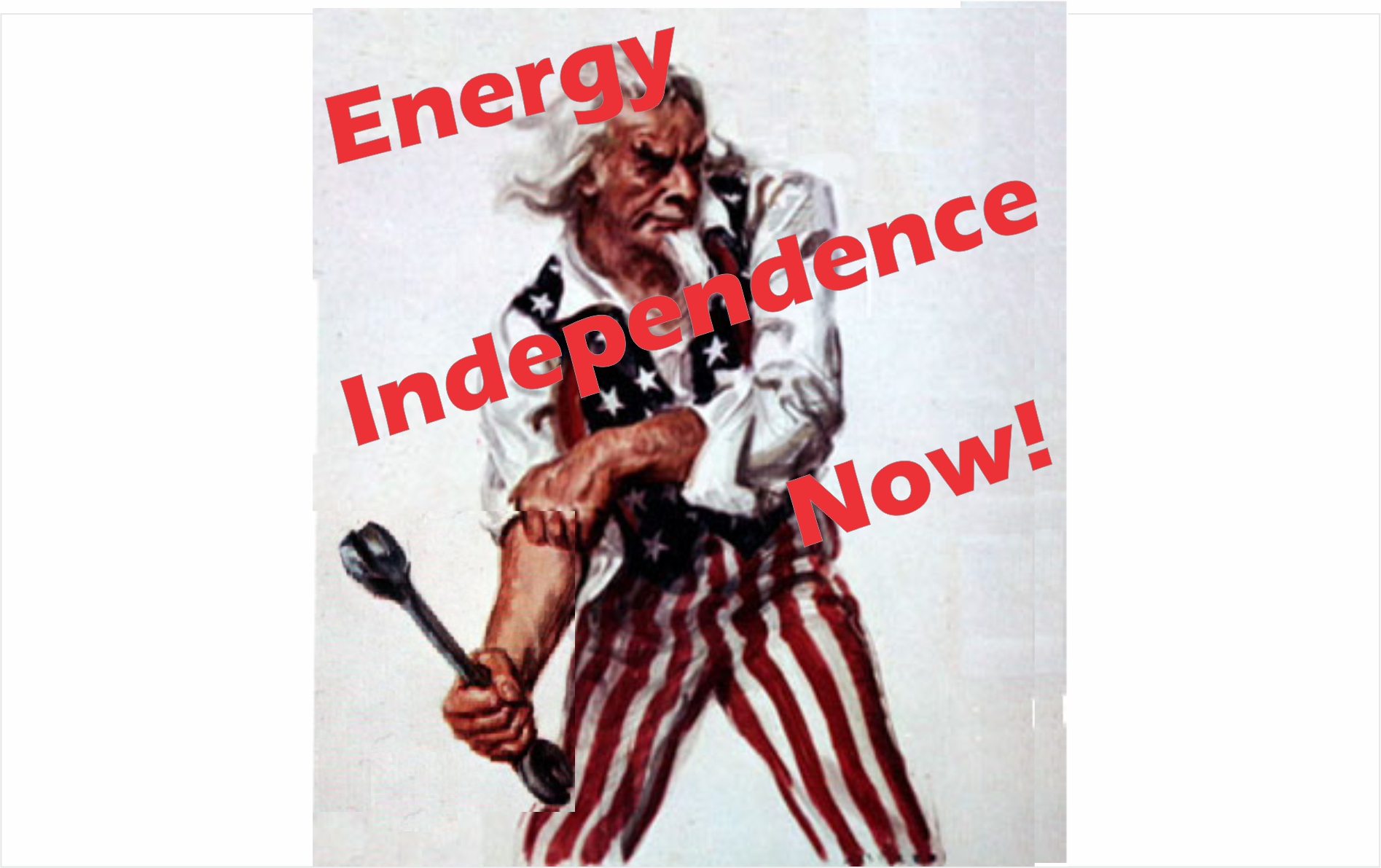
Stop asking for permission to be self-sufficient. Build the reactors. Drill the wells. Cut the tether. Let the rest of the world solve their own problems while we keep the lights on for ourselves.