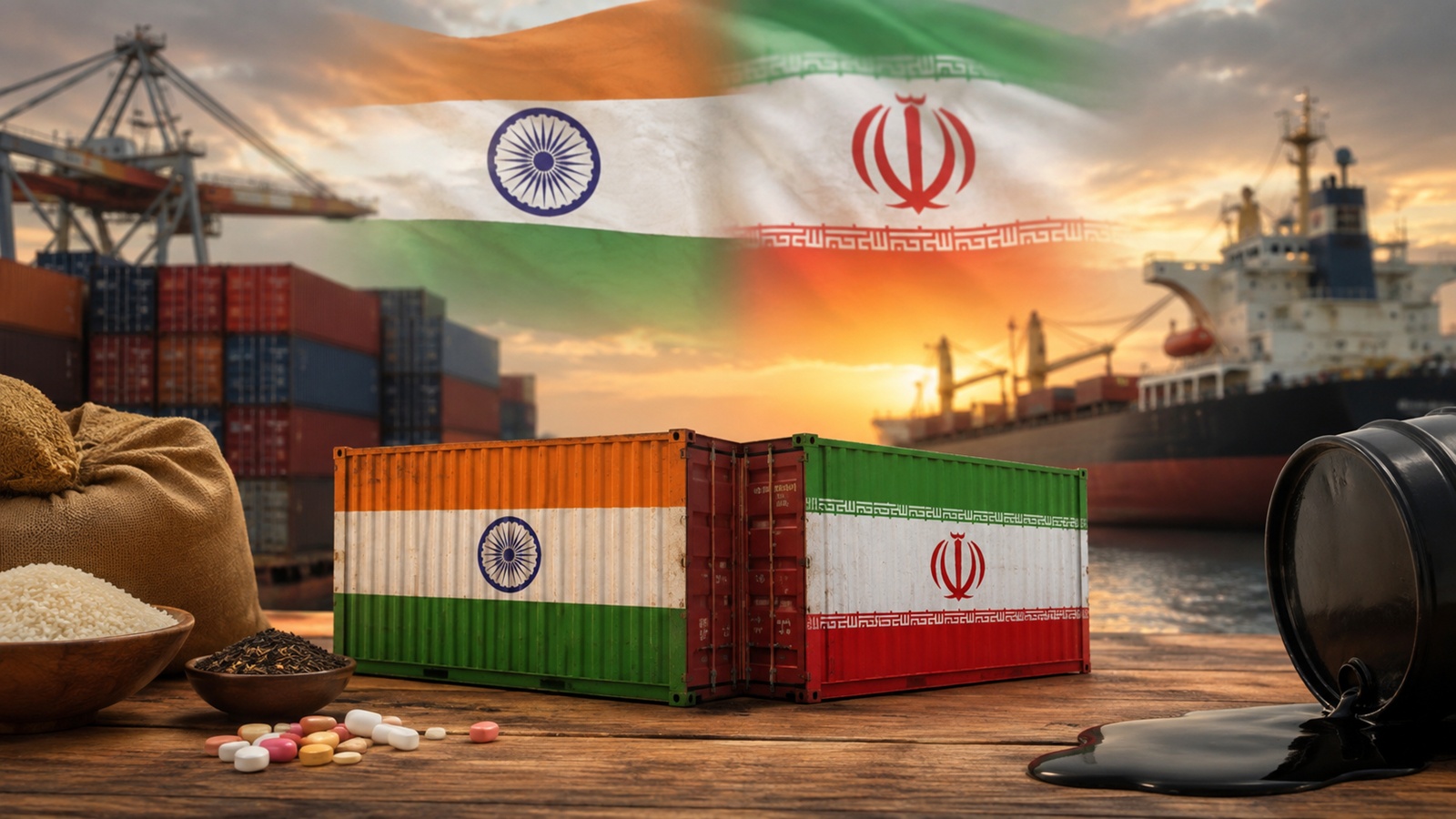
The global energy market is currently caught in a squeeze play between two competing versions of American power. On one side, the United States is pumping more crude oil than any nation in history, with output hitting a record 13.6 million barrels per day in 2025. On the other, the administration is deploying energy as a blunt-force diplomatic weapon, most notably through the naval blockade of Iranian ports in the Strait of Hormuz initiated this week. While the "Drill, Baby, Drill" mantra was sold as a path to lower prices and global stability, the reality is far more volatile. By attempting to flood the market while simultaneously strangling the transit of one-fifth of the world’s supply, the U.S. has created a high-stakes paradox.
The math of energy dominance is simple in theory but brutal in practice.
The Blockade and the Bottleneck
On April 13, 2026, the U.S. military began enforcing a blockade on Iranian ports following the collapse of ceasefire talks. This move was intended to exert "maximum pressure," yet it immediately sent shockwaves through the global shipping lanes. The Strait of Hormuz is barely 21 miles wide at its narrowest point. It is the jugular vein of the global economy. When you threaten the flow of oil through this corridor, you aren't just targeting a regime; you are taxing every factory in Germany and every commuter in New Delhi.
Ships forced to bypass the Persian Gulf must now navigate around the entire Arabian Peninsula. This adds roughly 3,500 nautical miles to a standard journey. For a massive crude carrier, that translates to a 50% to 70% spike in transportation costs. These are not abstract numbers. They are baked into the price of every gallon of gas and every plastic component manufactured in the coming months. The administration argues that increased domestic production in the Permian and Bakken formations will offset these disruptions. It is a gamble that assumes the global market is a series of isolated bathtubs rather than a single, interconnected ocean.
The Erosion of the Green Transition
The pivot back to fossil fuel primacy is not just about today's pump prices. It is a fundamental dismantling of the decade-long push toward a low-carbon economy. Within hours of the 2025 inauguration, the "Initial Rescissions of Harmful Executive Orders" began a systematic rollback of over 70 climate-related mandates. The goal was clear: unlock the "Genesis Mission," an AI-driven initiative to maximize oil and gas extraction using U.S. Department of Energy data.
This shift has created a massive vacuum in the global renewable sector. By freezing funds from the Inflation Reduction Act (IRA) and the Infrastructure Investment and Jobs Act (IIJA), the U.S. has effectively told the world that the "Green Transition" is a secondary concern to "Energy Dominance." The result is a fractured global landscape. While the U.S. ramps up coal-powered electricity generation—saving 17 gigawatts of coal plants from closure in late 2025—allies in Europe and partners in Asia are left holding the bag on expensive, half-finished wind and solar projects.
The Nuclear Wildcard
There is, however, a sophisticated pivot happening in the background. The administration isn't just looking at the 19th-century fuels. It has set an aggressive target to quadruple American nuclear capacity to 400 GW by 2050. A $2.7 billion investment in domestic uranium enrichment is designed to break the dependence on Russian nuclear fuel. This is a long-term play for "clean" baseload power, but it does nothing to alleviate the immediate energy crisis triggered by Middle Eastern instability. It is a solution for 2040 being sold to a public struggling with 2026 inflation.
Tariffs as Energy Warfare
The use of tariffs has evolved from a trade tool into a primary energy strategy. The administration’s 25% "reciprocal" tariffs on global imports, combined with specific 50% to 100% tariffs on countries purchasing Russian oil, has created a fragmented market. In March 2025, even Canada and Mexico—America's closest energy partners—were hit with temporary 25% tariffs to force concessions on unrelated border issues.
These trade barriers make the components for energy infrastructure—steel, aluminum, and specialized valves—prohibitively expensive. When it costs 30% more to build a pipeline or a refinery because of steel tariffs, the "cheap energy" promised by deregulation never actually arrives. The savings from fewer environmental rules are swallowed by the costs of trade protectionism.
The Global Reaction
The world is not waiting for the U.S. to stabilize. India has already responded by hiking its own diesel export taxes by over 150%, a defensive move to ensure its domestic supply isn't sucked away by the highest bidder in a chaotic global market. China, meanwhile, is being courted to buy American crude even as it faces escalating trade tensions. This is "calculated economic warfare," as some analysts call it, but the collateral damage is the predictability of the global energy price.
We are entering an era where energy is no longer a commodity governed by supply and demand, but a chip in a broader geopolitical poker game. The U.S. is betting that it can produce enough to dominate the board. But in a world where a single naval blockade can negate a year’s worth of drilling gains in the Permian Basin, the definition of "independence" becomes increasingly fragile. The crisis isn't just about a lack of oil. It is about the loss of a stable system to move it.
The current strategy relies on the belief that American volume can overwhelm global volatility. If the Strait of Hormuz remains a contested zone, that belief will be tested to the breaking point. Energy dominance requires more than just high production; it requires a world capable of buying and receiving that production without the threat of a naval skirmish at every chokepoint.
The market is no longer looking for a leader. It is looking for a floor.