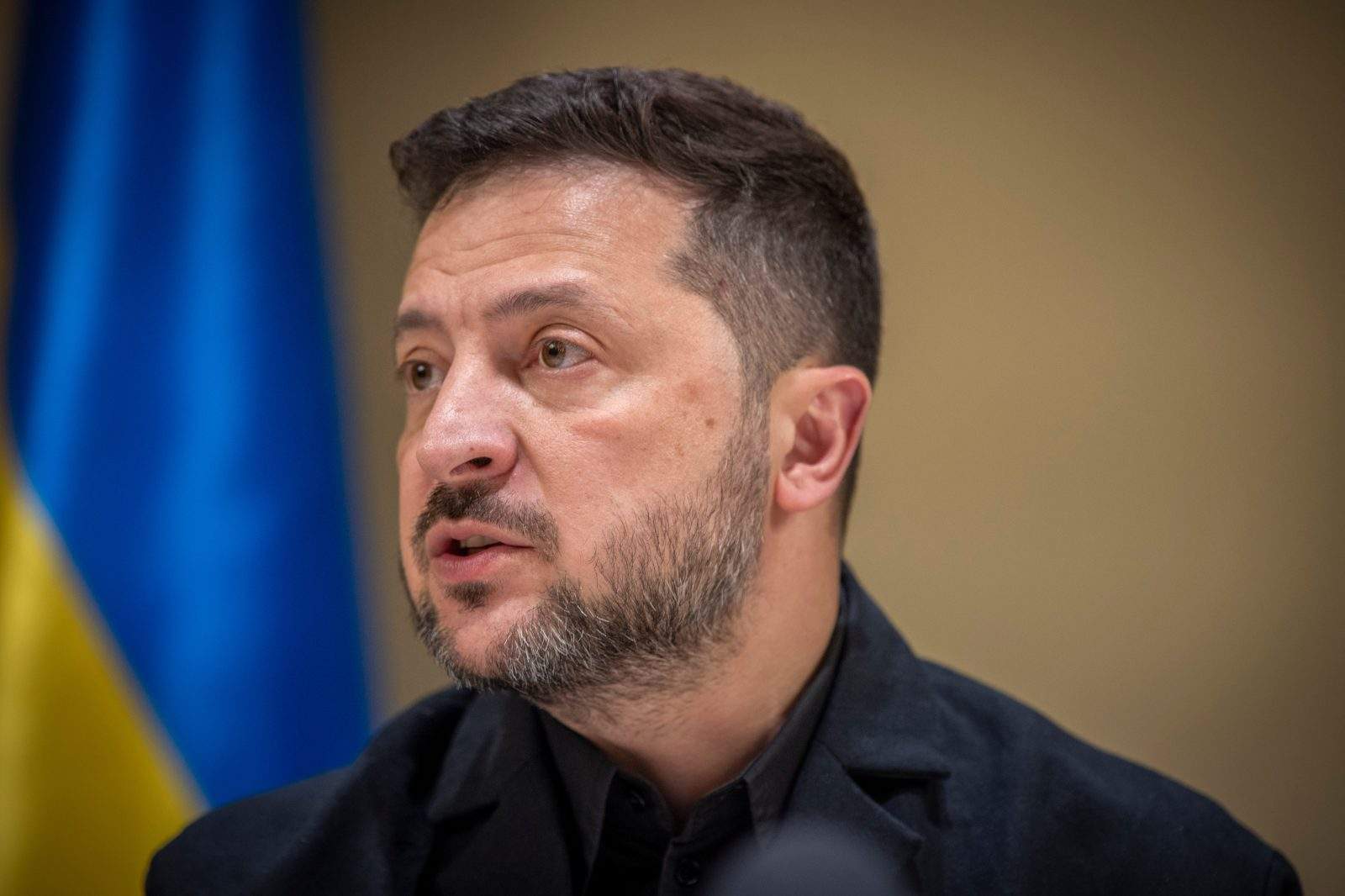
Most coverage of the Russia-Ukraine war treats a potential energy ceasefire as an obvious, unqualified step toward peace. According to statements from Ukrainian President Volodymyr Zelenskyy, Kyiv has signaled openness to halting strikes on energy infrastructure if Moscow does the same. On the surface, the consensus seems clear: stopping attacks on power grids and oil refineries protects civilians, stabilizes global markets, and builds trust for broader negotiations.
That reading misses the structural reality of how modern attrition warfare works.
When analysts celebrate a proposed energy truce as a straightforward humanitarian win, they overlook the asymmetric leverage baked into both sides' infrastructure. Energy is not a neutral backdrop to the conflict; it is a primary theater of economic and military pressure. Treating a bilateral pause on energy strikes as a simple de-escalation ignores why both capitals have targeted these assets in the first place—and who actually benefits when the missiles stop flying.
The Asymmetry Behind the Headlines
To understand why an energy ceasefire is far more complicated than standard diplomatic coverage suggests, you have to separate two completely different types of infrastructure: electricity generation and hydrocarbon export capacity.
Ukraine's vulnerability is domestic and immediate. Russian missile and drone campaigns have repeatedly targeted thermal power plants, hydroelectric dams, and high-voltage substations. According to assessments from the International Energy Agency (IEA) and Ukrainian grid operator Ukrenergo, these strikes have removed gigawatts of dispatchable generation capacity, threatening residential heating, water pumping, and domestic industrial output during winter months. For Kyiv, an energy truce relieves acute civilian suffering and reduces the strain on scarce air defense interceptors.
Russia's vulnerability is financial and logistical. Ukrainian long-range drone strikes have focused heavily on oil refineries, fuel depots, and export terminals deep inside Russian territory. While Moscow possesses vast redundant power generation for its domestic grid, its refining sector relies on specialized Western-made cracking units that are difficult to repair under sanctions. Analysts at energy consultancies and Western defense ministries have noted that these strikes temporarily curtailed Russian refining capacity and forced Moscow to periodically restrict gasoline exports to manage domestic fuel prices.
An "energy ceasefire" lumps these two distinct targets together under a single label. Yet trading Ukrainian power grid security for Russian refinery immunity is not an equal swap—it is a complex negotiation over entirely different forms of strategic pressure.
The Hidden Trade-Offs of a Partial Truce
The mainstream narrative assumes that any reduction in strikes automatically favors stability. In practice, partial ceasefires in high-intensity conflicts carry severe strategic trade-offs that rarely make the front page.
1. Reallocating Munitions Rather Than Reducing Violence
A pause on energy infrastructure does not mean a reduction in overall missile and drone production. Neither Moscow nor Kyiv destroys its stockpiles during a sectoral truce. Instead, long-range strike assets are redirected. If Russia agrees not to hit electrical substations, those same cruise missiles and Shahed-type drones can be retargeted toward Ukrainian logistics hubs, railway junctions, airfields, or defense manufacturing facilities. Similarly, Ukrainian drones spared from flying toward Russian refineries can be redirected to military airbases or ammunition depots. The total volume of violence often remains unchanged; only the target list shifts.
2. The Repair Window Advantage
In infrastructure warfare, time favors the side with the deeper industrial base and fewer supply chain bottlenecks. During a pause in strikes:
- Russia gains uninterrupted months to import dual-use components through third-party networks, repair damaged distillation towers, and rebuild strategic fuel reserves ahead of future offensive operations.
- Ukraine gains crucial breathing room to repair transformers, install decentralized gas turbines, and prepare its grid for winter—provided Western financial and equipment deliveries arrive on schedule.
Which side extracts greater net value from a repair window depends entirely on how long the pause holds and how effectively each side uses the downtime. A short truce that collapses after ninety days could leave one side with restored capacity while the other merely delayed an inevitable crisis.
3. The Verification Trap
Unlike a territorial ceasefire along a defined front line—where satellite imagery and ground observers can track troop movements—an energy truce suffers from severe definition problems. What counts as "energy infrastructure"?
- Does a dual-use railway substation powering military troop trains qualify as protected civilian energy, or is it a legitimate military logistics target?
- Is a fuel depot located ten miles behind the front line part of the civilian energy sector or a tactical military supply point?
- What happens when air defense debris falls on a transformer during an interception aimed at a nearby military factory?
Without granular, mutually agreed-upon definitions and an enforcement mechanism, every accidental strike or borderline target becomes a pretext to declare the other side in breach. History shows that poorly defined sectoral truces—much like the fragile Minsk-era agreements in eastern Ukraine—tend to erode through mutual accusations of bad faith rather than formal withdrawal.
Why Diplomatic Signals Often Mask Tactical Reality
When President Zelenskyy expresses support for mutual restraint on energy strikes, or when diplomatic backchannels explore limited de-escalation, observers frequently interpret those statements as an imminent pivot toward a broader peace settlement.
That interpretation confuses tactical crisis management with strategic resolution.
Both Kyiv and Moscow have clear incentives to appear constructive on energy security. For Ukraine, backing an energy truce demonstrates reasonableness to international partners, reinforces its commitment to protecting civilian infrastructure, and addresses urgent domestic concerns before peak winter demand. For Russia, entertaining discussions—or selectively pausing strikes—can create diplomatic friction among Ukraine's backers, ease pressure on its refining sector, and test whether Kyiv will trade away one of its few effective long-range offensive levers.
However, agreeing that freezing in the dark is undesirable does not resolve the core disputes driving the war: territorial sovereignty, security guarantees, and the long-term political alignment of Ukraine. Treating an energy ceasefire as a shortcut to ending the conflict misreads the function of limited agreements. At best, a sectoral truce acts as a temporary shock absorber for civilian populations and global commodity markets. At worst, it becomes a tactical pause used by combatants to catch their breath before resuming hostilities on different terms.
The Reality Check on Energy Truces
Recognizing the limitations of an energy ceasefire does not mean dismissing its humanitarian value. Preventing blackouts in major cities and keeping hospitals heated are vital objectives. Rather, it means stripping away the illusion that a narrow infrastructure deal automatically translates into lasting peace.
Any realistic assessment of a proposed energy truce has to account for three uncomfortable truths:
- It is a swap of asymmetric leverage. Kyiv trades away its ability to pressure Russia's downstream oil revenue and domestic fuel supply in exchange for the survival of its electrical grid.
- It redirects, rather than eliminates, military pressure. Missiles and drones not fired at power plants or refineries do not vanish; they find new coordinates.
- Its durability depends on enforcement, not goodwill. Without clear boundaries separating civilian energy from military logistics, ambiguity alone can collapse the agreement.
An energy ceasefire might keep the lights on through the winter. It will not, by itself, turn off the war.


