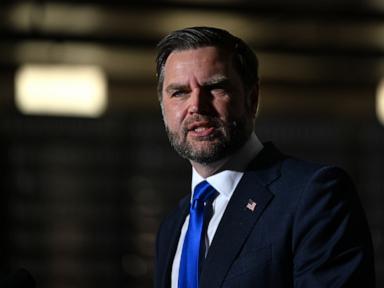
Standard reporting treats Vice President JD Vance’s refusal to endorse Israeli Prime Minister Benjamin Netanyahu as a straightforward scheduling or jurisdictional choice: domestic midterm campaigning takes precedence over foreign electoral intervention. That surface reading misses the deeper strategic architecture. When a sitting vice president withholds an endorsement less than a day after the president issues an explicit, full-throated backing of the same foreign leader, the non-endorsement operates as a calibrated signal rather than mere calendar management.
To understand why Vance declined to back Netanyahu while focusing on U.S. midterms, analysts need a structural framework separating domestic resource allocation, intra-executive signaling, and asymmetric reputational risk. Known facts establish what occurred and what officials stated on the record; educated hypotheses explain how those incentives interact across Washington and Jerusalem. Building on this idea, you can also read: Alberta Voters Did Not Reject Independence They Rejected Bad Math.
The Architecture of the Non-Endorsement
Surface-level coverage often flattens political statements into binary positions—either "for" or "against." A sharper analytical model divides electoral positioning into four distinct postures:
- Affirmative Endorsement: Explicit public backing that transfers the endorser’s brand equity and political capital to a candidate or coalition.
- Active Opposition: Explicit public criticism or backing of an adversary designed to weaken a candidate’s standing.
- Strategic Neutrality: Deliberate refusal to take a side, paired with a stated rationale that insulates the speaker from downstream outcomes.
- Deferential Abstention: Stepping aside in favor of a higher-authority actor while claiming a different operational mandate.
Vance’s remarks in October 2026 combine strategic neutrality and deferential abstention. He stated that he was neither pro-endorsing nor anti-endorsing Netanyahu, noted that he focuses on American candidates during the midterm cycle, and pointed to President Donald Trump’s endorsement as the one that carries decisive weight. Experts at Reuters have also weighed in on this trend.
The cause-and-effect chain here is straightforward. Trump’s Truth Social endorsement tied Netanyahu’s survival directly to U.S. burden-sharing in the conflict involving Iran. By declining to echo that endorsement, Vance avoided locking his own political identity into a single foreign leader’s electoral fate while preserving room to emphasize domestic voter concerns during a high-stakes U.S. election cycle.
Domestic Bandwidth Versus Foreign Signalling
In political strategy, attention is a scarce commodity governed by opportunity cost. Every hour spent on foreign electoral commentary competes with domestic messaging on inflation, local races, and turnout—especially in competitive U.S. Senate and House contests during midterm season.
The Opportunity Cost of Foreign Endorsements
A vice president campaigning in states like North Carolina or Ohio operates inside a domestic media ecosystem. Foreign endorsements generate headlines abroad and among specialized foreign-policy audiences, yet they rarely move swing voters in domestic battleground districts. Worse, when a foreign election becomes entangled with contentious regional conflicts—such as the war in Gaza, West Bank tensions, or negotiations and military friction with Iran—foreign endorsements can pull domestic surrogates into protracted debates over overseas entanglements.
Saying "I endorse American candidates" functions as a boundary-setting mechanism. It tells domestic audiences that the speaker’s operational priority is home turf, while framing foreign electioneering as outside the vice president’s core midterm assignment.
The Precedent Constraint
Citing domestic focus does not explain why a foreign endorsement would be risky in the first place; for that, one has to look at prior precedent. Earlier in 2026, Vance traveled to Hungary and campaigned openly for Prime Minister Viktor Orbán ahead of parliamentary elections, only for opposition challenger Péter Magyar to win and end Orbán’s long rule. Vance subsequently remarked that his sole prior foreign endorsement had not gone particularly well.
In principal-agent terms, endorsing a foreign incumbent carries reputational tail risk. If the incumbent loses, the foreign endorser absorbs a visible setback without gaining domestic electoral credit. Learning from a prior loss makes abstention rational, particularly when an election is widely viewed as a high-friction referendum on an embattled incumbent.
Intra-Executive Division of Labor
A common mistake in reading coalition politics is assuming that two top leaders must speak in lockstep on every nuance. In practice, a president and a vice president can occupy complementary—or quietly divergent—lanes without triggering an open rupture.
Consider the dynamics at play when Trump endorses Netanyahu while Vance declines:
- Trump’s Lane: Direct, high-stakes dealmaking and personal loyalty framing, linking Netanyahu’s leadership to U.S. strategic interests regarding Iran and asserting that American voters would bear greater costs under a different Israeli leader.
- Vance’s Lane: Domestic coalition mobilization, restraint on foreign intervention, and deference to the president’s prerogative on international endorsements.
- Friction Points: Reports of tense past exchanges between Vance and Netanyahu, alongside Vance’s earlier warnings to Israeli cabinet members against criticizing Washington during negotiations with Tehran, show that alignment on alliance security does not mean unconditional personal or political backing for Netanyahu’s domestic campaign.
This division of labor is an educated hypothesis grounded in public statements and reported friction rather than a confirmed secret pact. Still, its strategic utility is clear: Trump claims credit for backing a key partner in regional confrontation, while Vance insulates the broader domestic message from foreign electoral volatility.
How to Audit Foreign Policy Signals During Election Cycles
analysts, campaign strategists, and observers evaluating similar episodes can apply a four-step diagnostic instead of taking official explanations at face value.
- Map the Timing and Sequence: Check whether a non-endorsement follows or precedes a principal’s statement. Reactive abstention after a president’s endorsement carries different meaning than silence in a vacuum.
- Audit Prior Track Records: Compare current restraint against past behavior. If a leader previously campaigned abroad and suffered an adverse outcome, stated domestic focus may be partly a lesson learned from sunk reputational costs.
- Separate Policy Alignment from Electoral Backing: Distinguish between supporting a country’s security posture or diplomatic track and endorsing a specific party leader’s reelection bid.
- Weight Domestic Incentive Structures: Evaluate how much domestic voters care about the foreign race relative to inflation, cost of living, or local governance in the upcoming U.S. election.
Limitations of This Framework
No analytical model is a silver bullet. First, public statements in campaign settings are engineered for persuasion and plausible deniability, so exact internal motivations remain unobservable without primary records. Second, foreign elections have their own domestic drivers—coalition math, turnout, local grievances—that often dwarf external endorsements regardless of who issues them. Third, if an overseas crisis escalates sharply, domestic insulation can break down quickly, forcing leaders who preferred distance back into active crisis management.
Strategic Play for Observers and Decision-Makers
Treat a vice president’s refusal to endorse a foreign leader during a domestic election cycle as a dual-purpose hedge: it conserves campaigning bandwidth for home races while avoiding uncompensated downside risk in a contested foreign vote. Rather than reading non-endorsement as abandonment of an ally or reading a stated focus on midterms as the sole motive, track the gap between executive statements and operational policy—because security commitments and campaign endorsements are two very different instruments of statecraft.
JD Vance declines to endorse Netanyahu for reelection, says he's focusing on midterms
This report provides the core coverage of JD Vance's remarks declining to endorse Netanyahu while campaigning ahead of the U.S. midterm elections.


