Silence.
That is the hardest thing to explain about a diplomatic summit that never happens—not the roar of motorcades, not the rhythmic thump of security helicopters overhead, not the crisp snap of thirty-two national flags whipping in the coastal wind, just the sudden, eerie quiet of a calendar square left blank.
When news broke in late 2026 that NATO had canceled its 2027 leaders’ summit—a gathering originally slated to bring heads of state together in Tirana, Albania—the initial headlines read like dry bureaucratic housekeeping. A scheduling adjustment. A strategic pause. A logistical pivot. Most readers scrolled right past it on their morning commutes, treating it with the same mild indifference they reserve for a postponed trade symposium or a rescheduled municipal board meeting.
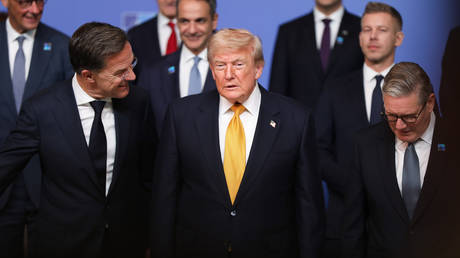
They shouldn't have. Because in the architecture of global security, the summit isn't just a photo opportunity where aging men and women in dark suits shake hands in front of blue backdrops. It is the annual pulse check of the Western alliance. When that pulse skips a beat, you have to ask whether the heart is resting—or faltering.
The Architecture of a Room
To understand what disappears when a NATO summit vanishes from the docket, you have to step inside the preparation for one. Picture a hypothetical mid-level foreign ministry official—let’s call her Elena—sitting in a windowless briefing room in Brussels or Tallinn eighteen months before the gavel falls.
For Elena, a summit isn't a two-day event. It is a grueling, eighteen-month forcing mechanism.
Diplomacy, by its nature, drifts toward procrastination. Nations argue over defense spending percentages, quibble over ammunition procurement contracts, and stall on cyber-defense protocols until a hard deadline forces their leaders into the same physical room. Nobody wants to be the prime minister who shows up to the family photo empty-handed while cameras from four hundred news outlets click away. The summit is the deadline that makes the entire sprawling machinery of thirty-two militaries and foreign ministries actually move.
"Without the summit on the calendar, the urgent suddenly becomes optional," a senior European defense planner might tell you over lukewarm coffee, speaking on background because nobody wants to sound alarmist on the record. "You lose the gravitational pull."
Consider what happens next: the draft communiqués that would have been fought over line by line in smoke-free committee rooms sit unedited on secure servers. The bilateral side-meetings—those crucial, unscripted fifteen-minute conversations in hallways between leaders who rarely speak directly—never get penciled in. In international relations, proximity breeds accountability. It is remarkably easy to delay a promised air-defense battery over an encrypted phone line; it is considerably harder to look a fellow leader in the eye across a polished oak table in Tirana and explain why the shipment is six months late.
What the Official Explanation Leaves Out
According to alliance officials and diplomatic reporting surrounding the decision, the cancellation of the 2027 leaders' summit was framed around pragmatism. After years of back-to-back high-stakes gatherings—Madrid in 2022, Vilnius in 2023, Washington in 2024, The Hague in 2025, and Ankara in 2026—the alliance had already locked in its core regional defense plans, updated its force models, and debated its long-term spending targets. Supporters of the pause argue that constant summitry drains diplomatic bandwidth, costs host nations hundreds of millions of dollars in security apparatus, and risks turning historic gatherings into repetitive exercises in communiqué drafting.
That argument carries real weight. Anyone who has watched the modern diplomatic circuit knows the exhaustion of perpetual crisis meetings. When leaders gather every twelve months without fresh, earth-shaking decisions ready to sign, the resulting spectacle can look less like unity and more like theater. Critics of annual summits have long pointed out that NATO did not hold yearly leaders' meetings during much of the Cold War; during decades of acute nuclear standoff, heads of state sometimes went two or three years between formal summits, letting foreign and defense ministers handle the heavy lifting in between.
Yet history rarely repeats itself in identical conditions. During the Cold War, the lines in Europe were frozen in concrete and barbed wire, and Washington’s commitment to European security was an unchallenged axiom of American politics. Today, the ground beneath the alliance shifts every quarter.
Think of the alliance like a suspension bridge spanning a wide, turbulent river. On calm days, the cables look static, almost decorative. You barely notice them working. You might even wonder why engineers spend so much time inspecting bolts and tension rods every single year. It is only when the crosswinds pick up—when political turmoil rattles major capitals, when ammunition stockpiles run thin, when gray-zone sabotage targets undersea cables in the Baltic—that you realize those cables are the only thing keeping the roadway from twisting apart.
The summit is that annual tension check. Skipping it might save maintenance costs in the short term, or avoid an awkward public spectacle if the cables are vibrating unevenly. But skipping the inspection does not calm the wind.
The View From Tirana
To feel the human weight of a canceled summit, look away from Brussels and Washington for a moment and look toward the Adriatic coast.
For Albania—a nation that joined NATO in 2009 after emerging from decades of brutal, paranoid isolation under Enver Hoxha’s dictatorship—hosting the 2027 summit was supposed to be a generational milestone. Imagine a hotelier in central Tirana, or a young Albanian translator preparing for the biggest week of her career, or a municipal engineer repaving boulevards that once echoed with the footsteps of secret police. Hosting the leaders of the free world wasn't merely logistics for Tirana; it was validation. It was a loud, unmistakable declaration to the entire Western Balkans—a region still haunted by unresolved borders, Russian disinformation campaigns, and fragile democratic institutions—that the Adriatic coast sits squarely inside the transatlantic family.
When the 2027 gathering disappears from the schedule, Tirana loses more than hotel bookings and television coverage. The region loses a visible anchor.
I remember standing outside a NATO perimeter years ago during a rainy European autumn, watching local schoolchildren press their faces against steel barricades just to catch a glimpse of motorcades flying unfamiliar flags. To a cynic, it was just traffic and bureaucracy. To the people living on the alliance's eastern and southern edges, those flags meant something visceral: You are not alone on the map.
When you live five hundred miles from an active war zone, deterrence isn't an academic theory debated in think-tank white papers. It is the quiet assurance that lets you take out a twenty-year mortgage, open a bakery, or send your daughter to university without keeping a packed suitcase by the front door. And deterrence relies heavily on perception—on potential adversaries seeing thirty-two nations show up, stand shoulder to shoulder, and speak with one voice.
The Unspoken Fears Behind Closed Doors
Let’s be honest about what makes this moment so unsettling, because pretending everything is purely about calendar efficiency insults the reader’s intelligence.
Nobody outside the innermost circles of the North Atlantic Council knows every private calculation that led to scrubbing 2027 from the books. Geopolitics is messy, opaque, and full of half-truths whispered to reporters in corridors. When officials say "we are focusing on implementation rather than summitry," skeptics naturally wonder: Are they avoiding a meeting because there’s nothing left to decide, or because they’re terrified of what happens if they put certain leaders in the same room right now?
That question hangs over every foreign ministry in Europe like a low fog.
Over the past several years, transatlantic politics have grown increasingly volatile. Disputes over burden-sharing—who pays what percentage of GDP, who supplies troops, who carries the financial weight of European security—have moved from polite diplomatic nudges to blunt ultimatums. Elections across North America and Europe have reshaped governing coalitions, bringing populist skepticism toward multilateral institutions closer to the center of power. Meanwhile, the industrial reality of modern warfare has exposed uncomfortable gaps: factories struggling to scale up artillery shell production, air-defense interceptors costing millions apiece while cheap drones swarm across borders, and national budgets squeezed between aging populations and rising defense bills.
In that environment, a leaders' summit is no longer a guaranteed triumph of choreographed unity. It carries risk. A single sharp exchange caught on a hot mic, a public disagreement over alliance expansion, or a fractured final communiqué can hand adversaries a propaganda victory worth ten divisions.
If you are a diplomat trying to protect an alliance from visible cracks, canceling the summit looks like smart risk management. You keep the disagreements behind closed doors, managed quietly by defense ministers and ambassadors at NATO headquarters in Brussels rather than broadcast live to a billion smartphones.
But the real problem lies elsewhere: you cannot indefinitely hide structural strain by turning off the cameras.
What Happens When Momentum Stalls
Consider a hypothetical scenario—a small, plausible chain reaction over the next eighteen months.
Suppose a mid-sized European member state faces a bruising budget fight in the spring of 2027. Inflation is stubborn; voters want tax relief or hospital funding, not another billion euros earmarked for armored vehicles and radar systems. Without a high-profile leaders' summit looming that summer, the prime minister quietly delays the procurement vote until autumn. Then another country sees the delay and decides it, too, can stretch its timeline by six months. Nothing dramatic breaks. No treaty is violated. Article 5—the sacred pledge that an attack on one is an attack on all—remains printed on parchment in a vault.
Yet slowly, imperceptibly, the sense of shared urgency evaporates.
In military logistics, time is the one resource you cannot buy back. Factories do not build assembly lines on promises; they build them on signed, multi-year contracts backed by political deadlines. Engineers do not train overnight. When political leaders step back from the annual spotlight, the bureaucratic machinery beneath them naturally decelerates to match the reduced pressure from the top.
Meanwhile, adversaries do not take calendar breaks. Intelligence services in Moscow, Beijing, and Tehran watch NATO’s schedule with obsessive precision. They track every joint exercise, every defense budget vote, and yes, every summit cancellation. To an authoritarian planner looking for signs of Western fatigue, a skipped summit is data. It suggests an alliance catching its breath—or perhaps an alliance trying to avoid an argument it isn't sure it can win.
Where the Alliance Goes From Here
None of this means NATO is collapsing. Predictions of the alliance’s demise have been a cottage industry since 1949, and every single one of them has aged poorly. Over the past decade, the alliance has expanded to thirty-two members, adding Finland and Sweden—two fiercely capable military powers that transformed the strategic map of Northern Europe. Defense spending across European allies has climbed dramatically compared to the complacency of the 2010s, and hundreds of thousands of troops now sit at higher readiness than at any point since the fall of the Berlin Wall.
In fact, there is a constructive version of what happens next—if leaders choose to use the quiet wisely.
Without the frantic theater of preparing a multi-day leaders’ extravaganza, defense ministers and military commanders at Supreme Headquarters Allied Powers Europe have a rare window to focus on unglamorous, essential work. They can standardize ammunition calibers that still fail to fit across allied artillery systems. They can untangle the regulatory knots that slow down moving tanks across European rail borders. They can harden electrical grids and undersea fiber-optic cables against hybrid attacks that fall just short of open warfare.
Real security is rarely built in front of television cameras anyway. It is built in ammunition depots in Poland, shipyards in Scotland, drone testing ranges in Estonia, and radar stations along the Arctic Circle. If 2027 becomes the year NATO traded speeches for steel—swapping podiums for production lines—then historians might eventually view the canceled summit not as a retreat, but as a moment of grown-up discipline.
Still, diplomacy is a human enterprise, and human beings need rituals to remind themselves why they belong together. Treaties are just words on paper until people stand in a room and reaffirm them with their presence.
Somewhere in Tirana next year, on a week that was supposed to bring the world’s most powerful leaders to the edge of the Adriatic, the boulevards will remain open to ordinary morning traffic. Shopkeepers will unlock their doors. Coffee cups will clatter on small café tables. Life will go on smoothly, quietly, without a single motorcade in sight—and across a continent that once learned the hard way what happens when alliances drift apart, nobody will quite know whether that silence was the sound of peace holding steady, or the sound of a warning nobody wanted to hear.