The morning mist still clings to the heavy pines of the Grafenwöhr training area in Bavaria, a place where the dirt has been chewed up by American tread marks for nearly eighty years. For the local baker who sells rolls to GIs or the German mechanic who married a girl from Kentucky, the rumble of a Stryker vehicle isn't just noise. It is the sound of a promise. It is the audible proof that if the world catches fire again, the biggest kid on the playground is already standing in the yard.
But promises are expensive. They require more than just words; they require bodies, logistics, and a staggering amount of money.
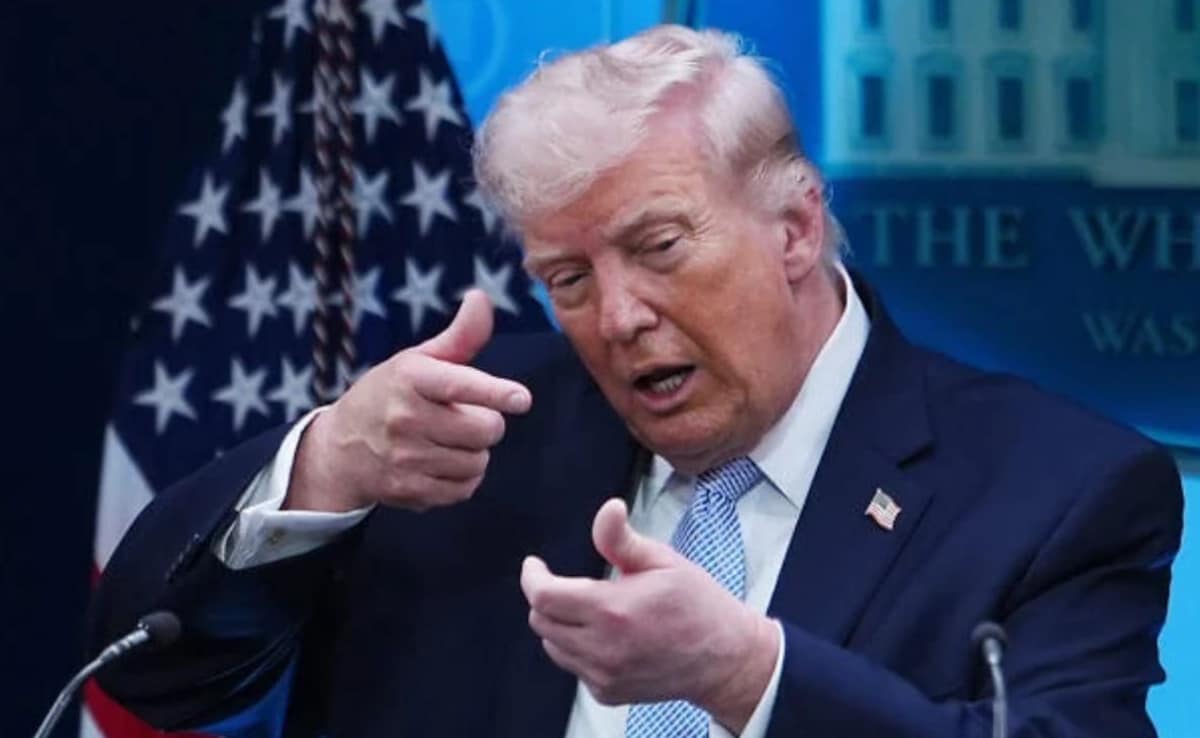
In Washington, the ledger is being reopened. Donald Trump has never looked at a map of Europe and seen a sentimental alliance. He looks at it and sees a balance sheet that doesn't add up. The talk of pulling thousands of American troops out of the continent isn't just a campaign threat or a bargaining chip for more defense spending. It is a fundamental questioning of whether the post-1945 world order still serves the person paying for it.
The Ledger of the Atlantic
Consider a hypothetical town called Vilseck. In this town, the local economy doesn't run on manufacturing or tech. It runs on the presence of the 2nd Cavalry Regiment. When those soldiers leave for a rotation, the grocery stores go quiet. When they return, the bars fill up. But more importantly, Vilseck serves as a physical tripwire. If you move troops out of Germany, you aren't just moving chess pieces. You are signaling to every neighbor—both the friendly ones and the one sitting behind a desk in the Kremlin—that the tripwire has been cut.
The friction within NATO has reached a fever pitch because the math is undeniable. For decades, the United States has shouldered the lion's share of the burden. The 2% of GDP spending goal, agreed upon by member nations, has been treated by many European capitals as a polite suggestion rather than a hard requirement. To a businessman-turned-politician, this looks less like a partnership and more like a lopsided subscription service where the lead provider is getting fleeced.
Money is the bone of contention, but the marrow is influence. If the U.S. pulls back, Europe faces a terrifying realization: they have outsourced their heartbeat to a foreign power that might just decide to stop pumping.
A Continent Holding Its Breath
Imagine a young lieutenant in the Polish army, stationed near the Suwalki Gap—that narrow strip of land that connects the Baltic states to their NATO allies. To him, the presence of American forces in Germany isn't a political debate. It is oxygen. He knows that his own country has ramped up spending, buying tanks and jets at a frantic pace. But he also knows that without the logistical spine of the U.S. military, Europe is a collection of small shields against a very large hammer.
The tension isn't just about whether 10,000 or 25,000 troops stay or go. It’s about the "what if."
What if the transport planes stop landing at Ramstein? What if the intelligence sharing that keeps the continent's borders secure becomes a pay-to-play model? This isn't a abstract theory. It is a shift in the tectonic plates of global power. When the U.S. signaled a potential withdrawal from bases in Germany during the previous Trump administration, the shockwaves weren't just felt in Berlin. They were felt in Tokyo, Seoul, and Taipei. Everyone was suddenly looking at their own horizon, wondering if the American umbrella was about to fold.
The Cost of the Stay
The argument for leaving is grounded in a harsh, pragmatic logic. Why should a taxpayer in Ohio, who struggles to afford healthcare or see a pothole fixed on their street, fund the defense of a wealthy European nation that enjoys a sprawling social safety net? It’s a powerful story. It’s a story that wins elections.
The counter-narrative is less visceral but arguably more vital. The U.S. doesn't station troops in Europe out of the goodness of its heart. It does so because a stable Europe is the largest trading partner the U.S. has. It does so because preventing a war is infinitely cheaper than fighting one. We are paying for a "no-war" insurance policy. The problem with insurance is that you only feel the cost when things are going well. You only appreciate the value when the house is already burning down.
If the withdrawal happens, the logistics are a nightmare. You don't just pack a suitcase and leave. You have to move heavy armor, sensitive communications equipment, and thousands of families. You have to decide where they go. Bringing them home to the U.S. requires building new barracks and infrastructure that doesn't exist. Moving them to Poland or the Baltic states—which some have suggested—acts as a direct provocation to Russia. It moves the line of contact. It raises the temperature in a room that is already sweltering.
The Invisible Thread
There is a specific kind of silence that falls over a military base when a unit leaves for good. It’s not the silence of a weekend; it’s the silence of a ghost town. The schools for the children of service members close. The local businesses that have survived on the "American dollar" for three generations begin to shutter.
But the most profound change is invisible. It’s the loss of the "human glue." When American soldiers train alongside Germans, Italians, and Poles, they develop a language of cooperation that can't be taught in a classroom. They learn how to trust the person to their left. If you remove the troops, you remove the trust. You replace it with a series of frantic phone calls between diplomats who don't know each other’s names.
We are watching a slow-motion divorce of interests. The U.S. is increasingly looking toward the Pacific, obsessed with the rising shadow of China. Europe is looking at its own eastern border, terrified of a history they thought they had outrun. In the middle sits the American soldier, a person who has become a symbol of a world that might not exist for much longer.
The barracks are still full today. The Strykers still roar through the Bavarian mud. But the men and women inside them are looking at the news, just like everyone else. They are wondering if they are the last of their kind—the final vanguard of an era where a child in a German village could look at an American flag and feel, however briefly, that the world was safe.
The decision won't be made in a trench or a cockpit. It will be made in a boardroom or a voting booth. And when the ink dries on that order, the map of the world won't just look different. It will feel different. The air will get a little colder. The distances will get a little longer. And the silence in the woods of Grafenwöhr will finally be absolute.


