Silence in a server room rarely means peace. It usually means a fan died or a power supply tripped before the alarms could scream.
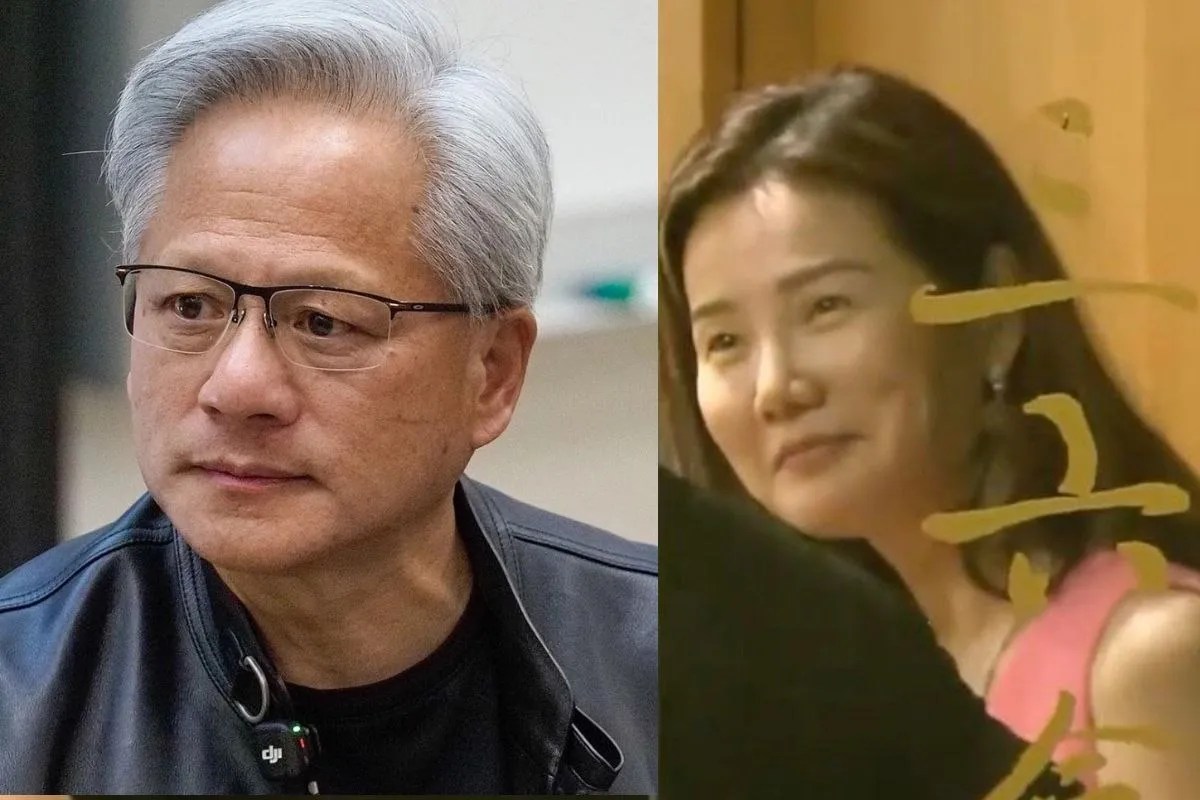
On November 12, 2026, that exact kind of cold, heavy quiet fell over Santa Clara. After thirty-three years at the helm, Jensen Huang—the leather-jacketed co-founder who turned a niche graphics chipmaker into the beating heart of artificial intelligence—stepped down as president, chief executive officer, and board director. Reports surrounding undisclosed extramarital relationships, including scrutiny involving a businesswoman suspected by U.S. authorities of espionage for China (an allegation Beijing has denied), had triggered a board investigation and an abrupt exit. Interim leadership stepped in. Stock tickers bled red. A column of market value that had taken decades to build began to wobble in real time.
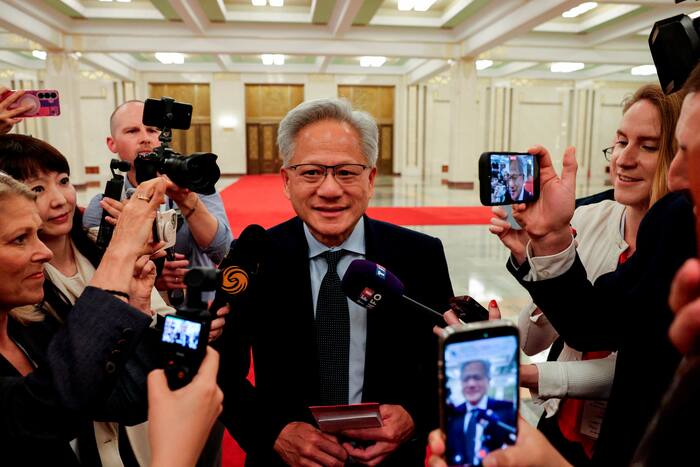
Then, just eleven days later, on November 23, Nvidia's board voted unanimously to bring him back.
To read a dry wire summary of those two dates is to miss the tremor under everyone's feet. A founder resigns. A board names an interim chief. Eleven days later, the founder returns after consultations with senior U.S. government officials reassure directors that his reinstatement poses no national security risk. On paper, it looks like a clerical correction. In reality, those eleven days exposed how fragile a trillion-dollar era becomes when its architect walks out the door.
The Architecture of One Mind
Think of a symphony orchestra that has spent thirty years playing from sheet music written live on stage by its conductor. Even when the violins know their cues by heart, the tempo lives in the conductor's wrist.
That is a metaphor, and it stretches things a bit, because chips are physical silicon and math rather than melody. Still, anyone who has watched Nvidia up close knows how tightly Jensen Huang's instincts fused with the company's daily pulse. He didn't merely sign off on roadmaps; he shaped how engineers argued over thermal limits, how software teams talked to hardware architects, and how fast the company moved when a new model architecture threatened yesterday's assumptions.
Consider what happened to one engineer during those frantic days. Let's call him Tomasz, a hypothetical systems engineer in his late twenties who spent his evenings profiling GPU memory bottlenecks and drinking lukewarm coffee beside humming racks. When news broke that Huang had resigned, Tomasz felt a knot tighten in his stomach—not out of blind hero worship, though respect ran deep in the halls, but out of sheer disorientation. Who decides which bet gets double the wafer allocation next quarter? Who absorbs the heat when a radical design looks crazy on a whiteboard? Like a real Nvidia robotics engineer named Darrell Dai who publicly resigned in the wake of Huang's exit—and later admitted on social media after Huang's return that he "may have moved too quickly"—Tomasz felt the urge to pack up his badge before the ground finished shifting.
Leaving is easy when you are angry or scared. Staying in the dark is harder.
Why Eleven Days Shook Everything
Most people assume a giant corporation is a fortress of redundancy. Org charts have boxes stacked three deep. Legal teams have binders. Boards have checklists.
Yet markets do not trade on org charts. Markets trade on conviction.
In the days after Huang's resignation became public, Nvidia's shares slid sharply, adding to a brutal stretch for the stock. Within days, a petition calling for his return gathered more than 180,000 signatures, drawing support from high-profile figures such as Elon Musk, while board chair Harvey C. Jones initially told analysts there were no plans to bring him back. Six days after that statement, the board reversed course. Shares surged roughly 25% to more than 30% across premarket and opening trading upon news of his reinstatement, wiping out days of panic in a matter of hours.
Pause and look at that swing. A single human being's status moved tens—and at peak single-day spikes, hundreds—of billions of dollars in market value.
Why? Because artificial intelligence infrastructure is not a consumer fad you can pause like a streaming subscription. Data centers are multi-year commitments of concrete, high-voltage power lines, liquid cooling loops, and scarce silicon. When the person most closely identified with driving that hardware cadence suddenly steps aside amid intelligence and governance probes, customers, suppliers, and lenders all ask the same quiet question at once: Does the pace hold?
I have worked around high-stakes engineering teams long enough to recognize that look on people's faces when leadership fractures. Nobody panics out loud in the first hour. Instead, meetings get quieter. People double-check emails twice. Small decisions sit waiting for a blessing that used to take five minutes in a hallway. You don't feel the cost on Tuesday; you feel it six months later in missed milestones and second-guessing.
Power, Scrutiny, and the Cost of Return
Bring him back.
Good. The whiplash stopped.
Yet a return is not a reset button. When Nvidia reinstated Huang on November 23, the board emphasized that it had received input from senior levels of the U.S. government and felt confident his return posed no national security risk, while noting that independent review and regulatory inquiries—including investigations involving federal authorities and governance oversight—were not simply evaporating overnight.
Let's be honest with ourselves: this part is messy, uncomfortable, and hard to pigeonhole. We want stories with clean heroes and clean villains. Real life rarely hands us either. A founder can build something extraordinary—something that accelerates scientific research, reshapes software, and employs tens of thousands of talented people—while simultaneously creating governance headaches, personal blind spots, and geopolitical tension that no single person can wave away with a keynote speech.
If you feel a tug-of-war inside yourself reading about this—admiring the sheer engineering drive on one hand, and feeling uneasy about concentrated power, personal conduct, and national security questions on the other—you are not missing the point. You are right where the tension lives.
Consider a second hypothetical character: Elena, a mid-sized cloud infrastructure founder trying to keep her compute cluster online without going bankrupt. For Elena, Jensen Huang isn't a poster on a dorm wall. He is the supplier whose chip availability determines whether her startup's servers arrive on time or stall in a queue. During those eleven days, Elena didn't care about cable-news talking points; she cared about lead times, roadmap continuity, and whether the engine powering her business had just lost its chief mechanic.
Her relief when Huang returned was practical, almost physical. The uncertainty had a price tag attached to every hour.
What Eleven Days Actually Revealed
Strip away the noise, and three truths stand out from Nvidia's eleven-day shockwave:
- Founder gravity is real, and double-edged. When a founder embodies a company's speed and technical vision for over three decades, their exit creates an immediate vacuum of trust—even if capable executives are named to steady the ship.
- Governance cannot be an afterthought at scale. A company sitting at the center of global computing and national security debates cannot treat oversight, disclosures, and succession as minor details; scrutiny follows influence like a shadow.
- Reinstatement buys time, not immunity. Coming back restores momentum and calms markets fast, but the hard work of institutional maturity, compliance, and long-term capital returns still has to be earned every single quarter.
Tomasz, our hypothetical engineer, wouldn't have walked out if he hadn't cared about the craft. Elena, our hypothetical founder, wouldn't have breathed easier if the stakes weren't real. And investors wouldn't have whipsawed so violently if the market didn't view Nvidia as a keystone of modern computing.
A server rack hums through every hour of the night, indifferent to boardroom drama, headlines, or fear. Outside those blinking lights, human beings are still figuring out how to build enduring institutions around towering, complicated people.
The lights stay on.