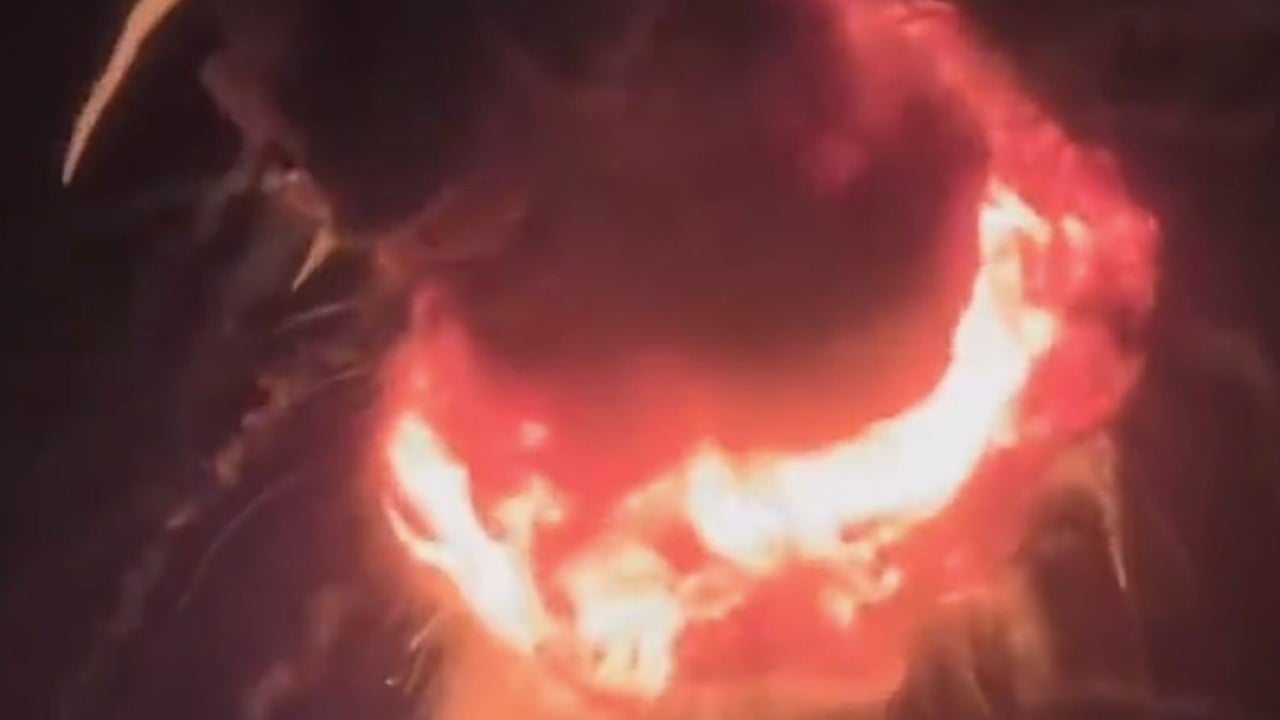
The historical narrative surrounding Albert Einstein and the Manhattan Project is broken. Popular history loves a clean, morally pure tragedy. It has manufactured a comforting myth: the gentle, pacifist genius who looked at the destructive potential of the atom, nobly refused to participate in building the atomic bomb, and spent his remaining years in haunted, philosophical regret.
It is a beautiful lie. It is also completely wrong.
Einstein did not refuse to build the atomic bomb. He was aggressively, systematically excluded from doing so by the United States government because he was deemed a massive security risk. He wanted in. He offered his services. The military intelligence apparatus looked at his leftist political associations, slapped a "denied" stamp on his file, and left him to rot in Princeton while younger physicists changed the world.
The "lazy consensus" surrounding Einstein's nuclear legacy treats him as an omnipotent moral agent who chose exile from the sandbox. The reality is far more bruising: Einstein was a geopolitical catalyst who was discarded the moment his initial utility expired.
The Letter That Launched the Firestorm
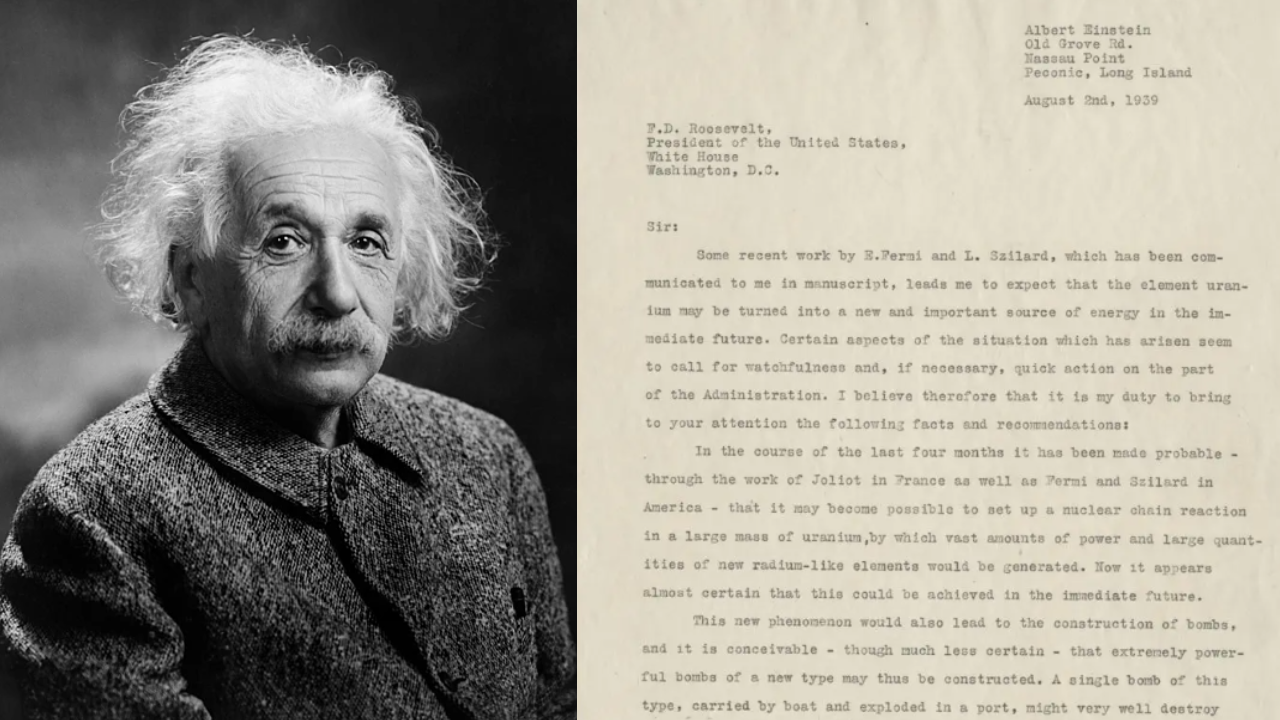
To understand the depth of the misconception, we have to look at August 1939. The conventional narrative frames Einstein’s letter to President Franklin D. Roosevelt—co-signed and drafted largely by Leo Szilard—as a reluctant, agonizing warning.
That is revisionist history. The letter was an urgent, proactive call to arms.
Einstein did not just warn Roosevelt that Nazi Germany might develop a nuclear weapon; he explicitly advocated for the United States to secure a supply of uranium ore and accelerate its own experimental work. He weaponized his cultural capital to jumpstart an industrial-military apparatus.
Einstein-Szilard Letter (1939) -> FDR Authorizes Advisory Committee on Uranium -> Manhattan Project (1942)
Without Einstein's signature, Szilard and J. Robert Oppenheimer would have been shouting into a void. Einstein didn't just open the door to the nuclear age; he kicked it down. He was the ultimate influencer for the military-industrial complex before the term even existed.
The Myth of Voluntary Pacifism
The core flaw in the public's understanding of this era is the confusion between Einstein's intent and his access.
In July 1940, the Army Intelligence office denied Einstein the security clearance required to work on what would become the Manhattan Project. They cited his pacifist leanings, his support for civil rights, and his socialist sympathies. The FBI, under J. Edgar Hoover, already had a file on him that would eventually swell to over 1,400 pages.
Imagine a scenario where the pentagon invites a known ideological wildcard into the most secret, consequential weapon system development in human history. It was never going to happen.
Einstein didn't sit in his study at the Institute for Advanced Study wrestling with his conscience about whether to join Oppenheimer at Los Alamos. He was never invited to the table. When the government needed a mathematical consultant for the Navy’s Bureau of Ordnance on conventional explosives later in the war, Einstein took the gig. He was paid $25 a day as a contractor, analyzing weapon designs. He didn't hate weapons; he hated losing to fascists. If the Manhattan Project had cleared him, he would have been calculating cross-sections alongside Richard Feynman and Edward Teller.
The Wrong Question: "Would Einstein Have Made the Bomb Faster?"
People often ask: If Einstein joined the Manhattan Project, would the bomb have been built sooner?
This question fundamentally misunderstands the nature of the project and the state of theoretical physics in the 1940s. The answer is a brutal no. In fact, he might have slowed it down.
By 1942, Einstein was an elder statesman out of sync with the bleeding edge of quantum mechanics. He had spent the previous two decades chasing a unified field theory, stubbornly rejecting the probabilistic nature of the quantum world. The Manhattan Project was not a triumph of relativity; it was a triumph of quantum physics, nuclear chemistry, and raw, unprecedented industrial engineering.
Oppenheimer wasn't looking for a philosopher; he was looking for managers of chaos. He needed people who understood neutron mastery and plutonium isotope separation. Einstein's specific genius was irrelevant to the brutal, practical mechanics of weaponization.
Furthermore, Einstein's track record with practical applications was notoriously spotty. His famous collaboration on the Einstein refrigerator in the 1920s was an engineering dead end. The Manhattan Project required the logistics of General Leslie Groves and the pragmatic physics of Enrico Fermi. Einstein was a monument, not a tool.
The Collateral Damage of Historical Sanitization
Why does this myth persist? Because society demands that its geniuses be saints.
We prefer the image of the sorrowful pacifist because the alternative is deeply uncomfortable: a brilliant man who realized, too late, that he had unleashed an existential threat he could neither control nor understand.
Later in life, Einstein famously told his friend Linus Pauling, "I made one great mistake in my life—when I signed the letter to President Roosevelt recommending that atom bombs be made."
Notice the phrasing. He did not regret refusing to build it; he regretted initiating it. It is the confession of a man who realized he was a useful idiot for a state apparatus that used his name to validate an atrocity and then locked him out of the room where the decisions were made.
Stop Asking What Einstein Thought
If you want to understand the nuclear age, stop looking at Einstein's furrowed brow. Look instead at the cold, hard calculus of state power.
The lesson of Einstein and the atomic bomb isn't a moral fable about a scientist who stood up to power. It is a cautionary tale about how easily power co-opts science. The moment you write the letter, you lose ownership of the outcome. The state takes your prestige, strips away your agency, and leaves you to write letters of protest while the engines of war roll on without you.
Einstein didn’t save his soul by refusing to build the bomb. The state saved its secrets by making sure he never got the chance.