The ink on a diplomatic cable is always cold, but the air in the room where it is read is usually thick with sweat.
When a leader speaks of erasing a nation from the map, the words travel through high-speed fiber-optic cables, flash across television screens, and settle into the quiet corners of regular homes. In Washington, the lights inside the West Wing burn into the early morning. In Tehran, a mother listening to the radio grips the edge of her kitchen counter just a little tighter. The headlines call it geopolitics. The people living through it call it survival.
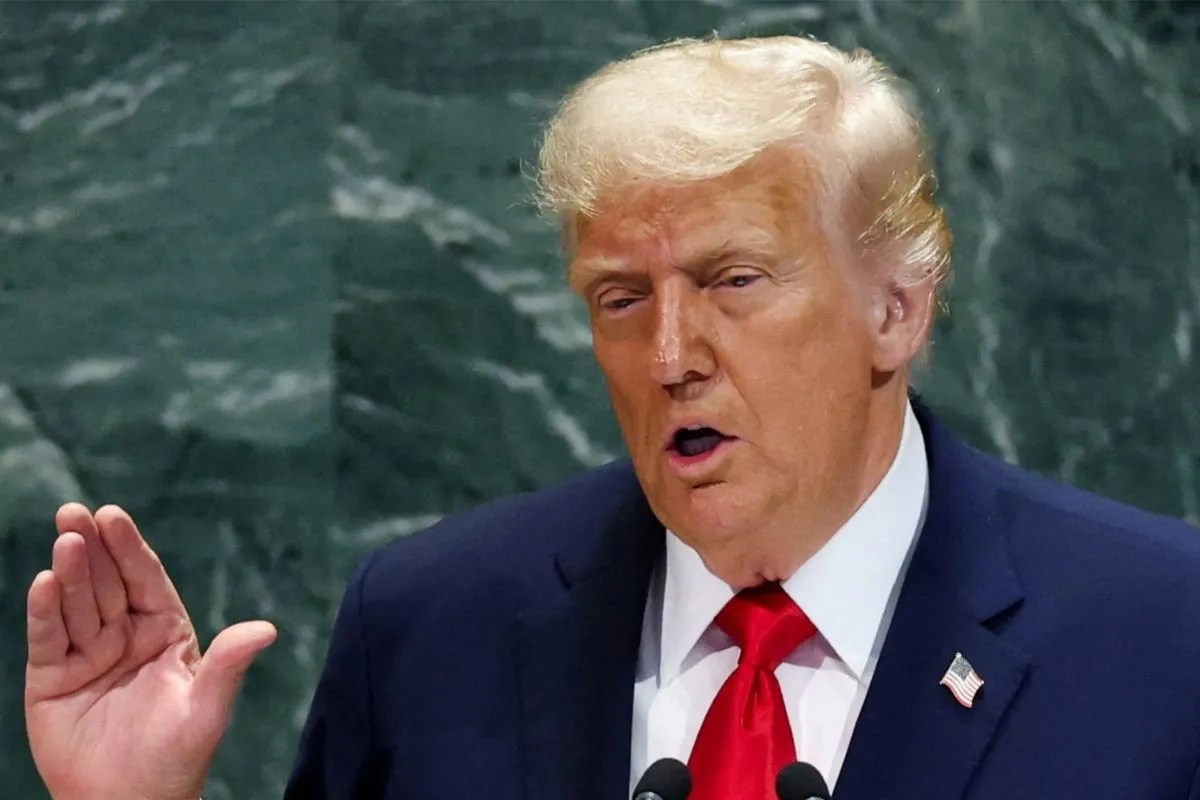
The modern language of international conflict has abandoned nuance. When former U.S. President Donald Trump issued a public warning to Iran, stating that any further provocation would met with the "official end" of the country, it was not just a policy shift. It was a line drawn in the sand with a heavy boot.
To understand how a routine diplomatic standoff escalated into an existential threat, we have to look past the podiums. We have to look at the machinery of fear that grinds between two nations that have forgotten how to speak to each other without shouting.
The Weight of a Word
Words have gravity. In the theater of global power, a single sentence can re-route oil tankers, shift billions of dollars in stock markets, and force military commanders to unroll maps they hoped to leave in the drawer.
Consider the word existence. It is an absolute term. It leaves no room for negotiation, no space for face-saving compromises, and no exit ramps for de-escalation. When a superpower uses that word against a regional adversary, the psychological shockwave hits long before any economic or military action takes place.
Imagine a shopkeeper in Isfahan. He does not control the uranium centrifuges. He does not command the speedboats in the Strait of Hormuz. Yet, when the television in his shop broadcasts threats of total annihilation, his entire world shrinks. Will the currency collapse tomorrow? Should he buy extra rice? Will his son be drafted? This is the invisible tax of brinkmanship, paid daily by people who have no say in the conflict.
The friction between Washington and Tehran is often framed as a clash of ideologies or a dispute over nuclear capabilities. That is the sterile view. The messy truth is that it is a cycle of deep-rooted mistrust stretching back more than half a century. Every action taken by one side is viewed by the other through a lens of historical grievance.
When the U.S. walked away from the 2015 nuclear deal, it signaled to Iran that American signatures are written in disappearing ink. When Iran responded by increasing its enrichment levels and backing regional proxies, it confirmed Washington’s worst fears about an unchecked, aggressive Islamic Republic.
It is a classic trap. Both sides believe they are acting defensively, yet both sides appear entirely aggressive to the other.
The Paradox of Pressure
There is a fundamental flaw in the logic of maximum pressure. The theory goes that if you squeeze an economy tightly enough, the leadership will eventually break, bow, and accept your terms.
But humans do not react to pressure with pure logic. They react with pride, anger, and defiance.
When a nation is backed into a corner and told its very survival is at stake, the internal political dynamics shift drastically. Moderate voices who argue for diplomacy are suddenly viewed as weak or traitorous. Hardliners who promise resistance at all costs gain total control of the narrative. The threat of destruction becomes a self-fulfilling prophecy, hardening the resolve of the very regime the pressure was meant to change.
The Strait of Hormuz provides a stark picture of this tension. It is a narrow choke point, a maritime highway through which one-fifth of the world’s petroleum passes. It is remarkably fragile. A few sea mines or a miscalculated drone strike could halt shipping, sending global energy markets into a tailspin.
The U.S. Navy maintains a massive presence there to keep the lanes open. Iranian Revolutionary Guard fast-boats buzz past American destroyers like angry hornets. The sailors on both sides are young. They are tired. They are operating under immense stress, knowing that a single nervous finger on a trigger could ignite a conflict that neither nation actually wants.
This is where the dry facts of news articles fail us. They report the deployment of an aircraft carrier group as a chess move. They do not report the collective breath held by hundreds of families waiting for news, or the terrifying reality that global peace hangs on the split-second decisions of twenty-year-olds staring at radar screens in the dark.
The Missing Bridge
Diplomacy is often derided as talk without action, but the absence of talk is catastrophic. When the formal channels of communication are cut, assumptions take their place. In a high-stakes standoff, assumptions are lethal.
During the Cold War, the United States and the Soviet Union maintained a direct hotline. Even during the darkest moments of the Cuban Missile Crisis, Washington and Moscow could pick up a phone and clarify their intentions. They knew that a misunderstanding could end civilization.
Today, no such reliable hotline exists between Washington and Tehran. Communication happens through public tweets, televised speeches, and Swiss intermediaries. It is a game of telephone played with loaded weapons. A military exercise is misinterpreted as an imminent invasion. A technical malfunction on a radar system looks like an incoming missile. Without a direct way to ask "what are you doing?" the default response to ambiguity becomes retaliation.
The danger is not necessarily that a leader will wake up one morning and decide to start a catastrophic war. The danger is that they will miscalculate their way into one. They step right up to the edge, confident they can stop themselves in time, only for the ground beneath their feet to give way.
The rhetoric of total destruction is easy to deploy from behind a podium wrapped in bulletproof glass. It rallies the base, dominates the news cycle, and projects an image of unyielding strength. But out in the real world, away from the teleprompters, that rhetoric creates a momentum that is incredibly difficult to slow down. It locks both sides into a dangerous dance where backing down looks like surrender and moving forward looks like ruin.
A heavy silence always follows the thunder of aggressive declarations. The cameras turn off, the journalists pack up their gear, and the politicians retreat to their offices. The words stay behind, hanging in the air like heavy smoke, leaving ordinary people to wonder if tomorrow will be the day the world shifts beneath their feet.