The commercialization of television history relies on an asymmetry between emotional attachment and physical reality. When media properties transition from broadcast intellectual property into tangible spatial commodities, they test the limits of consumer willingness-to-pay against manufactured scarcity. The operationalization of the Studio City split-level residence in Los Angeles, marketed commercially as The Brady Experience, demonstrates how modern experiential tourism monetizes cultural memory by transforming a soundstage illusion into a physical real estate asset.
Understanding this asset requires deconstructing the physical discrepancy that defined the original production. During the broadcast run from 1969 to 1974, the physical structure located at 11222 Dilling Street functioned exclusively as an exterior establishing shot. The interior environment inhabited by Mike, Carol, and their children existed solely within a controlled soundstage at Paramount Studios in Hollywood. Series creator Sherwood Schwartz selected the split-level exterior precisely because its architecture matched his conception of an architect’s suburban residence. For decades, the gap between the physical exterior in Studio City and the fictitious interior in Hollywood remained an unbridgeable architectural chasm for the public. Discover more on a similar subject: this related article.
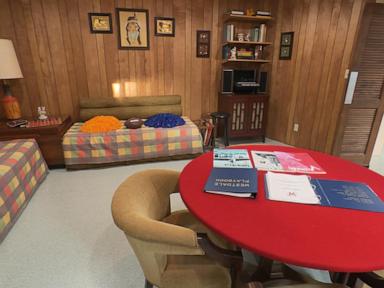
The convergence of these two distinct spaces occurred through a high-capital intervention by cable network infrastructure. When media ownership acquired the physical property, it executed a multi-million-dollar structural overhaul to mirror the studio soundstage layout within the physical shell of the house. This engineering feat, heavily documented for broadcast entertainment, inverted the original production logic. The real-world house was retrofitted to match a fake television set, creating a bizarre loop where reality imitates an artificial construct.
This physical convergence unlocked a specific market segment characterized by high disposable income and intense generational attachment. The operational model relies on severe inventory restriction. By pricing timed-entry, semi-private walkthroughs at roughly $289 per person, the operators restrict throughput to maintain high perceived exclusivity and protect the residential zoning footprint of the surrounding neighborhood. This high-unit-cost, low-volume distribution strategy creates artificial scarcity. Consumer demand vastly outstrips available time slots, turning access into a status symbol for pop-culture enthusiasts. Further reporting by GQ explores related perspectives on this issue.
The operational economics of such activations depend entirely on unit economics per square foot and labor management. Unlike traditional theme parks with high ride maintenance liabilities, a residential museum tour operates with minimal mechanical infrastructure. Fixed costs consist primarily of property maintenance, insurance, security personnel to prevent artifact theft, and a percentage allocation toward charitable entities such as local rescue organizations. Variable costs per visitor remain exceptionally low, yielding high profit margins per tour cycle despite the intensive capital expenditure required for the initial renovation.
Spatial layout optimization within the tour drives the consumer feedback loop. Every room functions as a physical node designed to trigger specific narrative recall. Visitors encounter curated props mapped to individual narrative arcs from the broadcast era, ranging from specific literary references to character-specific memorabilia. This design strategy maximizes user engagement time per square foot. The physical environment acts as a physical search engine query, where consumers walk through the catalog of their own childhood memories, validating the authenticity of the recreation against their internal archives.
The limitations of this operational model are structural and absolute. Residential zoning laws in suburban neighborhoods impose hard caps on daily visitor volume, parking capacity, and operational hours. Unlike commercial theme parks engineered for high-density crowd management, a residential street cannot scale transaction volume horizontally. Growth is strictly vertical, achieved exclusively through price optimization rather than capacity expansion. Furthermore, the longevity of the attraction is bound to a specific demographic cohort whose peak consumption years align with the original broadcast window and subsequent syndication waves.
The strategic takeaway for experiential asset monetization is clear. When physical infrastructure is scarce and cultural intellectual property holds generational resonance, operators can bypass traditional volume-based entertainment models. By engineering absolute fidelity to a fictional space and restricting supply through high pricing floors, asset owners transform passive television nostalgia into high-yield physical inventory. Future entrants seeking to replicate this playbook must identify properties where the gap between media illusion and physical reality has already been bridged by prior capital expenditure, minimizing upfront structural risk while maximizing the monetization of consumer memory.