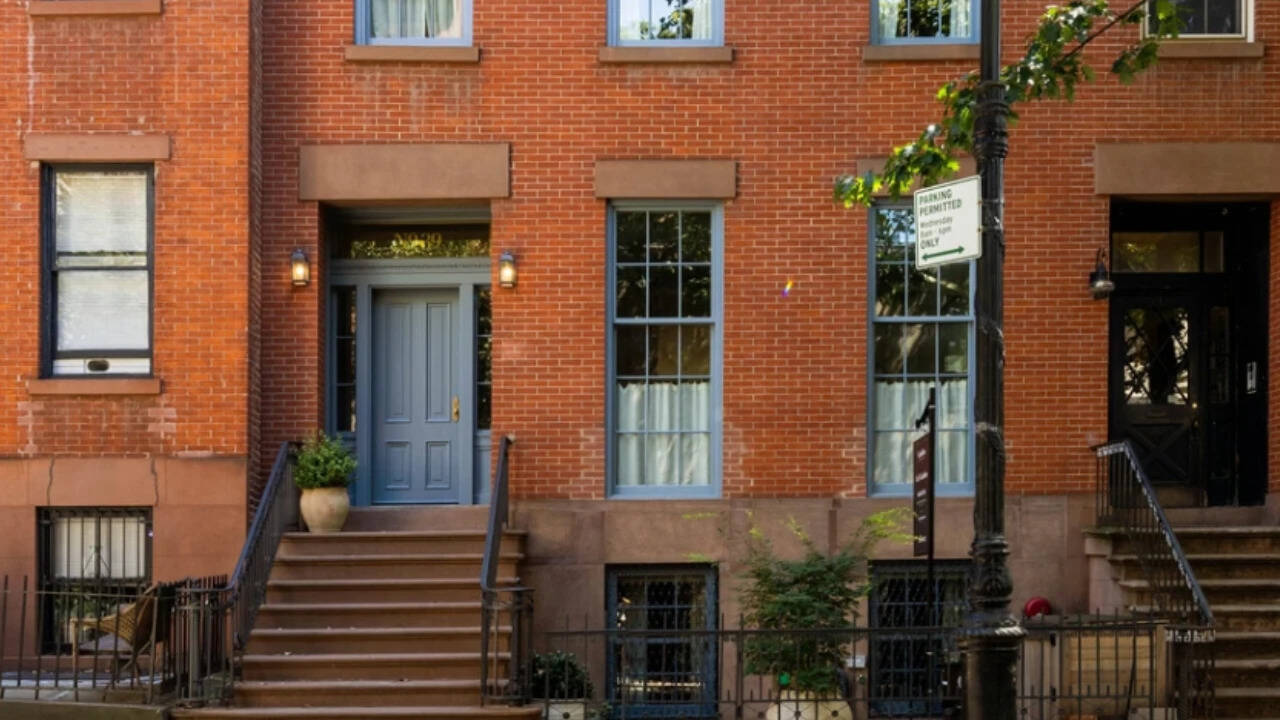
Real estate capital appreciation is frequently misattributed to general market momentum or simple aesthetic improvements. When a historic 1840s Brooklyn townhouse acquires a market valuation of 12.75 million dollars following an initial 5.35 million dollar acquisition and a subsequent multi-year restoration, the transaction reveals a precise economic formula. This valuation trajectory is not an anomaly of speculative fervor. It represents a structured conversion of uncaptured structural equity into a high-yield prime asset class through intensive capital expenditure, regulatory navigation, and supply scarcity management.
Understanding this transaction requires examining the underlying mechanics that govern prime historic urban real estate. Standard real estate analysis focuses on gross square footage and superficial finishes. High-performance urban asset evaluation relies on three structural pillars: foundational structural integrity, preservation compliance economics, and localized supply inelasticity.
The Three Pillars of Historic Asset Valuation
The transformation of a mid-nineteenth-century structure from an initial valuation baseline to prime luxury tier is dictated by strict economic parameters.
Structural and Spatial Efficiency
Older urban footprints, particularly Greek Revival or Italianate townhouses from the 1840s, often suffer from compartmentalized floor plans that conflict with modern ultra-prime residential demand. The primary capital expenditure in a comprehensive restoration is not cosmetic luxury; it is structural reconfiguration. Engineers must insert concealed steel moment frames to open floor plates, establish vertical circulation cores, and maximize natural light penetration through rear-facade glazing expansions. The cost function of this structural work scales exponentially with the age of the building due to hidden load-bearing anomalies, foundational stabilization requirements, and the need to retrofit modern mechanical, electrical, and plumbing systems into unyielding masonry envelopes.
Regulatory Friction and Compliance Cost
Historic preservation districts impose severe operational constraints. Navigating landmarks preservation commissions transforms standard architectural planning into a protracted, high-cost compliance process. Every exterior material, fenestration proportion, and cornice detail must replicate historical specifications using certified craft labor. This regulatory friction introduces time delays, which compound carrying costs, mortgage interest, and real estate taxes during the inert construction phase. However, this friction simultaneously creates a permanent barrier to entry. Because competitors cannot easily replicate the historic envelope or bypass district regulations, properties that clear this regulatory hurdle capture a permanent scarcity premium.
Micro-Market Inelasticity
Prime historic neighborhoods in Brooklyn, such as Brooklyn Heights, Cobble Hill, or Park Slope, possess a fixed land supply. No new land can be generated within these designated zones. As capital concentrates in prime urban corridors, demand curves for turnkey, historically verified assets shift outward against a perfectly inelastic supply curve. The spread between the acquisition cost and the final asking price reflects the capture of this micro-market inelasticity.
The Capital Expenditure Mechanics
A value-add project of this scale operates under a strict financial architecture. The delta between the 5.35 million dollar purchase price and the final 12.75 million dollar valuation accounts for hard construction costs, soft costs, regulatory carrying charges, and developer margin.
Hard costs encompass structural remediation, hazardous material abatement, bespoke millwork, foundation underpinning, and mechanical infrastructure installation. In high-cost urban environments, premier residential construction routinely commands high per-square-foot expenditures, especially when specialized structural engineers and historic restoration artisans are required.
Soft costs include architectural fees, engineering consultants, legal counsel for landmark approvals, structural surveying, and municipal permit fees. These overhead items typically represent twenty to twenty-five percent of the total hard cost budget.
Carrying costs dictate the velocity of the investment return. Property taxes, bridge financing interest rates, and insurance premiums accumulate continuously during the design and construction phases. Every month of regulatory delay directly erodes the internal rate of return. Consequently, the operational efficiency of the development team is the primary determinant of project profitability.
Pricing the Scarcity Premium
The jump to a 12.75 million dollar valuation repositions the asset into the ultra-prime market tier. Assets in this bracket are insulated from broader macroeconomic shifts that impact median-tier housing. Buyers at this level are not purchasing square footage; they are purchasing irreplaceable provenance combined with modern structural performance.
When a historic townhouse is fully restored, it eliminates the operational risk for the end buyer. The consumer of a twelve-million-dollar home demands zero deferred maintenance, integrated home automation, climate control zoning, and acoustic isolation. Achieving these modern performance metrics within a nineteenth-century masonry shell requires engineering precision that justifies the compressed yield spread.
Strategic Forecast for Prime Urban Restoration
Future capital allocation in historic urban real estate will favor assets with exceptional structural width and uncompromised structural envelopes over standard narrow-lot townhouses. As municipal building codes evolve toward strict energy efficiency mandates, future restorations must factor in the capital cost of retrofitting historic thermal envelopes to meet carbon neutrality standards without violating landmark preservation laws. Investors who successfully integrate modern building science into historic architecture will continue to capture outsized returns, while those who rely solely on superficial cosmetic upgrades will face margin compression in a discerning market.