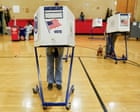
Offering a $1 million bounty for verifiable evidence of voter fraud is not an investigative mechanism; it is an asymmetric information play designed to alter public perception at minimal financial cost. By dangling a seven-figure payout for proof of systemic election malfeasance—past or future—Donald Trump applies standard corporate whistleblower economics to an electoral environment where the base rate of provable, outcome-determinative fraud is near zero. This creates a structural asymmetry: the promoter captures immediate political and media utility through the announcement itself, while the probability of actually disbursing the capital remains statistically negligible.
To understand how this mechanism operates, one must separate the legal definition of voter fraud from the political utility of fraud allegations. In operational terms, the bounty functions as an out-of-the-money call option on political legitimacy. If no evidence materializes, the cost to the offeror is zero, yet the existence of the reward implies that hidden malfeasance is widespread enough to warrant a bounty. If a single verifiable case does emerge—even an isolated administrative error or a localized single-ballot infraction—the offeror can point to the payout as proof of systemic failure, regardless of whether the incident had any mathematical bearing on election outcomes.
The Three Pillars of Bounty Mechanics in Political Campaigns
Traditional whistleblower programs, such as those administered by the Securities and Exchange Commission or the Internal Revenue Service, rely on strict evidentiary thresholds, administrative triage, and statutory protections to filter signal from noise. Political bounties strip away these institutional guardrails, replacing them with three distinct operational mechanics.
1. Asymmetric Risk-Reward Distribution
In standard financial markets, an asymmetric bet caps downside risk while leaving upside potential open-ended. A $1 million voter fraud reward operates on this exact architecture. The financial exposure is strictly capped at $1 million, a negligible sum relative to modern presidential campaign expenditures, which routinely exceed $1 billion per cycle.
The upside, however, is unbounded political capital. By framing the reward around both past and upcoming elections, the offer retroactively validates existing grievances regarding the 2020 cycle while preemptively casting doubt on future certifications. The offeror pays nothing until an arbitrary, self-defined evidentiary standard is met. Because the entity offering the reward typically retains sole discretion over what constitutes "verifiable proof" capable of leading to a conviction or overturning a result, the payout trigger remains firmly under the offeror's control.
2. The Base Rate Fallacy and Signal-to-Noise Degradation
In statistical analysis, the base rate fallacy occurs when decision-makers ignore the underlying prevalence of an event in favor of specific, vivid information. Decades of empirical research, including comprehensive audits by state election boards, academic institutions, and federal law enforcement, consistently demonstrate that the base rate of in-person and mail-in voter fraud in the United States is infinitesimal—typically measured in fractions of a thousandth of a percent of total ballots cast.
Introducing a high-value financial incentive into a low-base-rate environment guarantees severe signal-to-noise degradation. When the potential payout is $1 million, rational and irrational actors alike are incentivized to flood reporting channels with unverified tips, clerical anomalies, and misinterpretations of standard election procedures.
- False Positives: Observers unfamiliar with chain-of-custody logs or provisional ballot adjudication routinely mistake normal administrative friction for deliberate malfeasance.
- Opportunity Cost: Election administrators and local prosecutors must divert finite investigative resources away from legitimate operational security—such as cybersecurity hardening and physical polling place logistics—to debunk high-volume, low-quality submissions generated by bounty hunters.
- Confirmation Bias Loops: The sheer volume of submitted tips is frequently cited by political operatives as evidence of a problem, conflating the quantity of allegations with the quality of proof.
3. Regulatory Arbitrage and Statutory Friction
Political bounties do not exist in a legal vacuum; they collide directly with state and federal election laws governing voter intimidation, bribery, and interference. Under 18 U.S.C. § 597, federal law strictly prohibits making or offering an expenditure to any person to vote or withhold their vote. While offering a reward for reporting illegal activity is legally distinct from paying for a vote, the operational execution frequently blurs statutory boundaries.
When private citizens are financially incentivized to surveil polling locations, photograph voters, or challenge ballot validity in real time, the risk of crossing into unlawful voter intimidation increases sharply. Enforcement agencies face a difficult jurisdictional boundary: distinguishing between protected First Amendment political activity, legitimate citizen observation, and coordinated harassment designed to suppress turnout in targeted precincts.
The Cost Function of Decentralized Election Surveillance
Analyzing a voter fraud bounty requires mapping its total cost function across three distinct stakeholder groups: the political campaign, state election infrastructure, and the electorate. The financial outlay of the campaign is the least significant variable in this equation.
For state and local election officials, the cost function is driven by administrative friction and attrition. Following the 2020 election cycle, election offices nationwide experienced unprecedented turnover among senior administrators and poll workers. A bounty program acts as a force multiplier for administrative burden. Every public records request, challenge to voter rolls, and allegation of ballot harvesting generated by reward-seekers requires formal documentation, legal review, and public response. This imposes an unfunded mandate on county-level budgets, forcing local governments to allocate taxpayer funds toward defensive compliance rather than system upgrades.
For the electorate, the cost manifests as institutional trust erosion. Game theory demonstrates that democratic stability relies on loser's consent—the willingness of the losing faction to accept the legitimacy of the outcome based on trust in the procedural fairness of the system. A standing bounty signals that the system is fundamentally compromised, shifting the default assumption from procedural integrity to presumptuous fraud. Once trust drops below a critical threshold, no amount of post-election auditing can restore consensus, because the auditing mechanisms themselves are subsumed into the conspiracy narrative.
Why Private Bounties Fail as Investigative Tools
Law enforcement agencies regularly use financial rewards to solve violent crimes or locate fugitives, yet similar mechanisms consistently fail when applied to systemic electoral fraud. The divergence lies in the nature of the evidence required to prove each offense.
A conventional crime—such as a bank robbery—is a discrete physical event with clear, unambiguous evidence: missing currency, surveillance footage, and physical witnesses. A reward tip in this context points investigators toward a specific suspect, after which standard forensic methods establish guilt beyond a reasonable doubt.
Systemic election fraud, by contrast, is an allegation of coordinated, large-scale administrative subversion. Proving that an election was stolen requires demonstrating a conspiracy capable of altering thousands of votes across multiple jurisdictions without leaving an audit trail in paper ballots, electronic poll books, or bipartisan canvass certifications.
- Redundancy in Modern Voting Systems: Over 95 percent of ballots cast in recent U.S. federal elections are either hand-marked paper ballots or produce a voter-verified paper audit trail. Altering digital tallies without altering the physical paper trail creates an immediate discrepancy during mandatory post-election risk-limiting audits.
- Bipartisan Chain of Custody: At virtually every stage of ballot handling—from signature verification to tabulator testing and canvassing—procedures are executed by bipartisan teams. A single whistleblower cannot easily expose a "secret" fraud scheme because the system is specifically engineered to eliminate single points of failure.
- The Evidentiary Paradox: If an insider possessed undeniable proof of a massive conspiracy involving hundreds of poll workers and election officials, that evidence would already be visible in the public reconciliation data comparing registered voters who checked in against total ballots tabulated.
Historical precedent confirms this structural limitation. In 2020, Texas Lieutenant Governor Dan Patrick offered a $1 million reward for information leading to the arrest and conviction of voter fraud offenders. Over the subsequent years, only a single payout of $25,000 was publicly documented—awarded to a progressive poll worker in Pennsylvania who reported a single instance of a Republican voter attempting to cast a duplicate ballot for his deceased mother. The bounty failed entirely to uncover the systemic, outcome-altering fraud it was designed to expose, instead capturing an isolated, individual infraction that had zero impact on state certification.
Strategic Vulnerabilities and Operational Risks
Deploying a high-profile bounty carries significant strategic risks for the offering campaign, primarily through the mechanism of adverse selection and legal blowback.
First, the initiative risks weaponization by political opponents. As demonstrated in the Texas precedent, a neutral reward mechanism does not discriminate by party affiliation. Opposing campaigns and independent watchdog groups can actively use the bounty's reporting infrastructure to submit documented instances of fraud committed by the offeror's own supporters, turning a intended political weapon into a recurring public relations liability.
Second, the campaign faces exposure to civil litigation. If bounty-motivated actors falsely accuse specific election workers, vendors, or private citizens of criminal conduct, and the campaign amplifies those unverified claims to justify withholding or awarding the payout, the campaign assumes direct defamation liability. Recent multimillion-dollar settlements and jury verdicts against media networks and political operatives demonstrate that courts treat false accusations of election rigging as actionable defamation per se, stripping away standard political speech protections when actual malice is established.
Third, excessive focus on policing fraud often degrades a campaign's own turnout operations. Resources, volunteer hours, and donor capital directed toward forensic fraud hunting and poll watching are directly cannibalized from voter registration, persuasion, and get-out-the-vote (GOTV) mobilization. In tight swing-state races decided by fewer than 20,000 votes, prioritizing defensive surveillance over net-new voter acquisition represents a severe misallocation of campaign capital.
Strategic Imperatives for Election Stakeholders
Given the predictable mechanics of political bounty announcements, institutional stakeholders and campaign strategists must adjust their operational posture to neutralize signal-to-noise degradation and protect systemic integrity.
- For State Election Administrators: Preemptively publish granular, machine-readable reconciliation data—comparing daily check-in logs against total ballots cast—before certification deadlines. Transparency at the precinct level removes the informational vacuum that bounty hunters exploit, allowing journalists and independent analysts to debunk false claims immediately using primary state data.
- For Campaign Operations: Reallocate capital away from reactive, crowdsourced fraud reporting and toward statutory pre-election litigation and certified poll-observer training. Challenging ambiguous administrative rules in court prior to Election Day yields binding legal clarity, whereas post-election bounty hunting produces unverified noise that courts routinely dismiss for lack of standing or evidentiary rigor.
- For Media and Information Platforms: Refuse to report the gross volume of tips submitted to private hotlines as a metric of electoral integrity. Coverage must anchor strictly on adjudicated outcomes, criminal indictments, and verified discrepancies in official canvass logs, treating unverified bounty submissions as raw, unauthenticated noise until they clear a formal judicial threshold.
The $1 million voter fraud bounty will continue to recur as a campaign tactic because its cost-to-attention ratio is unmatched in modern political communication. However, as an operational tool for altering election outcomes or uncovering systemic subversion, it remains structurally inert—a high-visibility signaling device built on an empty evidentiary foundation.