Seven seconds.
That is all it takes for a Tuesday evening on a residential block in Washington DC to fracture into a permanent before and after, leaving four human beings bleeding on the concrete while the rest of the city scrolls past a four-word headline on their phones.
Four people shot.
You have seen that exact phrasing dozens of times, maybe hundreds, stacked neatly between weather alerts and commuter train delays in local news feeds across the District. The language of modern breaking news is engineered for speed and emotional insulation, stripping away the smell of cordite, the frantic pressing of palms against torn cotton, and the agonizingly slow arrival of sirens down narrow one-way streets. When a newsroom reduces a neighborhood trauma to "Four people shot in Washington DC," it performs a quiet act of erasure, turning four distinct histories, four sets of lungs, and four families waiting at dinner tables into an anonymous statistical blip.
To understand what actually happens when gunfire erupts in the nation's capital, you have to step away from the police scanner transcript and stand on the cracked sidewalk where the shell casings land.
The Anatomy of a Neighborhood Rupture
Imagine a hypothetical evening on a block in Ward 7 or Ward 8—say, a stretch of rowhouses where porch lights flicker on at dusk and children still ride bicycles until the streetlights hum. Let us call one of the people standing near the corner Marcus, a fictional composite drawn from dozens of real DC trauma survivors, a twenty-nine-year-old warehouse supervisor heading home with a bag of takeout. Beside him, though they have never spoken a word to one another, stands Elena, a hypothetical forty-two-year-old home health aide waiting for the X2 or V2 bus after a twelve-hour shift.
Neither of them is looking for trouble. Neither of them is part of a dispute.
Then comes the sound that anyone who has lived in certain quadrants of Washington DC recognizes instantly, a sharp, metallic crack that does not echo like fireworks because it lacks the hollow boom of a mortar tube. Gunfire is flat, dry, and terrifyingly close. Before Marcus even registers the heat tearing through his left calf, the street transforms into a kinetic maze of survival. People drop behind parked sedans, pressing their faces against cold asphalt stained with motor oil, listening to the screech of tires peeling away toward the Anacostia River or the Maryland line.
Within ninety seconds, the first Metropolitan Police Department cruiser arrives, its blue and red strobes painting the brick facades in violent, alternating flashes.
By the time DC Fire and Emergency Medical Services paramedics kneel beside Elena, who took a ricochet fragment to the shoulder, and two teenagers farther down the block who were caught in the crossfire while walking back from a corner store, the official narrative is already hardening. A public information officer drafts a brief statement: four victims, three adult males and one adult female, transported to local hospitals with non-life-threatening injuries, suspects fled in a dark-colored sedan.
"Non-life-threatening."
Think about the sheer, deceptive cruelty of those three words. In trauma medicine, "non-life-threatening" simply means your heart is still beating and your major arteries have not severed completely enough to kill you before you reach the doors of MedStar Washington Hospital Center or Howard University Hospital. It does not mean you will ever walk without a limp, sleep without waking up drenched in sweat at every car backfire, or afford the physical therapy required to lift a grocery bag again.
The Invisible Ledger of Survival
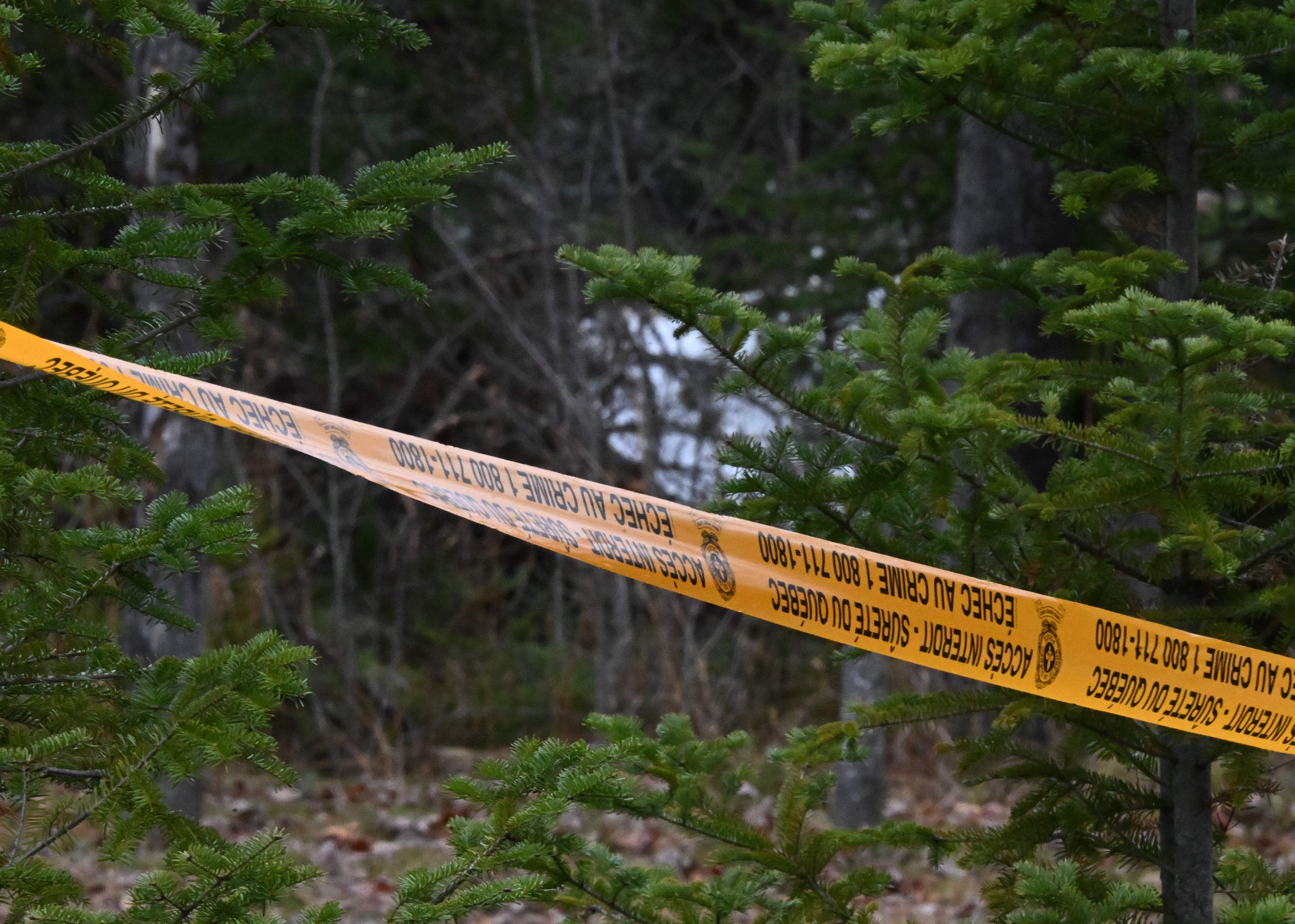
I remember the first time I stood outside a trauma bay in Northwest DC after a multiple shooting, watching a mother stare at the automatic sliding doors as if willing them to open through sheer maternal gravity. The hallway smelled of antiseptic and burnt coffee, and the silence in that waiting room was heavier than any noise on the street. You learn quickly in those fluorescent-lit corridors that a shooting does not end when the yellow crime scene tape is rolled up and tossed into the trunk of a squad car.
That yellow tape is merely the prologue.
Consider what happens next to our hypothetical survivor, Marcus, once the emergency room surgeons extract the bullet fragments and stitch his leg closed. Because his injuries are classified as non-life-threatening, he is discharged forty-eight hours later with a pair of aluminum crutches, a three-day supply of painkillers, and a sheaf of stapled discharge papers he can barely read through the fog of anesthesia.
The real crisis begins on day four.
Marcus cannot climb the stairs to his second-floor apartment without biting his lip until it bleeds, nor can he stand for eight hours on a concrete warehouse floor loading pallets. His employer, operating on thin margins, holds his job for two weeks before hiring a replacement. Suddenly, a man who paid his rent on time for six years is calculating how many cans of soup will stretch until the end of the month, all while navigating the labyrinthine paperwork of crime victim compensation funds that take months to process a single claim.
Meanwhile, Elena—our hypothetical home health aide—finds that her physical wound heals in six weeks, leaving a jagged, purple crescent near her collarbone. Her mind, however, refuses to leave the bus stop. Every time a car slows down near the curb, her pulse spikes to one hundred and forty beats per minute, her palms slick with cold sweat, her breath catching in her throat as she scans tinted windows for the glint of steel. She stops taking the evening shift because she cannot bear standing under the streetlamp after dark, cutting her household income by a third.
When the local news reports that four people were shot in Washington DC, none of these secondary detonations make the broadcast. The cameras pack up before midnight, leaving behind an invisible ledger of lost wages, untreated post-traumatic stress, and neighborhood distrust that compounds year after year.
Why the Headlines Flatten the Truth
Why do we consume these tragedies in such sterile, bite-sized fragments?
Part of the answer lies in the sheer velocity of modern media, where algorithms reward brevity and local desks are stretched too thin to follow a story past the initial police blotter. Another part, harder to admit, is psychological self-defense. Washington DC is a city of stark, unforgiving geography, divided not just by quadrants and bridges, but by radically different daily realities.
Less than three miles from the marble columns of the United States Capitol, where lawmakers debate national policy beneath gilded ceilings, residents in neighborhoods like Barry Farm, Benning Terrace, or Congress Heights navigate blocks where stray bullets regularly pierce living room windows. When a shooting happens in a well-heeled commercial corridor like Georgetown or Dupont Circle, it triggers days of breathless panel discussions, emergency community meetings, and soul-searching editorials about the soul of the city. When four people are shot on a residential block east of the river, it barely disrupts the morning commute three miles away.
This asymmetry is not an accident; it is the result of decades of concentrated disinvestment, redlining, and uneven economic development that turned certain zip codes into pressure cookers.
To understand the mechanics of gun violence in the District, think of a neighborhood like an old wooden bridge supporting a steady stream of heavy freight trucks. You can patch a splintered plank here or tighten a rusted bolt there, which is essentially what reactive policing does after a shooting occurs. Yet if the underlying steel girders have been corroded by decades of underfunded schools, scarce mental health clinics, and missing economic ladders, adding one more coat of paint will never stop the structure from groaning under the weight.
According to data tracked consistently by the Metropolitan Police Department and public health researchers across the District, the overwhelming majority of gun violence is hyper-localized, clustered on a tiny fraction of city blocks. Even more telling, most shootings are not the result of elaborate criminal masterminds, but rather impulsive escalations—an argument on social media, a perceived slight at a gathering, a longstanding neighborhood beef—made lethal because high-capacity handguns are effortlessly accessible.
The Myth of the Random Bullet
When people hear that four people were shot in a single incident, their first instinct is often to ask whether they are safe walking down the street. It is a fair, human question, born out of that primal fear that chaos could strike anywhere, anytime, without warning.
The truth is both more comforting and more infuriating than random chance.
Statistically, pure stranger-on-stranger violence in Washington DC remains relatively rare compared to targeted disputes. However, bullets do not carry identification cards, and modern semi-automatic firearms sprayed from a moving vehicle or fired wildly down a crowded sidewalk turn every bystander within a hundred-yard radius into a potential casualty. In multi-victim shootings—incidents where three, four, or five people are struck at once—collateral damage is the rule rather than the exception.
One person on that block may have been the intended target of a retaliatory strike. The other three are almost always people who simply happened to be standing near a carryout restaurant, waiting for a ride-share, or sitting on their front steps enjoying a rare warm evening.
Look closely at what that does to the social fabric of a block.
Healthy neighborhoods rely on what urban sociologists call "eyes on the street"—grandmothers watering geraniums on the porch, neighbors chatting over chain-link fences, teenagers playing basketball at the recreation center until dusk. Those casual, everyday interactions are the single strongest deterrent against street crime. Yet every time four people are shot on a residential corner, the rational response of every surviving neighbor is to lock the deadbolt, pull the blinds tight, and keep their children indoors.
Fear empties the sidewalks. And empty sidewalks belong entirely to the people willing to carry weapons.
Beyond the Flashing Lights
If you spend enough time talking to violence interrupters—the men and women hired by DC community organizations like Cure the Streets or the Office of Neighborhood Safety and Engagement to walk into hot zones armed with nothing more than credibility and de-escalation training—you begin to see the city through an entirely different lens.
Many of these outreach workers are returning citizens who once contributed to the very cycles of retaliation they now risk their lives to interrupt. They know, down to the marrow of their bones, that a shooting rarely ends when the ambulance pulls away. In fact, the forty-eight hours immediately following a four-person shooting represent the most dangerous window of all.
In hospital waiting rooms and on encrypted group chats, grief curdles rapidly into rage. Cousins, brothers, and neighborhood peers begin asking who was responsible, preparing to settle the score before the police have even finished canvassing the block for Ring camera footage.
This is where the real work happens, completely out of view of television news vans.
While detectives knock on doors looking for witnesses—often met with tight-lipped silence born not of apathy, but of a very real fear of retaliation—violence interrupters are working the phones. They visit the wounded in their hospital beds, sit with mothers in cramped kitchens, and broker fragile, face-to-face truces between young men who have been taught since childhood that walking away from disrespect is a death sentence.
When they succeed, nothing happens.
Think about that paradox for a moment. Every time a violence interrupter talks a grieving twenty-year-old out of picking up a firearm, there is no breaking news alert, no press conference at police headquarters, and no viral headline. Success in violence prevention is measured entirely in absences—the gunshot that never rang out, the ambulance that stayed parked at the station, the mother who never received a midnight phone call from a hospital social worker.
What We Owe the Names We Never Learn
I still think about that waiting room in Northwest DC, and about the quiet, devastating dignity of the families who inhabit those plastic chairs night after night. We live in a culture addicted to immediacy, trained to skim the surface of tragedy, feel a fleeting pang of sympathy or outrage, and move on to the next distraction before our coffee cools.
It is easy to read "Four people shot in Washington DC" and treat it as background noise, an unavoidable tax paid by living in a major American metropolis. It is much harder to sit with the uncomfortable reality that every single one of those four numbers represents an entire universe of human relationships, suddenly knocked off its axis.
Somewhere in the District tonight, four people are staring at ceiling tiles under the hum of fluorescent hospital lights, listening to the steady beep of a heart monitor while trying to figure out how they will pay next month's rent, how they will explain the scars to their children, and whether they will ever feel safe walking down their own block again.
The sirens have stopped. The yellow tape is gone. For the people who were standing on that sidewalk, the loudest part is just beginning.