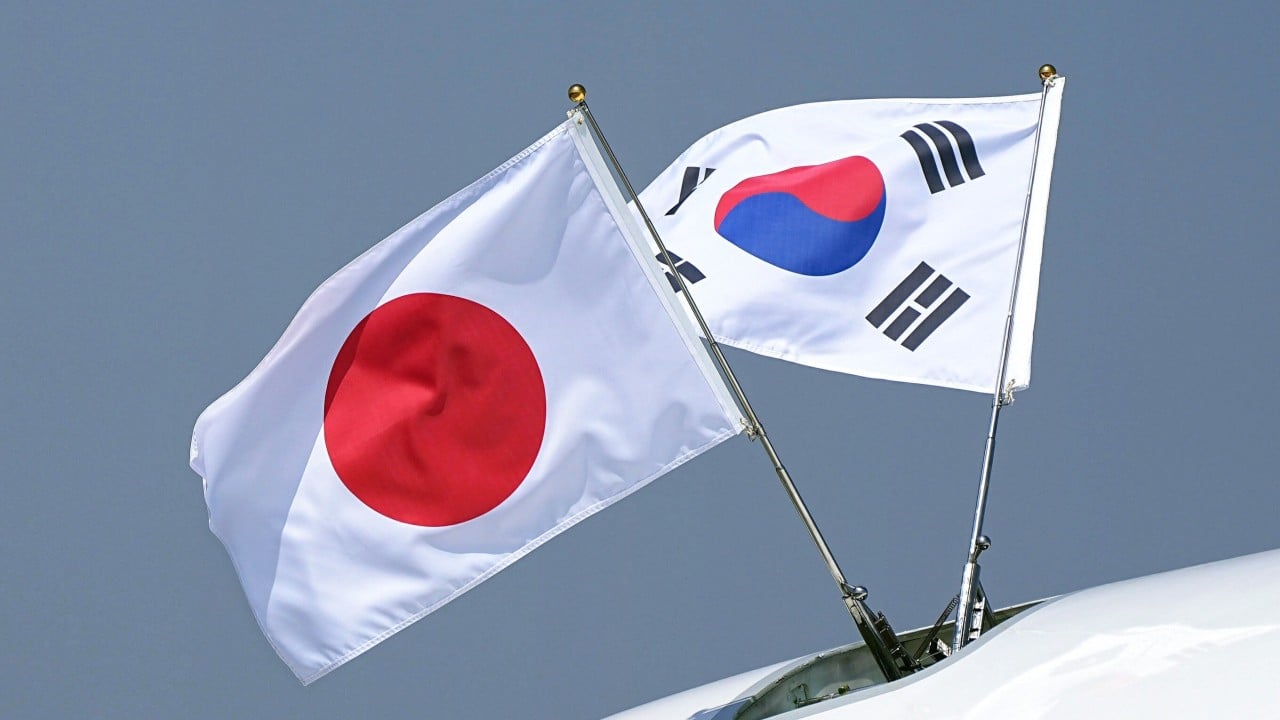
For decades, the security architecture of East Asia rested on a straightforward bargain. The United States provided a nuclear umbrella, and in return, Japan and South Korea promised never to build their own atomic bombs.
That bargain is dying. The assumption that Tokyo and Seoul will remain forever non-nuclear is no longer a strategic certainty, but a historical legacy under severe duress. Driven by a rapidly modernizing Chinese arsenal, a rogue North Korea exporting troops to Europe, and profound anxiety over American reliability, political elites in both capitals are quietly laying the groundwork for a radical policy reversal. If one goes, the other will follow. The question is no longer whether they have the capability, but when the political cost of restraint finally outweighs the price of proliferation.
The Eighty Percent Reality in Seoul
The nuclear debate in South Korea has moved out of academic fringe circles and straight into the political mainstream. Public sentiment has crossed a historic threshold. According to the comprehensive Asan Institute for Policy Studies annual poll released in April 2026, support for an indigenous nuclear weapons program has surged to an all-time high of 80%.
What panics planners in Washington is not just the raw number, but the resilience of this public desire. Historically, American analysts assumed that South Korean enthusiasm for the bomb would evaporate once the catastrophic economic consequences were explained. That assumption proved wrong. The 2026 data reveals that even when explicitly confronted with the prospect of international economic sanctions, 63% of South Koreans still favor building the bomb. If told it might lead to the withdrawal of U.S. forces, a majority of 52.2% still say do it anyway.
This is a profound psychological shift. The country has spent decades building an export-driven economic miracle, yet its citizens are now indicating they would risk that prosperity for strategic autonomy.
The driver is a cold calculation regarding American extended deterrence. When North Korea possessed only crude atomic devices, the U.S. promise to defend Seoul was easy to believe. Now, Pyongyang possesses road-mobile intercontinental ballistic missiles capable of striking Los Angeles or New York. South Korean strategist Han Yong-sup summarized the dilemma succinctly by reviving a Cold War ghost: "Will Washington truly trade San Francisco for Seoul?"
The 2023 Washington Declaration, which established a bilateral Nuclear Consultative Group to give Seoul a greater voice in U.S. strategic planning, was designed to patch this trust deficit. It worked as a temporary band-aid. But the return of transactional foreign policy to the White House, defined by aggressive demands for massive increases in defense cost-sharing, has thoroughly revived South Korean anxieties.
The mechanics of a South Korean breakout would be blindingly fast. Unlike Iran, which spent decades sneaking centrifuges into underground facilities, South Korea possesses a world-class commercial nuclear power infrastructure. The administration of President Lee Jae-myung confirmed in early 2026 that it is moving ahead with expanding its nuclear energy capacity, maintaining a massive fleet of reactors.
South Korea has also spent years stockpiling advanced delivery systems. Its military possesses highly precise ballistic missiles like the Hyunmoo-5, which features an incredibly heavy conventional warhead designed to destroy deeply buried bunkers. Replace that massive conventional payload with a miniaturized nuclear device, and Seoul instantly possesses a highly capable, survival-optimized strike force. Experts estimate that if the political decision were made to exit the Non-Proliferation Treaty under Article X—which allows withdrawal due to extraordinary events jeopardizing national interests—Seoul could assemble a working nuclear weapon within 12 to 18 months.
Tokyo Breaking the Three Principles
Japan presents a structurally different but equally volatile scenario. For a country that suffered the horrors of Hiroshima and Nagasaki, nuclear weapons have long been a profound cultural and political taboo. The state has formally operated under the Three Non-Nuclear Principles since 1967: not possessing, not manufacturing, and not permitting the introduction of nuclear weapons into Japanese territory.
Yet those principles are fraying at the edges. The shifting tone among top political leadership is palpable. During security debates, high-ranking officials within the ruling Liberal Democratic Party have pointedly declined to offer the standard, ironclad reaffirmations of the non-nuclear stance. Prime Minister Sanae Takaichi has faced intense scrutiny for refusing to unconditionally rule out a reassessment of these prohibitions under extreme regional contingencies.
The shift in Japanese thinking is driven by an unprecedented accumulation of regional threats. To the west, China is engaged in what the Pentagon terms one of the fastest expansions of nuclear capabilities in history, deploying precision, low-yield missiles tailored for regional conflict. To the north, Russia has demonstrated a complete willingness to disregard international borders and use nuclear coercion as a shield for conventional aggression.
Japan’s defense elite looks at this environment and sees a structural vulnerability that cannot be solved by conventional hardware alone. Tokyo has already taken historic steps to shed its pacifist constraints, revising arms export rules to allow the sale of lethal weapons and systematically boosting its defense budget toward 2% of GDP. But conventional cruise missiles and advanced air defenses do not offset an adversary's nuclear blackmail.
If Tokyo decides to cross the nuclear threshold, its technical path is even shorter than South Korea's. Japan possesses what arms control experts call a "virtual" nuclear capability. Through its domestic civilian nuclear fuel cycle program, particularly the reprocessing facility at Rokkasho, Japan has amassed a domestic stockpile of separated, reactor-grade plutonium. This inventory is large enough to manufacture thousands of nuclear warheads.
The country possesses advanced rocketry through its space program and deep expertise in high-tech manufacturing. Japan is essentially a turn-key nuclear state. It lacks only the political decision to turn the key.
The Shared Threshold
The strategic reality of East Asia is that Japan and South Korea operate in an involuntary nuclear chain reaction. Neither state can make a move in isolation.
Should South Korea break out and build an indigenous deterrent, the domestic political balance inside Japan would alter overnight. No Japanese prime minister, no matter how committed to historical pacifism, could easily justify to the public why Japan should remain the only unarmed state in a neighborhood populated by a nuclear China, a nuclear Russia, a nuclear North Korea, and a newly nuclear South Korea. The pressure to match Seoul's capability would become irresistible, completely overwhelming traditional institutional resistance.
The United States is acutely aware that the regional architecture is buckling. In response, a growing chorus of defense analysts in Washington is advocating for a highly controversial alternative: reintroducing U.S. theater nuclear weapons to the Western Pacific to prevent America's closest allies from building their own.
Under this proposed framework, the U.S. would deploy tactical nuclear weapons, such as B61 gravity bombs, back to Asian territory for the first time since the end of the Cold War. The deployment would likely begin in South Korea using a framework modeled after NATO's nuclear-sharing agreements, where U.S. weapons are stored locally under American custody but can be delivered by allied aircraft during a conflict. A secondary, more gradual phase would involve integrating Japan, potentially by basing assets nearby on Guam or operating dual-capable aircraft under strict dual-key arrangements.
Yet this solution is fraught with operational and political risks. It would trigger an explosive diplomatic backlash from Beijing, likely resulting in severe economic retaliation against Seoul and Tokyo. Domestically, hosting American nuclear weapons would provoke massive local protests, particularly in Japan, where local communities are highly sensitive to hosting controversial military assets.
The regional dynamic has reached an unstable equilibrium. The traditional strategy of relying entirely on vague American reassurances is losing its efficacy in Tokyo and Seoul, while the public and political appetites for genuine strategic autonomy are growing. If the United States cannot convincingly demonstrate that its extended nuclear umbrella remains ironclad despite threats to its own homeland, the domestic pressures building within South Korea and Japan will eventually force a choice. When that moment arrives, the non-nuclear consensus that defined East Asian security for more than half a century will vanish in a matter of months.


