Financial columnists are uniform in their celebration of Eurostat's latest flash estimate showing Eurozone headline inflation dipping to 2.8% in June. They point to the core inflation print down to 2.4% and the cooling of services inflation to 3.2% as ironclad proof that the European Central Bank's 25-basis-point interest rate hike in June did its job. The broad market narrative is comfortable: the geopolitical energy shock stemming from the Middle East conflict is fading due to the recent ceasefire agreement, and Christine Lagarde can now safely retreat back to a relaxed stance at the upcoming July Governing Council meeting.
This assessment is completely wrong.
The widespread relief over June’s cooling inflation data is dangerously short-sighted. It mistakes a temporary geopolitical reprieve for structural macroeconomic victory. The market's interpretation completely reverses the true health of the single-currency area. Far from giving Frankfurt breathing room, these numbers mask a deep stagflationary reality that the ECB is entirely unequipped to manage.
The Base Effect Illusion
To understand why the June data is an administrative mirage rather than an economic cure, one must dissect the Harmonised Index of Consumer Prices (HICP) basket. The entire downside surprise—dropping from May's 3.2% down to 2.8%—was driven by a contraction in energy inflation from 10.8% to 8.7%. This downward shift followed the diplomatic re-opening of the Strait of Hormuz.
Relying on a volatile commodity ceasefire to dictate monetary policy is a terrible strategy for a central bank. Commodity prices drop quickly on headlines but stick long-term in the real economy. The underlying mechanics prove that the inflationary threat has shifted from an external supply shock to a permanent domestic reality.
- The Services Anchor: Services inflation dropped nominally to 3.2%, but it remains the largest, stickiest component of the Eurozone HICP basket, holding a dominant 42% weight.
- Corporate Cost Shifting: As Commerzbank researchers noted, Eurozone corporations have not finished passing higher wholesale energy costs from the spring surge onto consumers. The lag effect of supply chain costs takes between three to six months to hit retail prices.
- Persistent Structural Pressures: Industrial goods inflation held entirely flat at 0.9%. The core rate of 2.4% remains stubbornly above the ECB's explicit 2.0% medium-term target, marking the fourth consecutive month of failure.
I have spent decades tracking central bank policy errors. The most destructive mistakes occur when policymakers mistake a temporary drop in headline data for permanent structural cooling. In 2021, central bankers ignored early warning signs by mislabeling systemic inflation as "transitory." In 2026, the reverse error is occurring: the market is mislabeling a temporary drop in headline inflation as a structural victory.
The Stagflation Reality
The market’s biggest error is ignoring the real reason inflation is slowing down: aggregate demand in Europe is collapsing. The Eurozone is entering a deep domestic stagnation.
On June 5, Eurostat quietly revised its first-quarter GDP data to show a 0.2% contraction for the euro area. The Eurosystem staff macro projections have already cut annual growth expectations down to a weak 0.8% for the year. This is not a soft landing. It is an economic stalling out.
Eurozone Macroeconomic Convergence (Q1-Q2 2026)
+-------------------------+-------------------------+
| Economic Indicator      | Current Performance     |
+-------------------------+-------------------------+
| Q1 Real GDP Growth      | -0.2% (Contracting)     |
| Headline Inflation      | 2.8% (Above Target)     |
| Structural Core HICP    | 2.4% (Sticky)           |
| Broad Services Weight   | 42.0% of Total Basket   |
+-------------------------+-------------------------+
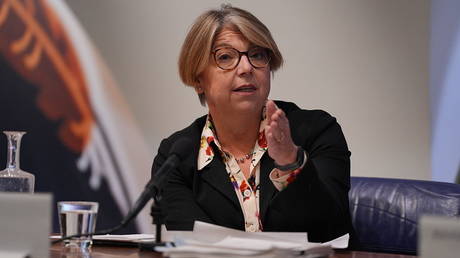
When Christine Lagarde stood up at the Sintra Forum and claimed that monetary policy can go "back to basics" because the ECB no longer needs to act with "forceful" interest rate increases, she fell directly into a classic central banking trap.
If the ECB keeps interest rates paused at 2.25% based on June’s lower headline numbers, they risk unanchoring long-term inflation expectations. Shorter-term consumer expectations remain highly elevated from the recent energy spike. If the central bank pushes interest rates higher to kill off sticky services inflation, they will deepen a recession across the Eurozone's largest economies, including Germany and Italy.
The ECB is caught in a structural trap. Their policy tools are designed to manage demand shocks, not geopolitical supply crises combined with domestic demographic decline.
The Regional Fragmentation Problem
The primary structural flaw of the Eurozone is that a single interest rate cannot fit a 21-country monetary union with deeply fractured fiscal realities.
While headline inflation slowed in Germany to 2.4% and France to 2.0%, Spain is burning hot at 3.6%. Italy is stuck with inflation at 3.1% alongside a massive debt load and a contracting domestic labor market. By setting monetary policy based on an artificial pan-European average of 2.8%, the ECB guarantees it will make the wrong move for individual member states.
An interest rate that is appropriate for a stagnant, cooling French economy is dangerously loose for a highly inflationary Spanish economy. Conversely, keeping interest rates elevated to cool Spain risks pushing highly leveraged Italian sovereign bonds into a renewed fragmentation crisis. The ECB's standard policy toolkit is broken.
Dismantling the Consensus View
The financial press frequently asks variations of the same flawed question: "When will the ECB be able to safely cut interest rates back to historic norms?"
This question fundamentally misunderstands the current macroeconomic environment. The pre-pandemic era of zero interest rates, quantitative easing, and cheap globalized supply chains is gone. The structural reality for the next decade consists of fractured supply chains, high defense spending, and a shrinking domestic workforce.
Imagine a scenario where the ECB cuts interest rates later this year because headline inflation temporarily touches 2.2%. The immediate result would be a rapid depreciation of the Euro against the U.S. dollar, which is currently hovering at a weak $1.139. A weaker Euro instantly imports more inflation through dollar-denominated commodities, erasing any brief domestic progress.
The brutal truth is that Eurozone interest rates must stay higher for longer than anyone in the market wants to admit. Accepting a permanent state of low growth and moderate inflation is the only path forward.
Corporate leaders and institutional investors must stop waiting for a return to cheap capital. The current 2.25% refinancing rate is not an administrative peak; it is the absolute floor for the foreseeable future. Businesses that cannot survive without zero-cost debt need to restructure their balance sheets now. The June inflation dip is an outlier, not a trend. Relying on it to plan capital allocation over the next two years will ruin your portfolio.