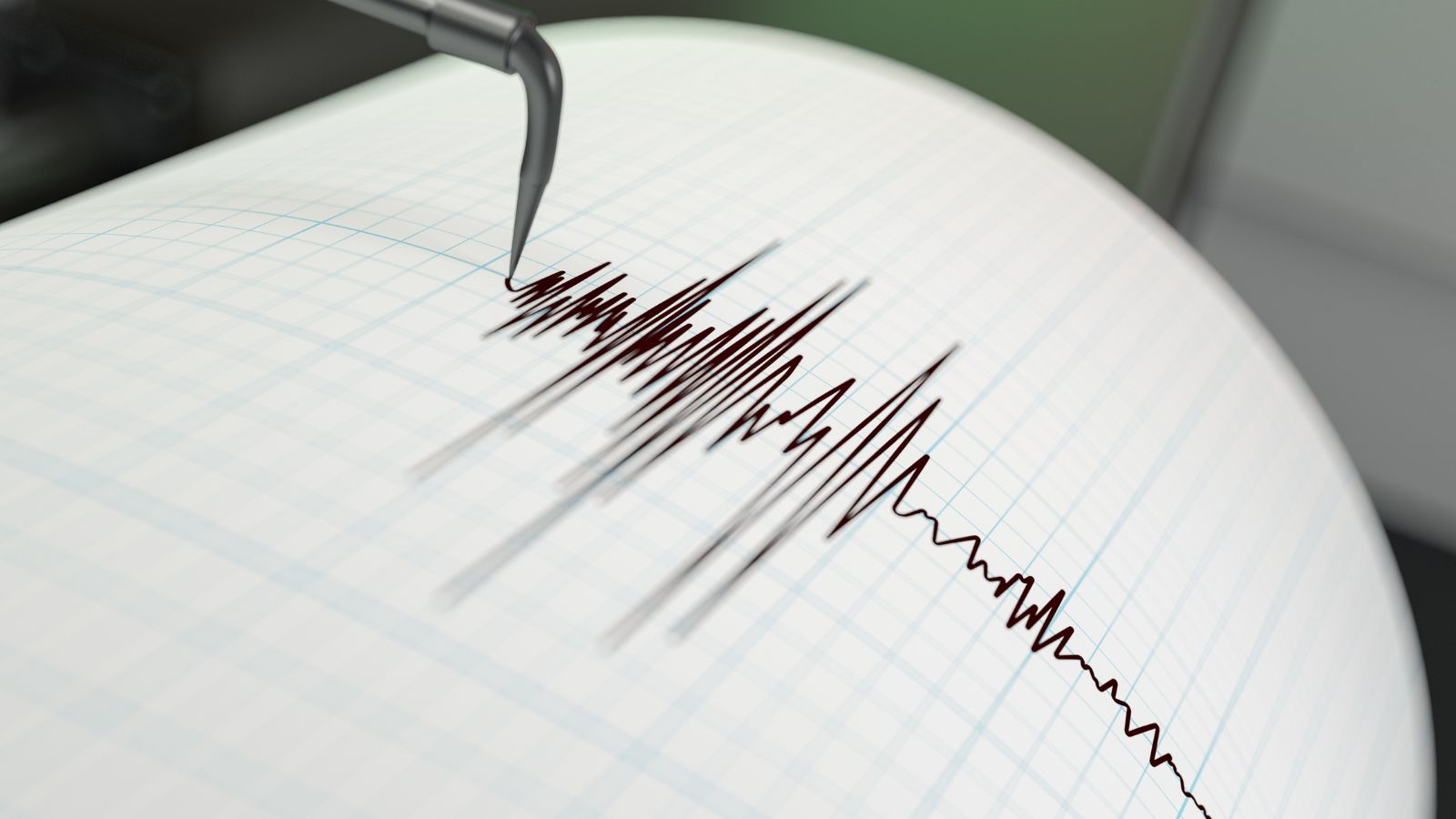
The concrete did not just move; it breathed.
At precisely 4:43 in the afternoon, the ground beneath Kyushu forgot how to be solid. For millions of residents in southern Japan, the afternoon routine—tea kettles whistling, bicycles clicking against pavement, children racing home from school—shattered into a violent, rhythmic heave. A magnitude 7.1 earthquake had just torn through the earth's crust, a sudden reminder that humanity builds its quietest lives on the backs of restless giants. In related updates, we also covered: Why the PoJK Election Boycott and Rawalakot Crackdown Change Everything.
Consider the kitchen clock swinging wildly against a floral wallpaper, its pendulum losing all rhythm.
Seismologists measure these events in cold integers. They talk about faults, tectonic plates, and focal depths. But numbers cannot capture the sound. It begins as a low, subterranean groan, a noise so deep it vibrates in the soles of your feet before your ears even register it. Then comes the violent shaking—a sideways jerk that turns hallways into obstacle courses and sends ceramic plates crashing into shards of white porcelain. TIME has provided coverage on this important subject in great detail.
In a high-rise apartment in Miyazaki, a hypothetical resident named Kenji dropped his pen. For three agonizing seconds, his mind refused to accept what his body was experiencing. The building swayed, groaned, and fought against gravity. Books cascaded from shelves in a dusty avalanche. Kenji did not calculate the moment magnitude scale; he simply grabbed the nearest sturdy table, pulled his knees to his chest, and watched the ceiling tiles ripple like water.
Fear is a universal language, but in Japan, it is accompanied by a choreography rehearsed since kindergarten.
Almost instantly, the airwaves woke up. Sirens began to wail, but alongside them came the sharp, unmistakable chirping of the Jishoku early warning systems. Smartphones across the region had screamed a warning two precious seconds before the shockwave arrived, giving people just enough time to drop, cover, and hold on.
Minutes later, the threat shifted from the ground to the sea.
A tsunami alert flashed across television screens and public loudspeakers. The ocean, usually a source of calm and sustenance, suddenly became a looming hazard. Coastal communities along Miyazaki and Kochi prefectures faced an agonizing choice: abandon everything and race for the high ground.
Water is heavy. A cubic meter of it weighs a metric ton. When an earthquake displaces the ocean floor, that immense weight turns into a traveling wall of kinetic energy. People living along the coast do not wait to see the waves; they know the history. They remember the scars left by previous disasters. Families grabbed pre-packed emergency bags containing bottled water, high-calorie ration bars, flashlights, and portable radios, moving with practiced urgency toward designated evacuation shelters on higher hills.
Why does the earth break this way?
Imagine a massive sheet of ice cracking under the weight of a heavy boot. The Earth's crust is divided into massive jigsaw pieces called tectonic plates, constantly grinding past one another at a snail's pace. Sometimes, they get stuck. Friction holds them in place while the forces underneath continue to push. Pressure builds for decades, centuries, quietly storing energy like a giant rubber band pulled taut.
When the friction finally fails, the release is instantaneous. The stored energy explodes outward in seismic waves. A magnitude 7.1 earthquake is not a minor tremor; it releases an amount of energy roughly equivalent to hundreds of tons of TNT, enough to shift coastlines and redraw the local geography.
As night fell over southern Japan, the electricity flickered in thousands of homes.
Emergency crews swung into action, inspecting bullet train tracks, highway bridges, and nuclear facilities for structural integrity. The Shinkansen bullet trains came to an automatic, smooth halt, a testament to fail-safe engineering designed to prevent derailments during violent shakes. Utility workers climbed poles in the dark, checking gas lines and repairing downed power wires while aftershocks—smaller, rattling quakes—kept nerves raw.
There is a profound vulnerability in standing beneath a starry sky while the earth beneath you continues to tremble.
People gathered in school gymnasiums, sitting on blue plastic mats, sharing blankets, and tuning transistor radios to hear updates from the Japan Meteorological Agency. Conversations were hushed, filled with shared glances of relief that the worst-case scenario had not materialized, tempered by the lingering dread of what the next aftershock might bring.
Nature does not negotiate. It does not offer warnings in human terms. It simply acts, leaving us to pick up the pieces, check on our neighbors, and rebuild our homes a little wiser, a little more humble, knowing full well that the ground we walk on is only ever lent to us for a moment.