Dust.
In northern Peru, along the Pacific coast where the Sechura Desert meets the irrigated sugar cane fields of Lambayeque, fine yellow dust settles on everything. It coats the dashboards of battered mototaxis, gathers in the creases of leather sandals, and drifts through the open shutters of parish halls in Chiclayo. For decades, a man from Chicago named Robert Francis Prevost walked those streets with that dust on his shoes. He was a missionary first, then an Augustinian prior, and eventually the bishop of a diocese where faith is measured not in marble cathedrals, but in muddy boots during El Niño floods and soup kitchens fed by neighbors who have almost nothing to spare.
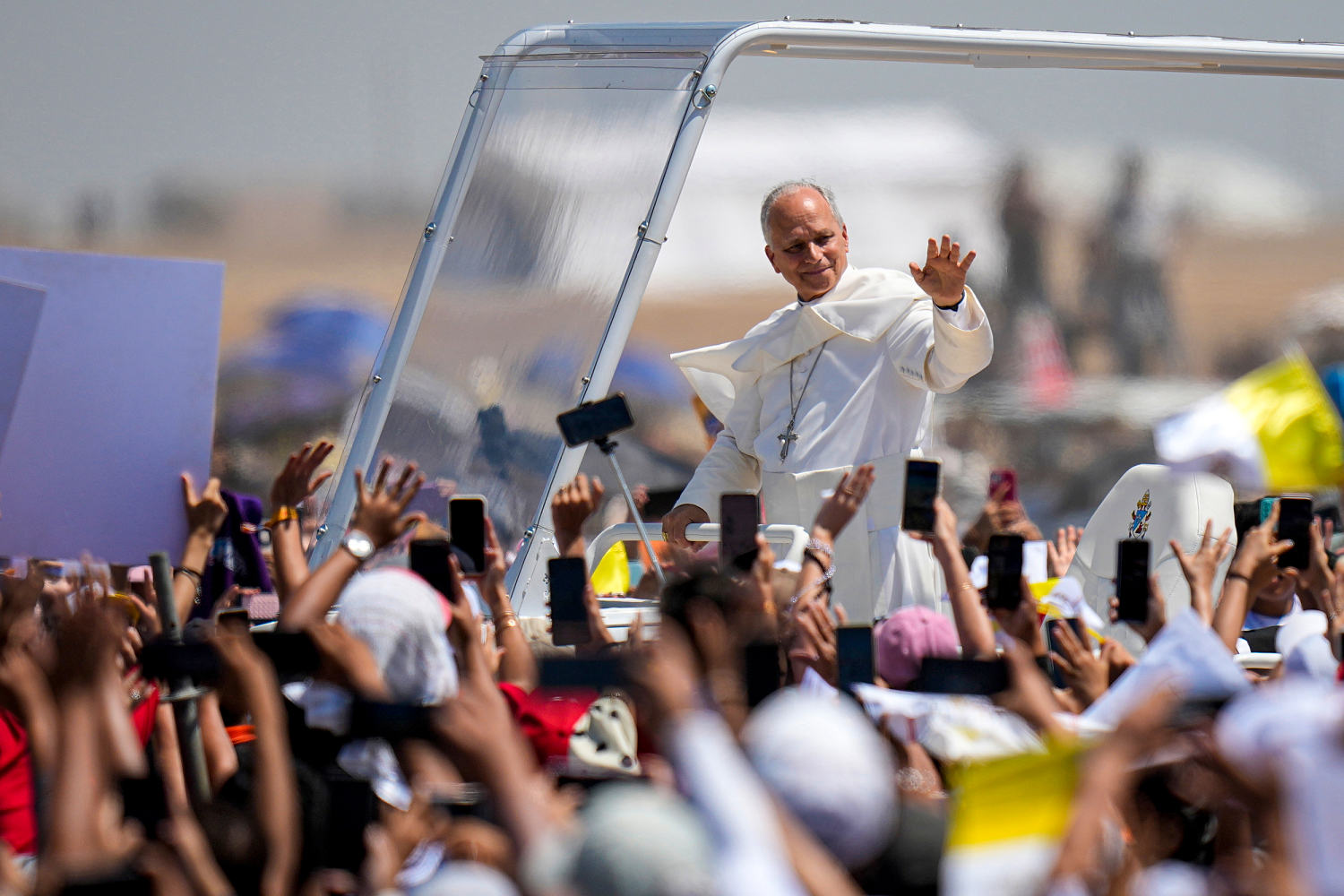
Then, in May 2025, the chimney above the Sistine Chapel exhaled white smoke, and the man from Chiclayo stepped onto the loggia of St. Peter’s Basilica as Pope Leo XIV.
When a local bishop becomes the Bishop of Rome, the world gains a pontiff, while a specific corner of the earth loses its shepherd to history. Standard news dispatches treat a papal homecoming like a diplomatic itinerary—a motorcade, a liturgy, a series of pre-approved waves behind bulletproof glass. Yet when Pope Leo XIV returned to his beloved diocese of Chiclayo, the event was less a state visit and more a collision between two radically different realities. On one side stood the ancient, gilded machinery of the Vatican; on the other stood a coastal Peruvian city that still remembers the sound of his voice when the microphones were off.
The Architecture of Memory
To understand why a crowd in Chiclayo weeps differently than a crowd in St. Peter’s Square, you have to understand the geography of the heart. Rome is built on monuments designed to outlast empires. Chiclayo, known as the "City of Friendship," is built on resilience, commerce, and the quiet endurance of working families.
Consider a hypothetical parishioner—let us call her Elena, a retired schoolteacher from the district of José Leonardo Ortiz—standing behind a metal barricade at dawn. To the global press corps flying in on the papal charter, the man stepping down the stairs of the aircraft is the 267th successor of St. Peter, a dual citizen of the United States and Peru, a canon lawyer who once headed the Vatican’s Dicastery for Bishops. To Elena, he is the priest who stood in ankle-deep water during the 2017 coastal floods, coordinating oxygen tanks and dry rice when the regional government stalled.
That distinction changes everything.
Most institutions operate like tall towers; the higher you climb, the smaller the people on the ground appear. The Catholic Church, despite its theological commitment to servant leadership, has struggled with this gravitational pull for two millennia. When a leader ascends to the papacy, the office itself acts as a kind of gilded insulation. Handlers curate the schedule. Swiss Guards form a perimeter. Every word is translated, analyzed by Vaticanologists, and distilled into headlines before the echo has even faded from the colonnade.
Returning to Chiclayo meant temporarily dismantling that insulation. You cannot wear a mask in front of people who knew you before you wore white.
Why This Homecoming Matters Beyond the Altar
A natural question arises for anyone watching from afar: why should a religious homecoming in northern Peru matter to a secular observer in London, Tokyo, or New York? Why does the emotional temperature of a single diocese carry weight in a fractured global era?
Because leadership everywhere is suffering from an authenticity crisis.
Whether in politics, corporate boardrooms, or religious institutions, modern authority often feels synthetic—manufactured by communications teams and stress-tested against focus groups. People have developed an acute radar for performance. When a leader claims to "feel your pain" from behind a podium, the public flinches. We know the difference between someone visiting a neighborhood for a camera angle and someone returning to a neighborhood because their soul never quite left it.
Pope Leo XIV’s return to Chiclayo serves as a rare public test of whether global power erases local memory. During his first address from the balcony of St. Peter’s in 2025, he paused his Italian to speak directly in Spanish to his "querida diócesis de Chiclayo"—his beloved diocese. That moment was not a throwaway line written by a speechwriter. It was a geographical anchor dropped into the middle of the Roman Curia. By physically going back, he turned a fleeting linguistic gesture into a lived reality.
History shows us how rare this is. Popes travel constantly—John Paul II logged over a million kilometers, Francis visited dozens of nations on the peripheries—yet returning to one’s own former diocese carries a distinct psychological charge. When Karol Wojtyła returned to Kraków in 1979, the streets trembled with political defiance against the Soviet bloc. When Joseph Ratzinger returned to Bavaria, it was a quiet meditation on theology and childhood roots. For Leo XIV, stepping back onto the soil of Lambayeque was an act of institutional grounding. It reminded the Roman hierarchy that the center of the Church is not a museum in Italy, but wherever two or three gather in dusty streets to share bread.
The Weight of the White Cassock
I have spent years covering moments where private identity collides with public office, and there is always a specific micro-expression that gives the truth away. Watch the shoulders. Watch the hands.
In Rome, a pope’s hands are constantly observed—extended in blessing, resting on the arms of a chair, signing encyclicals. The white cassock, iconic and unmistakable, flattens individuality into an archetype. Yet in the humidity of northern Peru, under a sky that shifts from blinding coastal glare to sudden twilight, the archetype gave way to the man.
People often ask what happens to a priest’s citizenship and personal ties once he becomes pope. In practical terms, Robert Prevost became a naturalized Peruvian citizen in 2015, after decades of missionary service in Chulucanas, Trujillo, and finally as Bishop of Chiclayo from 2015 to 2023. He did not merely pass through Peru; he naturalized into its struggles, its idioms, and its fierce, unsentimental devotion. Even after Pope Francis summoned him to Rome in 2023 to oversee the selection of bishops worldwide, his phone still buzzed with messages from parish priests in Peru dealing with broken water pumps, migrant families arriving from Venezuela, and young seminarians doubting their vocation.
When he walked into the Cathedral of Santa María in the heart of Chiclayo, the air inside smelled of old wood, melted wax, and tropical heat. For eight years, that sanctuary was his daily workshop. He knew where the floorboards creaked. He knew which pews filled first on Sunday mornings and which families sat near the back because they couldn't afford shoes that matched.
Imagine, for a moment, returning to your own childhood kitchen after becoming the head of a global enterprise. You might arrive in a tailored suit with an entourage waiting in black sedans outside, yet the second you smell coffee burning on the stove or see a chipped tile by the sink, your posture shifts. Your voice drops an octave. You stop performing authority and start inhabiting memory.
That shift was visible in Chiclayo. When the crowd chanted not just "¡Viva el Papa!" but "¡Padre Roberto!", the protocol officers lost control of the script. And for once, nobody seemed to mind.
The Invisible Stakes of the Periphery
To understand the deeper current beneath the cheers, you have to look at what Chiclayo represents in the broader story of the twenty-first-century Church.
For centuries, Catholicism was viewed primarily through a European lens—its debates shaped in Paris, Munich, and Rome. Even as demographics shifted dramatically toward the Global South, the institutional reflexes remained stubbornly Eurocentric. When Jorge Mario Bergoglio of Argentina became Pope Francis in 2013, he cracked that mold open, insisting that the Church must go to the "peripheries."
With Leo XIV, the periphery is no longer a theoretical destination on a Vatican map. It is a lived biography.
Born in Chicago, educated in canon law in Rome, formed in the Augustinian tradition, and tempered in the heat of northern Peru, he embodies a bridge between North and South that few leaders in any sphere can claim. In Chiclayo, that bridge became concrete. When he met with local volunteers, catechists, and families from rural districts like Olmos and Motupe, the subtext was unmistakable: the decisions made beneath Michelangelo’s frescoes must answer to the realities lived under corrugated tin roofs.
There is a vulnerability in this kind of leadership that is easy to overlook. Returning home exposes a leader to the gap between what they promised and what they could actually fix. Chiclayo still wrestles with stark inequality, fragile infrastructure, political turbulence in Lima, and the daily grind of informal labor. A papal visit does not pave every dirt road or cure every systemic failure. Walking among people who love you while knowing you cannot wave a wand to erase their hardship requires a quiet, unglamorous courage. You have to show up empty-handed of miracles and rich only in presence.
The Rhythm of a Real Encounter
Look closely at how the day unfolded, away from the wide-angle drone shots.
It began with noise—the brass bands of Lambayeque playing marineras, the rhythm clattering off pastel-colored facades, children perched on their fathers' shoulders waving yellow-and-white paper flags that had already wilted in the morning sun. Security personnel scanned the rooftops, tense and alert, trained to treat every sudden movement as a threat.
Then came the pauses.
A pope’s schedule is calculated down to the minute, yet genuine human connection is notoriously inefficient. It takes thirty seconds just to look someone in the eye, recognize a face lined by nine years of sun and worry, and ask about their mother’s health. Every time Leo XIV stopped to grasp an outstretched hand—recognizing a former parish secretary, a deacon he had ordained, a grandmother who used to bring king kong sweets to the bishop’s residence—the carefully synchronized timetable slipped another notch.
Press aides checked their watches. Protocol officials gestured subtly toward the waiting vehicle. The crowd, sensing the hesitation, pressed closer—not with the frantic entitlement of autograph hunters, but with the fierce tenderness of people reclaiming someone they considered family.
Let us be candid about something that rarely makes it into official Vatican summaries: these moments are exhausting, messy, and slightly chaotic. There is nothing pristine about a crowd of tens of thousands packed into a Peruvian plaza in the heat. Sweat stains white fabric. Microphones screech with feedback. Tears smear makeup and dust onto sleeves. Yet in an era where so much of human interaction has been sanitized into screens and curated feeds, that raw, unedited friction is precisely what makes it believable.
What Remains When the Plane Takes Off
Eventually, the engines spool up at Capitán FAP José A. Quiñones Gonzáles International Airport. The white cassock disappears behind the cabin door. The motorcade disperses, the metal barricades are stacked onto flatbed trucks, and the brass bands pack their trumpets into battered cases.
By nightfall, Chiclayo returns to its familiar cadence. Vendors sell warm tamales on street corners. Mototaxis weave through intersections with horns blaring. The desert wind blows across the sugar cane fields, carrying the same fine yellow dust back onto the steps of the cathedral.
Nothing on the surface has been magically transformed. The problems of northern Peru remain stubbornly intact, and the burdens waiting on the desk in the Apostolic Palace are no lighter than they were forty-eight hours earlier.
Yet something quiet has shifted in the ledger of human trust. In a world conditioned to expect that elevation breeds distance—that the higher a person rises, the less they remember where they stood—one man walked back into the dust that formed him, knelt at the altar where he once prayed in obscurity, and proved that even the heaviest ring in Christendom cannot erase the calluses of home.