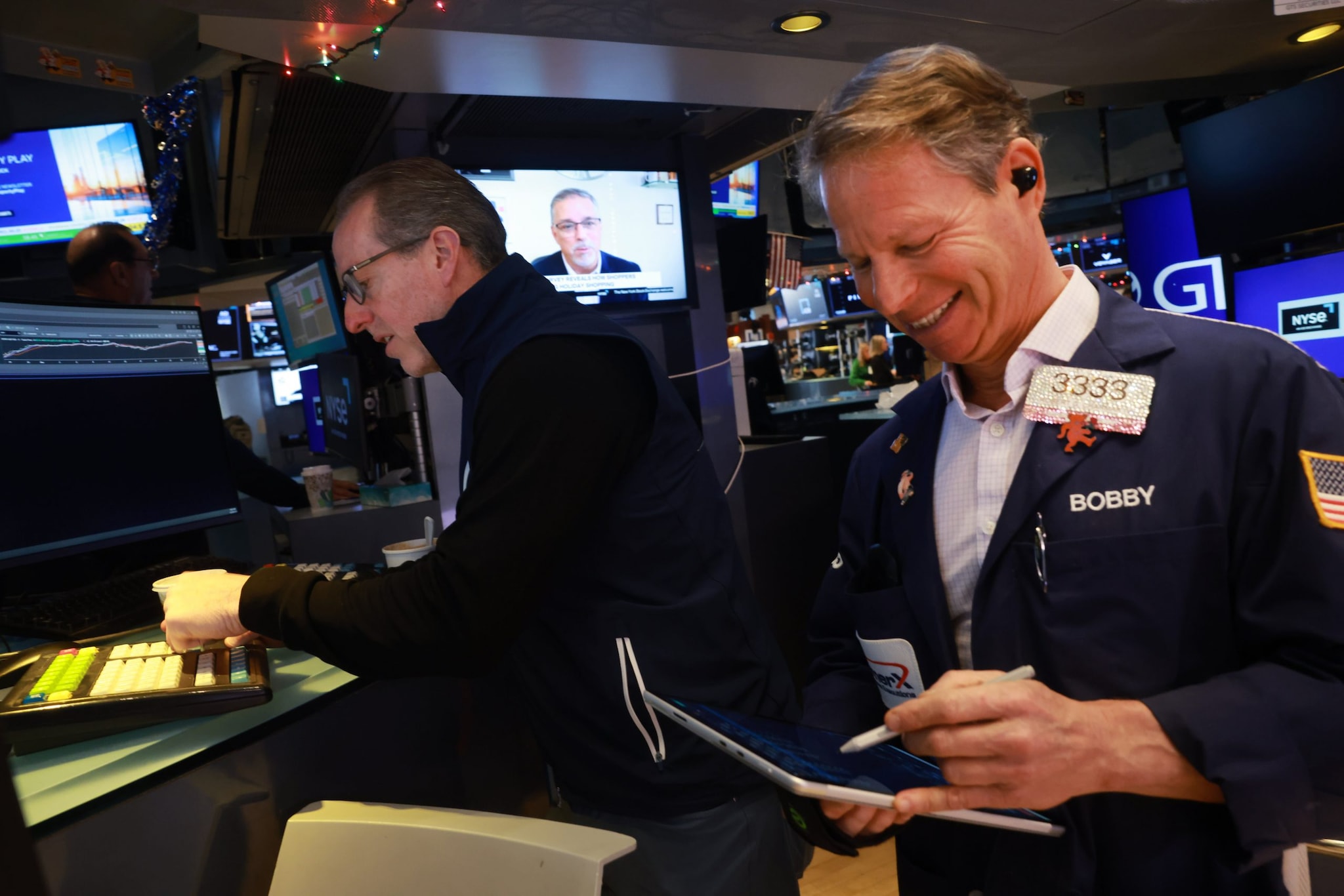
Wall Street just breathed a collective sigh of relief, but don't start celebrating a return to normalcy quite yet. The Dow Jones Industrial Average didn't just climb; it vaulted 1,325 points on Tuesday after President Trump announced a two-week ceasefire with Iran. This sudden 2.8% surge happened less than two hours before a terrifying deadline that could've seen the total destruction of Iranian infrastructure.
Basically, the market was pricing in a catastrophic escalation. When that didn't happen, the "relief rally" was violent. While seeing the Dow cross 1,300 points in a single session is a sight to behold, it’s mostly a reaction to the fact that we aren't currently in a full-scale global energy collapse. If you’re looking at your portfolio today, it’s vital to distinguish between a genuine recovery and a temporary reprieve from a blockade that has choked the global economy for five weeks.
The Hormuz Chokepoint and Your Wallet
The Strait of Hormuz is the world's most sensitive windpipe. About 21 million barrels of oil and 20% of the world's liquefied natural gas (LNG) pass through it daily. When Iran’s Revolutionary Guard effectively paralyzed that traffic in early March, the "war premium" on oil didn't just rise; it exploded.
Brent crude, the global benchmark, had briefly topped $119 per barrel earlier this month. For context, it was sitting around $70 before the conflict kicked off in late February. On the news of the ceasefire and the potential reopening of the waterway, oil prices plunged 16.4%, settling around $94.41.
That’s a massive drop, but it’s still nearly $25 higher than the pre-war baseline. You're feeling this at the pump, with U.S. gas prices averaging over $4.16. The market rally is essentially a bet that the two-week truce will hold long enough to get tankers moving again. If the ships don't start sailing, those Dow gains will evaporate faster than they appeared.
Winners and Losers in the Ceasefire Rally
It wasn't just the broad indices moving. We saw some incredible specific rebounds that tell you exactly what investors were scared of.
- Airlines and Transport: United Airlines soared 13.7% in a single day. Delta followed with an 11% jump. These companies were being crushed by fuel costs and the prospect of a prolonged closure.
- Energy Giants: Interestingly, companies like Chevron and ExxonMobil didn't see the same euphoria. Their stocks had already stayed relatively flat while oil prices were at $119 because the market expected a deal would eventually be reached. Now that the deal is here, the upside for them is capped.
- Global Markets: The reaction in Asia was even more dramatic. South Korea’s Kospi jumped 6.9% and Japan’s Nikkei 225 rose 5.4%. These countries are almost entirely dependent on Middle Eastern energy, so the reopening of the Strait is a literal lifeline for their industries.
Honestly, the "Trump Trade" in 2026 has been a rollercoaster. Investors have learned that the administration uses deadlines as a high-stakes negotiation tool. We saw this with the "Liberation Day" tariffs last year. The market initially panics, then rallies when the worst-case scenario is avoided through eleventh-hour diplomacy.
Why the Two Week Window is Treacherous
The "two-week ceasefire" sounds like a victory, but in geopolitical terms, it’s the blink of an eye. There are still massive "sticky points" in the negotiations. Iran's military capabilities have been hit hard by Operation Epic Fury, but they still hold the keys to the Strait.
The U.S. Energy Information Administration (EIA) recently raised its average oil price forecast for 2026 to $96 per barrel. This tells us that experts don't think the disruption is over. Even if the blockade ends today, the backlog of tankers and the rerouting of global shipping around the Cape of Good Hope will take months to untangle.
You also have to consider the "grocery supply emergency" in the Gulf states. Because they rely on the Strait for 80% of their food, prices for staples have jumped 40% to 120% in some areas. A two-week truce doesn't fix a broken supply chain overnight.
What You Should Do Now
Don't let the 1,300-point gain trick you into thinking the risk is gone. Volatility is the only certainty right now.
- Check your exposure to energy-sensitive stocks: If you bought the dip in airlines or cruise lines (like Norwegian, which jumped 11.9% Tuesday), it might be time to take some profits. These sectors are the first to bleed if the truce fails.
- Watch the bond market: Treasury yields eased slightly to 4.25%, which helped the stock rally. If yields start creeping back up toward 4.5%, it means the market is worried about long-term inflation again.
- Monitor shipping data: Watch for news of the first VLCCs (Very Large Crude Carriers) actually clearing the Strait. Announcements are one thing; physical movement of cargo is what actually moves the needle on inflation.
The current peace is fragile. Israel is still active in Lebanon, and there are reports of the Strait being shut again just hours after the rally. It’s a wait-and-see environment. Keep your stops tight and don't chase the "euphoria" of a single-day move. History shows that rallies built on geopolitical truces are often built on sand.