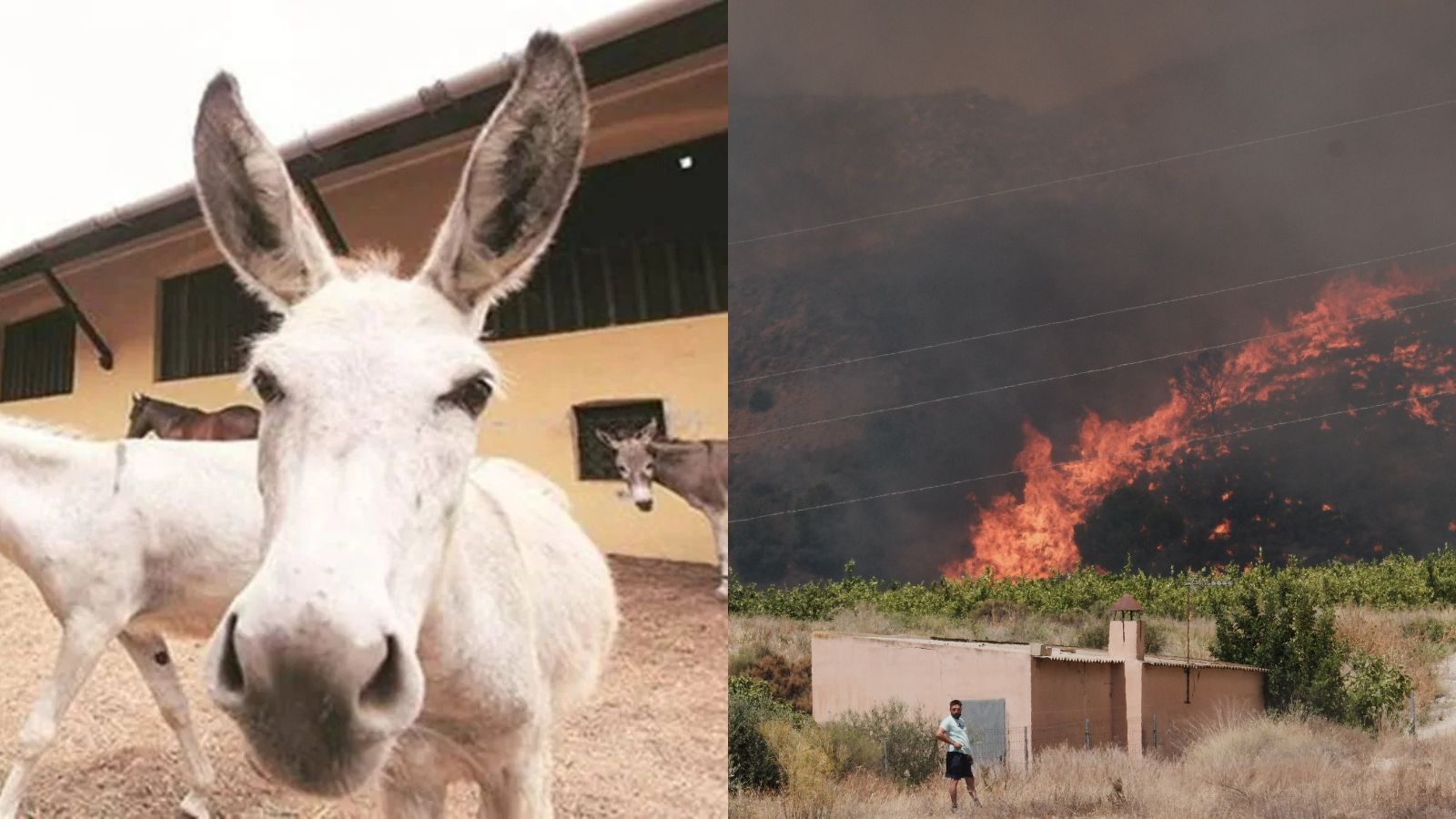
Drones map the terrain. Satellite sensors ping thermal anomalies. Heavy tractors attempt to cut firebreaks through jagged mountain paths. Yet year after year, multi-million-dollar tech solutions struggle to stay ahead of Western Europe's devastating summer blazes.
In southern Spain, land managers are turning to a much older tool. It eats dry brush, drinks eight gallons of water a day, and brays when it's hungry.
It's the donkey.
While high-tech prevention methods hog headline space, a small army of rescued donkeys has achieved what millions in forestry machinery could not. In the perimeter around Andalusia's fragile Doñana National Park, these animals have kept protected land free from forest fires for nine consecutive years.
It isn't magic. It's basic biology.
The Flaw in Modern Fire Prevention
Modern fire suppression focuses heavily on response speed. We buy bigger water-dropping planes. We build better dispatch algorithms. But fighting a fire once it starts is a losing battle when heatwaves hit 100 degrees Fahrenheit.
Real protection happens months before the first spark. It requires clearing undergrowth.
For decades, southern Europe relied on mechanical brush cutters and tractors to clear overgrown hillsides. That approach has massive flaws. Heavy machinery can't climb 45-degree rocky slopes. Tractors crush delicate topsoil, encouraging erosion. Gasoline-powered brush cutters can actually spark fires when their metal blades strike dry rocks.
Then there is the issue of rural depopulation. Throughout the 20th century, millions of Spanish farmers moved to cities. They took their livestock with them. Without sheep, goats, and donkeys constantly grazing the countryside, scrubland exploded. Dried gorse, woody shrubs, and tall grasses turned countryside hills into giant tinderboxes waiting for a spark.
High-tech surveillance like thermal drones can show you where a fire is starting. They can't eat the fuel that powers it.
Inside the Donkey Fire Brigade
In 2014, an association called El Burrito Feliz (The Happy Little Donkey) tried something straightforward in Andalusia. They took 18 rescued donkeys that had been abandoned or mistreated and put them to work on the outskirts of Doñana National Park.
Doñana is one of Europe's most vital wetland ecosystems. It serves as a sanctuary for endangered Iberian lynxes and millions of migratory birds traveling between Europe and Africa. A major wildfire here would destroy species found nowhere else on earth.
The setup is simple. Volunteers from the non-profit group Mujeres por Doñana guide the animals to designated high-risk zones. They set up temporary mobile fences around sections roughly 130 feet long by 50 feet wide.
The donkeys get straight to work.
Donkeys like Mortadelo, Magallanes, Leonor, and Ainoa work seven hours a day from March through November. They spend those hours chewing through dense, dry vegetation. By clearing strips of land around the park, they create natural firebreaks where flames cannot easily spread.
The results speak for themselves. While wildfires burned nearly one million hectares across Spain in recent years, the areas managed by these donkeys haven't seen a single wildfire since June 2017.
Why Donkeys Beat Goats, Sheep, and Machinery
People often ask why land managers don't just use goats or sheep. Fire-grazing projects using goats exist across Spain and California, but donkeys bring distinct physical advantages to brush clearing.
Raw Appetite and Size
A adult donkey weighs about three times as much as a standard goat. Because of that weight, as a donkey walks through thick vegetation, its hoofs crush and break down dense branches that goats simply walk around.
Donkeys also eat roughly ten times the volume of food that a goat consumes each day. A small pack of donkeys clears a firebreak far faster than a similar herd of smaller animals.
Tougher Digestive Systems
Cows, sheep, and goats are ruminants. They are picky eaters that prefer tender grass and soft green leaves. When plants dry out and turn woody during hot Mediterranean summers, goats and sheep leave the tough stuff behind.
Donkeys are non-ruminant hindgut fermenters. Their digestive systems handle fibrous, woody vegetation that other livestock refuse to touch. They willingly munch on thorny scrub, dry gorse, coarse weeds, and tough bark. They eat the exact fuels that turn small brush fires into uncontrollable crown fires.
Low Footprint, High Access
A tractor needs a road. A drone can only watch. A donkey goes anywhere a foot can step. They move easily over loose scree, steep ravines, and dense thickets without disrupting the soil structure or frightening native wildlife.
The Trend Spreads Across Spain
The success in Andalusia didn't stay hidden for long. Regions across Spain are replicating the model to safeguard their own rural areas.
In Catalonia, project leader Joan Cedó launched the Tivissa Donkeys Firefighters project in Tarragona back in 2020. Starting with just three animals, the project grew to around 40 donkeys managing nearly 400 hectares of land. Cedó notes that since introducing the donkeys, the municipality has had zero wildfires.
Further north in Galicia, the Andrea association deployed donkeys across almost 1,000 hectares within a designated biosphere reserve in Ourense. To track their efficiency, handlers fit the animals with GPS collars. The tracking data shows these donkeys travel up to 19 kilometers a day, systematically stripping low-level vegetation across wide swathes of terrain.
Even the Spanish Military Emergency Situations Unit, known as the UME, took notice. Military personnel visited the Doñana brigade to analyze their methods, officially recognizing the strategy and symbolically adopting one of the working donkeys.
What it Takes to Build an Animal Grazing Program
Using livestock for land management sounds low-tech, but it isn't completely hands-off. It requires deliberate management to keep both the animals and the land healthy.
- Water Access: Donkeys working in summer heat require 20 to 30 liters (about 8 gallons) of fresh water daily. Volunteers must haul water tanks directly to remote grazing plots.
- Rotational Fencing: Leaving animals in one spot too long causes overgrazing and soil destruction. Handlers use lightweight solar-powered electric fencing to move the herd every few days.
- Veterinary Oversight: Working donkeys need regular hoof trimming, dental checks, and medical care to stay fit for 7-hour workdays.
- Winter Strategy: Grazing focuses heavily on the pre-fire season between March and November. In winter months, animals move to pasture land or shelter sites.
How Local Communities Can Implement Animal Firebreaks
For municipalities, rural homeowners, and forestry teams looking to reduce wildfire fuel without heavy machinery, taking a page from Spain's playbook requires a clear strategy.
- Map High-Risk Perimeters: Identify brush zones located directly between wildlands and residential structures or protected natural reserves. Focus animal grazing on these border zones rather than trying to clear entire forests.
- Partner With Animal Rescues: Instead of buying expensive livestock, connect with local animal sanctuaries and equine rescues. Many non-profits look for working partnerships that give rescued working animals space and purpose.
- Use Mobile Rotational Plotting: Install temporary electric ribbon fencing to contain grazing teams to specific 40-by-15-meter plots. Move the fence line systematically along the perimeter every 48 to 72 hours.
- Combine Grazing with Forest Management: Animals handle low-level fuel under four feet tall. Humans still need to prune dead low-hanging tree branches to prevent ground fires from climbing into the tree canopy.