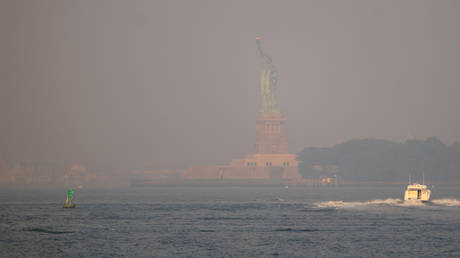
The biggest sporting event on earth is about to collide with a massive political shouting match. Just hours before Spain and Argentina face off in the 2026 World Cup final outside New York City, a dense layer of toxic smoke has rolled in from the north. The sky turned an eerie shade of orange, visibility plummeted, and millions of people received health warnings to stay inside.
Donald Trump didn't stay quiet. He hopped onto Truth Social and pointed his finger squarely at Ottawa, treating an environmental disaster like a hostile invasion. You might also find this similar story insightful: Why Infrastructure Warfare in Iran Will Backfire on the West.
He claimed the United States is being needlessly invaded by filthy air because America's northern neighbor refuses to manage its forests properly. Then came the real hammer. Trump declared that the financial cost of this pollution must be slapped onto the tariffs Canada pays to export goods to America.
It is a wild escalation. It mixes climate anxiety, high-stakes trade policy, and global sports drama into one messy weekend. Fans are coughing on the streets of Manhattan while politicians trade insults across the border. If you are trying to figure out whether the match will actually happen or if your wallet is about to take a hit from a new trade war, here is the ground reality of what is going on right now. As discussed in recent reports by TIME, the effects are significant.
The Toxic Smoke Smothering the World Cup Final
The open-air stadium in East Rutherford, New Jersey, is supposed to host football royalty on Sunday. Instead, it became the epicenter of an air quality crisis. Wildfires in Ontario and central Canadian provinces have sent massive plumes of pollution drifting straight down into the American Midwest and Northeast. Cities like Detroit and Chicago registered some of the worst air quality numbers on the planet this week, with the hazardous haze blanketing the entire eastern seaboard.
For FIFA, this is an absolute nightmare scenario. The 2026 tournament has already dealt with lightning strikes, severe summer heat, and brutal delays. Now, players from Spain and Argentina are forced to navigate air that local officials literally classified as a code red threat. Members of the Spanish squad had to train in New Jersey while a thick haze obscured the afternoon sun.
White House officials and Andrew Giuliani, the head of the administration's World Cup task force, have spent hours huddled with FIFA president Gianni Infantino. Everyone wants to know if there is a backup plan. The official word is that tournament organizers are monitoring the winds closely. Meteorologists expect a weekend storm system to push the heaviest smoke plumes away or damp them down with rain before kickoff.
But the damage to cross-border relations is already done.
Trump Targets Mark Carney Over Forest Management
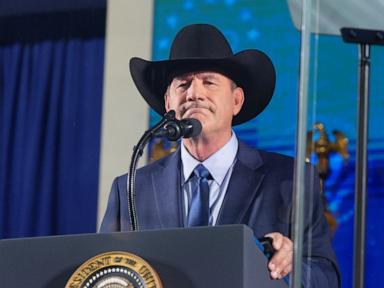
Trump didn't mince words when blaming Canadian Prime Minister Mark Carney for the disaster. The American president accused the Canadian government of willful negligence, stating that a refusal to clear out debris and brush from forests directly led to this pollution. He promised to call Carney directly to demand immediate action.
This isn't just an isolated outburst. It is part of a coordinated campaign by border-state politicians who are losing patience. Republican lawmakers from Michigan joined the chorus, sending letters to Ottawa stating that American lungs are paying the price for Canadian inaction.
Canada sees things very differently. When asked about the blistering attacks from Washington, Carney threw the focus right back onto global emissions, noting that fighting climate change requires a shared effort from every nation, including the United States. Ontario Premier Doug Ford took a more aggressive stance. He reminded the White House that Canadian crews have historically rushed south to help fight fires in California and assist during major American hurricanes. His message to Washington was simple. Stop complaining and send some firefighters to help.
The timing of this fight makes everything worse. Relations between the two countries were already incredibly tense. The White House recently announced it would skip a long-term renewal of its major North American trade deal, opting instead for rolling negotiations that could drag on for years. Trump's threat to increase tariffs over environmental smoke injects massive uncertainty into an already fragile economic partnership.
The Legal Reality Behind the Tariff Threat
Can a president actually punish a foreign country with trade levies because the wind blew forest fire smoke across the border? The short answer is that it is highly unlikely to hold up in court.
Earlier this year, the United States Supreme Court handed down a massive ruling that stripped the president of his ability to use national emergency powers to easily slap tariffs on trading partners. That decision took away Trump's favorite economic hammer. To actually implement a new tax on Canadian lumber, automotive parts, or energy exports, his administration has to navigate a incredibly complex web of procedural laws.
White House spokespeople insisted that the president retains plenty of tariff tools and intends to use them. But they can't explain how they would legally justify a tariff based on an "incalculable" cost of drifting air pollution. Trump has a long history of threatening massive trade penalties during moments of frustration and then letting them fade away. Last year, he threatened a one hundred percent tariff on foreign movies by calling them a national security risk, a move that never actually materialized.
A temporary global ten percent tariff implemented under an alternative trade law is also set to expire next week. This latest threat against Canada looks much more like a loud political stunt designed to show domestic voters he is protecting them, rather than a fully formed economic policy that could pass legal scrutiny.
The Science of Traveling Toxicity
While politicians argue about taxes and trade, environmental scientists are looking at the actual physical danger of these fires. The blazes tearing through northern Ontario aren't typical forest fires. Extremely dry soil and prolonged heat waves have created conditions where fires can burn intensely through deep layers of vegetation for weeks at a time.
The smoke crossing the border carries a complex mix of toxic materials. As these massive plumes travel hundreds of miles through the atmosphere, they undergo a process called photochemical aging. Sun exposure and chemical reactions make the traveling particles even more toxic by the time they reach major metropolitan areas like New York and Philadelphia than they were when they first left the forest.
Breathing this air during strenuous outdoor activity is incredibly risky. Strenuous running causes athletes to inhale massive amounts of air deep into their lungs. Earlier in the week, a professional women's soccer match in Queens had to implement mandatory breathing breaks just to keep players safe. FIFA is banking heavily on shifting winds, but the physical reality of the air quality is something that no amount of political messaging can fix.
What to Do If You Are Heading to New Jersey
If you hold tickets for Sunday's final or plan to travel into the New York metro area, you shouldn't let the political noise panic you, but you definitely need to prepare.
- Monitor the real-time index: Don't rely on general weather apps. Check specialized air quality trackers for East Rutherford specifically before you head out to the stadium gates.
- Pack high-quality masks: Keep a couple of N95 or KN95 masks in your bag. Standard cloth masks do almost nothing to filter out the micro-particles found in heavy wildfire smoke.
- Expect transport bottlenecks: Trump held meetings at Trump Tower on Friday afternoon, which shut down several blocks of Manhattan and created absolute chaos on Fifth Avenue. Combined with existing delays at Newark airport due to visibility issues, getting to the stadium will take twice as long as usual.
- Watch the local advisories: City health departments are updating their guidance every few hours. If a code red stays in place, limit your pre-game tailgating or outdoor walking to avoid breathing in the heavy haze.
The match itself is still highly likely to play out as scheduled. FIFA has too much money and global pressure on the line to delay the final unless conditions become completely unplayable. The wind seems to be moving the worst of the plume southward, and a blast of Saturday rain should clear out the heavy grit. But the toxic atmosphere lingering between Washington and Ottawa won't clear up nearly as fast as the skies over New Jersey.