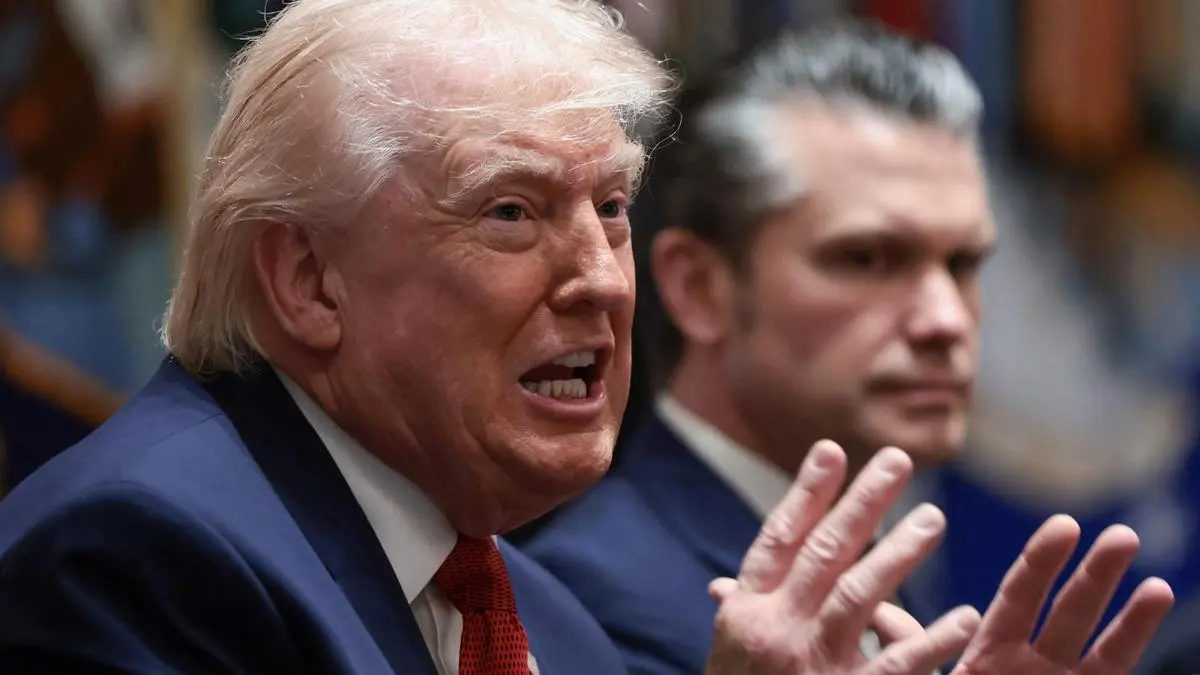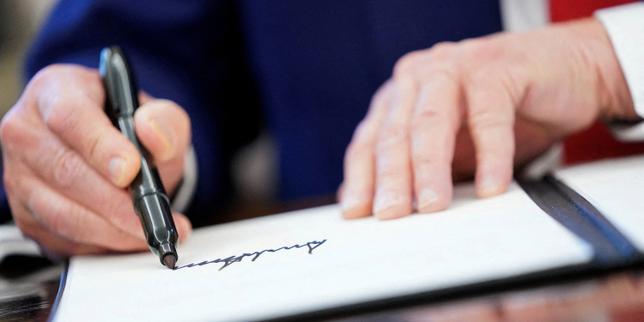
You’ve seen his name on skyscrapers, steaks, and casinos. Soon, you’ll see it every time you pay for a coffee with cash. Donald Trump is set to become the first U.S. President to have his signature appear on American banknotes. It sounds like a small bureaucratic change, but it’s a massive break from a century of tradition. Usually, only the Treasury Secretary and the Treasurer of the United States get their names on the greenback. Trump is changing that. He’s doing it because he can, and because he understands the power of a brand that literally everyone has to carry in their pocket.
This isn't just about ego. It’s a move that touches on the very mechanics of how the Treasury Department functions. To understand why this is happening now, we have to look at the legal loophole and the political will driving it. Normally, the "Series" year on a bill changes when a new Treasury Secretary takes office. The signature of the Secretary and the Treasurer are required by law to validate the currency. Trump's decision to add his own name alongside—or instead of—standard officials marks a shift in how the executive branch views its relationship with the nation's money.
The Technicality That Put a President on the Dollar
Most people think the faces on our money are the only thing that matters. We focus on Lincoln, Hamilton, or Benjamin Franklin. But the signatures at the bottom are what make the paper legal tender. Since the 1920s, the Secretary of the Treasury has been the primary signatory. For Donald Trump to put his name there, he had to navigate a specific set of Treasury regulations. It’s not as simple as grabbing a Sharpie and heading to the Bureau of Engraving and Printing.
The Treasury Department has wide latitude in how it designs currency. While there are strict laws about whose portraits can appear (no living person), the rules for signatures are surprisingly flexible. By designating himself as a certifying official for a specific series of notes, Trump found a way around the unwritten rule that Presidents stay off the paper until they’ve been gone for a long time. It’s a power move. It’s a way to ensure his legacy is handled by millions of people every single day, regardless of whether they voted for him or not.
Think about the logistics. The Bureau of Engraving and Printing (BEP) produces billions of notes a year. Changing a plate for a signature isn't a weekend project. It requires high-precision engraving and massive quality control checks. When the $5, $10, and $20 bills start rolling off the presses with "Donald J. Trump" scrawled on them, it represents a significant investment of taxpayer resources. It also creates an immediate collector's item. History shows that any "first" in US currency leads to a surge in hoarding. People will keep these bills. They’ll frame them. That actually takes money out of circulation, which is a weirdly specific side effect of this branding exercise.
Why This Isn't Just a Publicity Stunt
Critics call it vanity. Supporters call it leadership. I call it a masterclass in staying relevant. If you're a business owner, you know that brand recognition is everything. By putting his signature on the currency, Trump is bypassing the media, the internet, and the 24-hour news cycle. He's entering the physical world of commerce in a way no politician ever has. It’s a constant reminder of his administration’s economic policies, for better or worse. Every time a tourist gets change in New York or a farmer sells grain in Iowa, that signature is there.
There's a psychological element here too. Money is a symbol of trust. When a government issues currency, it’s promising that this piece of paper is worth something. By attaching his personal brand to that promise, Trump is tethering his reputation to the stability of the US Dollar. It’s a high-stakes bet. If the dollar is strong, the signature looks like a seal of approval. If inflation spikes, that name becomes a target for every person struggling to buy groceries. It's a double-edged sword that most Presidents have been happy to avoid.
The Impact on Currency Collectors
Numismatists—the folks who study coins and paper money—are already losing their minds. This is the biggest shakeup in bill design since the anti-counterfeiting measures of the late 90s. We're looking at a situation where "Series 2025" or "Series 2026" bills could become the most traded items on eBay within hours of release. Speculators are already trying to guess which denominations will hit the streets first. Usually, the $1 bill is the last to get a design refresh because it's the most widely used and the cheapest to produce. But if the goal is maximum visibility, don't be surprised if the $20 gets the Trump signature sooner rather than later.
The value of a bill isn't just its face value. Errors, low serial numbers, and unique signatures drive the secondary market. A Trump-signed $100 bill with a "star" serial number (indicating a replacement note) could easily sell for five times its face value to the right buyer. We’re going to see a "gold rush" at local banks. People will be withdrawing stacks of cash just to hunt for the new signature. It’s going to put a temporary strain on local bank branches that don't keep massive amounts of new-series bills in the vault.
Breaking a Century of Tradition
Since the founding of the Federal Reserve, the signature of the Treasurer of the United States (usually a woman) and the Secretary of the Treasury (usually a financier or politician) have been the standard. This balance was meant to show that the money belonged to the institution of the Treasury, not a single individual. Trump is effectively shattering that institutional anonymity. He’s saying that the Executive branch is the ultimate authority over the value of your labor. It’s a shift toward a more "unitary executive" theory of government, expressed through paper and ink.
Historically, Presidents have stayed away from this. Even the most popular ones, like FDR or Reagan, didn't feel the need to sign the cash. They were content with the portraits. But Trump has always been different. He views the presidency as the ultimate brand. If you can put your name on a plane, why not a billion-dollar printing run? It’s consistent with his entire career. He’s always been his own best spokesperson, and now he’s using the most powerful marketing tool in the history of the world: the US Treasury.
The Logistics of the Rollout
Don't expect your ATM to spit these out tomorrow. The process of updating currency plates is slow. The BEP has facilities in Washington, D.C., and Fort Worth, Texas. They have to coordinate with the Federal Reserve, which actually distributes the money to banks. They don't just dump new bills into the world all at once. They wait for old, worn-out bills to be returned to the Fed to be shredded. Only then do they replace them with the new series. It’s a gradual replacement that takes years to complete.
This means for a long time, you'll have a mix. You'll have Janet Yellen’s signature (the first woman Secretary of the Treasury) clashing with Donald Trump’s signature in your wallet. It’ll be a literal representation of the political divide in the country. Two different visions of America, printed on the same cotton-linen blend paper. It’s going to be a weird time for cashiers.
Counterfeiting and Security Concerns
Whenever you change the design of a bill, you create a window for counterfeiters. They thrive on confusion. If people aren't 100% sure what the "new" money is supposed to look like, they might be more likely to accept a fake. The Secret Service is going to have to launch a massive education campaign. They’ll need to show people where the signature is, what the ink should look like under a magnifying glass, and how it interacts with other security features like the 3D security ribbon on the $100 bill.
The Trump signature itself isn't a security feature, but it's a change to the visual "map" of the bill. People who handle a lot of cash rely on muscle memory and quick visual scans. Anything that disrupts that rhythm makes the system slightly more vulnerable until everyone gets used to it. The BEP will likely use this opportunity to slip in a few other minor security tweaks that they don't tell the public about. That’s how the cat-and-mouse game of currency protection works.
Practical Steps for Handling New Bills
If you're looking to capitalize on this or just want to be prepared, here's what you should do. First, don't pay a premium for these bills online right away. Millions will be printed. They aren't rare, even if they look cool. Second, check your local bank. If you want a "uncirculated" bill for a collection, ask your teller if they have any "new series" notes. They usually come in bricks of 1,000. Finally, keep an eye on the $20 bill. There’s been a long-standing debate about replacing Andrew Jackson with Harriet Tubman. If Trump puts his signature on the Jackson $20, it’s a clear signal that the Tubman redesign is on the back burner for the foreseeable future.
Watch the serial numbers. Collectors love "low" numbers (like 00000001) or "binary" numbers (only 1s and 0s). A Trump-signed bill with a rare serial number will be worth a fortune in twenty years. If you find one, don't spend it. Put it in a plastic sleeve and keep it out of the sun. The ink on US currency is durable, but light can fade it over decades. This is a weird piece of history you're holding. Whether you like the man or not, his name on the money is a permanent record of this era. Get a few crisp notes, put them in a drawer, and wait. History has a way of making even the most controversial changes look fascinating in retrospect.