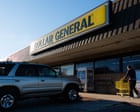
You grab a box of cereal or a bottle of laundry detergent because the shelf tag says one thing, and the register beeps out another. A quarter here. Eighty cents there. It feels minor in the moment, until you realize it happens across thousands of stores and millions of checkouts.
That exact disconnect sits at the center of a massive legal fight after the Federal Trade Commission and a coalition of 20 states sued Dollar General over alleged overcharging at the checkout counter. Regulators accuse the discount giant of charging shoppers more than advertised prices across its sprawling retail footprint—and since the initial filing on October 26, 2026, ten additional states have jumped into the case, pushing the state count to 30.
Honestly, this isn't just a story about sloppy price tags or barcode glitches. It strikes right at the promise of budget retail: when you're counting every dollar before you walk through the door, getting nickeled and dimed at the register stings a whole lot worse.
What the FTC and State Lawsuit Actually Alleges
Filed in the U.S. District Court for the Middle District of Tennessee, the complaint argues that Dollar General's pricing discrepancies aren't rare one-offs. Regulators say the company has faced tens of thousands of consumer complaints nationwide over shelf and tag prices not matching what rings up at checkout.
According to the FTC's enforcement announcement, the alleged pattern stretches back for years and spans thousands of stores across the country. When regulators filed an amended complaint adding ten more states on November 20, 2026, they pointed to violations of the FTC Act, the Gramm-Leach-Bliley Act, and various state consumer protection laws.
Wait—why bring up the Gramm-Leach-Bliley Act in a retail price-tag case? Regulators allege that false statements around pricing were tied to collecting consumer financial information from payment methods like debit cards, credit cards, and checks. That adds legal teeth beyond a simple deceptive-pricing claim.
The original group of 20 states joining the FTC included Alabama, Arizona, Arkansas, California, Connecticut, Florida, Illinois, Iowa, Kansas, Louisiana, Michigan, Mississippi, Nebraska, New Jersey, North Carolina, Ohio, Oklahoma, Tennessee, Utah, and Wisconsin. Soon after, Delaware, Georgia, Kentucky, Maine, Minnesota, New Mexico, Oregon, Rhode Island, South Carolina, and South Dakota joined the action as well.
Dollar General Pushes Back Hard
Dollar General hasn't rolled over and called it a day. In its public statement responding to the suit, the company pushed back forcefully against the idea that it abandoned its mission or ignored customers' budgets.
Company leaders stated that their goal is 100% accuracy between shelf and register prices in every store, while noting that occasional discrepancies happen across retail despite store policies and procedures. Dollar General also said store teams are expected to fix mistakes when shoppers flag them, and pointed to recent internal efforts aimed at improving price accuracy.
There's also a sharp disagreement over money and process. Dollar General noted it learned of the FTC probe in early February 2026, cooperated with testimony requests, and pushed back against a draft monetary settlement demand that the company described as disconnected from a realistic measure of pricing errors. A counteroffer didn't stop the lawsuit, and the chain says it plans to defend the case vigorously.
Around the same time, state-level pressure ramped up separately. New York Attorney General Letitia James announced a $1.875 million settlement with Dollar General over allegations of repeated customer overcharges in the state. Meanwhile, broader scrutiny hit rival discount and convenience operators too, showing how closely regulators and lawmakers are watching checkout accuracy right now.
Why Dollar General Overcharging Matters Beyond a Few Cents
If you shop at an upscale specialty grocer and get overcharged $1.20 on olive oil, it's annoying. If you rely on a neighborhood dollar store because it's the closest place with groceries or household staples—or because every extra dollar at checkout means skipping something else—a tiny pricing gap hits differently.
Thin Store Labor Meets Massive SKU Counts
Anyone who has spent time inside high-volume discount stores knows the operational reality. Stores carry thousands of items, run lean payrolls, and juggle constant price changes, markdowns, and promotional tags.
When shelves aren't updated fast enough—or when register databases update on a different schedule than paper tags—errors slip through. Over thousands of locations and millions of transactions, even small discrepancies add up to serious money.
The Trap of "Small" Checkout Mistakes
Most shoppers don't fight over a 50-cent difference when there's a line behind them. You're tired, you're in a rush, or you assume the computer must be right.
That human friction is exactly why checkout discrepancies persist. Retailers know small overcharges often go unchallenged at the register, while shoppers walk away feeling cheated without always having proof or time to argue.
Still, it's fair to separate intent from execution. Critics and regulators argue that long-running complaints prove safeguards fell far short of what's reasonable. The company counters that human error and scale make perfection tough, even when policies exist on paper. Both sides can be examined through court filings and store-level realities without guessing motives that haven't been proven in court.
What Shoppers Can Do Right Now at the Register
You don't have to wait for a multi-year court battle to protect your wallet on your next run. A few simple habits catch most register mismatches before you leave the aisle or the checkout lane.
- Snap a quick photo of shelf tags on sale or price-checked items. If the register rings higher, you have clear proof right on your phone without guessing what the tag said.
- Watch the screen as items scan. Look at each price pop up instead of waiting until the final total at the end.
- Speak up calmly at the register. Ask the cashier or manager on duty to verify the shelf price and adjust it on the spot.
- Keep itemized receipts for multi-item trips. Checking totals five minutes later is way easier when you can match lines against what you picked up.
- Report unresolved overcharges to official channels. You can file consumer complaints directly with the FTC's ReportFraud portal or your state attorney general's office.
Small overcharges only stay invisible if nobody checks them. Watch the scan line, keep your receipts, and speak up when the numbers don't match.
FTC and 20 states accuse Dollar General of overcharging shoppers at the register
This video is relevant because it summarizes the multistate and FTC lawsuit accusing Dollar General of overcharging customers at checkout.